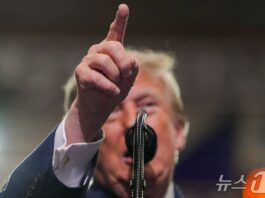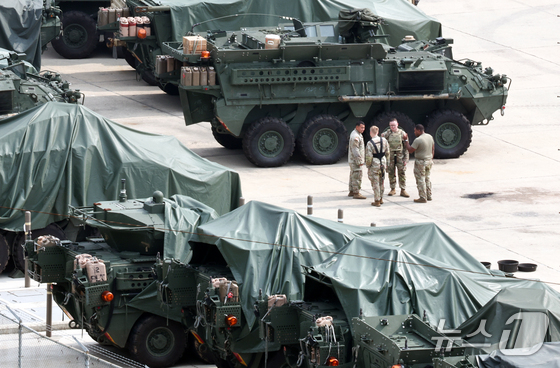
President Donald Trump’s order to drastically reduce the U.S.-South Korea joint military exercise, Ulchi Freedom Shield (UFS), has created an unprecedented situation.
Military experts have voiced concerns that this reduction could weaken the combined defense posture, especially given the rapidly evolving geopolitical landscape, including North Korea’s advancing nuclear program and strengthening ties between Pyongyang, Beijing, and Moscow. They warn that altering pre-agreed military exercises based on a U.S. President’s political calculations could lead neighboring countries, particularly North Korea, to misinterpret cracks in the U.S.-South Korea alliance.
Cancellation of Counter-Attack Drills Raises Questions About Joint Defense Readiness
The South Korean Joint Chiefs of Staff announced the early conclusion of UFS on August 21, following a proposal from the U.S. side. This decision came just two days after President Trump ordered a reduction in joint exercises on August 16.
While specific details of the scaled-down training weren’t provided, it appears the U.S. and South Korea will only conduct about half of the originally planned exercises.
Initially, the allies had scheduled defensive drills simulating a North Korean attack from August 17 to 21 (Phase 1), followed by counterattack exercises from August 22 to 27 (Phase 2). However, the shortened training period has led to the complete cancellation of the counterattack phase. This reduction impacts both command post exercises (CPX) and field training exercises (FTX).
The Pentagon echoed the Joint Chiefs’ announcement, confirming a significant scale-back of UFS exercises. They explained that live troop training has been reduced, with some drills canceled or converted to simulations. However, they emphasized that despite these adjustments, essential readiness and training objectives will be maintained without compromising U.S. training goals.
Critics argue that this reduction will inevitably weaken the actual joint defense posture, given that military training effectiveness increases through repetition and enhancement. The significant cut in exercises means that the full training benefit will be lost, effectively disrupting the process.
The joint field training exercise Warrior Shield, planned in conjunction with UFS, already included fewer events than last year’s iteration. Further reductions are likely to exacerbate concerns about deteriorating practical defense readiness. This comes at a critical time when North Korea is enhancing its nuclear capabilities and unveiling new military strategies, requiring the U.S. and South Korea to reassess their response tactics.
Dr. Yoo Ji-hoon, a researcher at the Korea Institute for Defense Analysis (KIDA), emphasized the crucial role of joint exercises in honing command and control, information sharing, and reinforcement deployment capabilities. He warned that reducing training opportunities could significantly impact crisis management abilities, especially given the regular rotation of military personnel.
A retired three-star general stressed the importance of these exercises in verifying wartime transition procedures and mission readiness. He advised that even if the U.S. reduces its involvement, South Korea must continue its own training uninterrupted to maintain readiness.
Reduced UFS Training May Delay Wartime Operational Control Transfer
The scaled-back UFS is particularly significant as it was meant to showcase South Korea’s command capabilities ahead of the planned transfer of wartime operational control (OPCON).
The OPCON transfer verification process involves three stages: Initial Operational Capability (IOC), Full Operational Capability (FOC), and Full Mission Capability (FMC). The South Korean government had planned to complete the FOC verification this year through joint exercises and set a target transfer date. However, the halved training scale may force a postponement of this evaluation.
Um Hyo-sik, director of defense security at the Korea Defense Security Forum and former Joint Chiefs of Staff spokesperson, noted that joint exercises are crucial for refining the alliance’s response to North Korean provocations and developing South Korea’s war command capabilities post-OPCON transfer. He warned that eliminating key training components could significantly delay South Korea’s military capacity-building efforts.
The Ministry of National Defense, however, maintains that the planned U.S.-South Korea joint evaluation during UFS was conducted normally and that the reduced exercises won’t negatively impact the OPCON transfer process.
This isn’t President Trump’s first push to reduce or suspend U.S.-South Korea joint exercises, citing North Korean dialogue and cost-cutting measures. Following the June 2018 Singapore summit with Kim Jong Un, he labeled the exercises as provocative war games and called for their cessation.
As a result, the long-standing Ulchi Freedom Guardian (UFG) exercise was halted in August 2018 after 28 years. By March 2019, other major exercises like Key Resolve and Foal Eagle were also terminated. Joint drills were subsequently scaled down to primarily computer-based simulations until the current UFS was reestablished in August 2022. Some analysts fear Trump’s latest directive could lead to a repeat of the 2018 scenario.
International media suggest that while Trump publicly cites his relationship with Kim and cost savings as reasons for the cuts, the decision likely reflects deeper political and economic grievances against South Korea. These may include delays in U.S. investments, regulatory issues involving companies like Coupang, and South Korea’s reluctance to participate militarily in situations like the Iran crisis.
Concerns are mounting that if pre-agreed military exercises between allies continue to be influenced by unilateral decisions, it could send a dangerous message of alliance instability to regional actors, particularly North Korea.
Professor Yoon Sang-yong from Seokyeong University’s Military Science Department criticized Trump’s action as revealing a transactional approach to the alliance. He warned that reducing joint exercises could signal to the international community that the U.S. no longer views South Korea as a dependable partner, potentially undermining regional security dynamics.