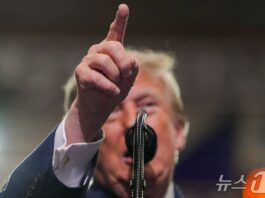
President Donald Trump has significantly scaled back the regular U.S.-South Korea joint exercise, Ulchi Freedom Shield (UFS), scheduled for the latter half of the year as he prepares to restart talks with North Korea. However, the trilateral Freedom Edge exercise involving the U.S., South Korea, and Japan is set to proceed as planned without reductions.
U.S. Navy Lt. Cmdr. Chloe Morgan, spokesperson for U.S. Indo-Pacific Command (INDOPACOM), confirmed to News1 on Wednesday that the command is working closely with the Japan Self-Defense Forces and Republic of Korea military to prepare for the 2026 Freedom Edge exercise.
Morgan elaborated that as it enters the fourth year of robust trilateral cooperation, this critical multi-domain exercise will solidify our shared values, boost interoperability, and further strengthen the defense partnerships to ensure peace and security across the Indo-Pacific region.
She added that additional exercise details would be released at a later date.
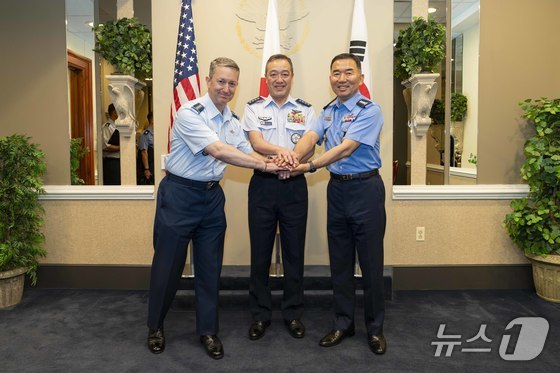
Last month in Washington, D.C., Republic of Korea Joint Chiefs of Staff Chairman Gen. Kim Seung-kyum, U.S. Joint Chiefs Chairman Gen. Charles Q. Brown Jr., and Japan Joint Staff Chief Gen. Yoshida Yoshihide held the 23rd Trilateral Chiefs of Defense meeting, where they discussed security cooperation measures, including the execution of Freedom Edge.
Freedom Edge originated from an agreement made during the 2023 Camp David summit, where the three nations committed to conducting multi-domain training. The inaugural exercise took place in June 2024, with a follow-up in November. Key components include maritime missile defense, air defense, and anti-submarine warfare operations.
Kim Yo Jong, vice department director of the Central Committee of the Workers’ Party of Korea, denounced these trilateral exercises last year, warning that the reckless display of military might by the U.S., Japan, and South Korea around the Democratic People’s Republic of Korea will inevitably lead to unfavorable consequences for themselves.
Park Jong Chon, vice chairman of the Central Military Commission, also issued a statement asserting that the indiscriminate military actions by the U.S., Japan, and South Korea on the Korean Peninsula, the world’s most volatile region, pose a grave threat to the national security interests and significantly undermine regional stability, escalating military tensions.
Nevertheless, following President Trump’s sudden order to scale back the UFS exercise on August 16, the day it commenced, analysts predict that future U.S.-ROK joint exercises may face additional impacts as efforts to restart U.S.-North Korea dialogue continue.
Military sources indicate that the U.S. and South Korea are planning to conduct the nuclear and conventional integrated tabletop exercise (CNI TTX) Iron Mace, along with the joint air exercise Freedom Flag and other drills between September and November this year.