

President Donald Trump has unveiled an ambitious plan to boost annual foreign tourist arrivals in the United States to a whopping 100 million. This move comes as international tourism in the U.S., which had been recovering post-COVID-19, started to decline again last year. The administration aims to attract more visitors by streamlining visa and entry procedures.
However, for Korean travelers, significant hurdles remain. From visa interviews and strict entry protocols to high exchange rates, pricey airfares, local inflation, and the ubiquitous tipping culture, these factors are seriously inflating the perceived cost of U.S. travel.
Trump Huddles With Travel Industry Bigwigs to Tackle Foreign Tourist Decline
On Wednesday, President Trump met with Chief Executive Officers (CEOs) from major players in the travel industry, including American Airlines, Marriott, and Carnival, at the White House in Washington, D.C. to brainstorm solutions for the dwindling foreign tourist numbers.
The U.S. Travel Association has set an ambitious target: to welcome 100 million foreign visitors annually by 2030. Last year saw a 5.5% drop in foreign tourists, with only about 68 million visitors. The downward trend continued into this year, with overseas arrivals from January to July falling 4.7% compared to the same period last year.
U.S. tourism authorities are pulling out all the stops to make the entry process less of a headache.
Brand USA (the U.S. Tourism Board) is arming travel industry partners with a nifty campaign toolkit called “Get Facts. Get Going.” It’s packed with accurate info on visas, Electronic System for Travel Authorization (ESTA), entry procedures, and fees. They’re also teaming up with U.S. Customs and Border Protection to promote speedy entry programs like Global Entry and Mobile Passport Control.
They’ve even rolled out special perks for the Korean market. During this year’s U.S. Tourism Board sales mission in Korea, they offered a sweet deal: conditionally approved Korean applicants could wrap up their Global Entry registration interviews in Seoul, saving them a trip to the U.S.
Air travel is getting a boost too. By 2026, expect over 250 weekly direct flights between South Korea and the U.S., connecting 16 stateside destinations. That’s more than 4.3 million direct flight seats annually. This year alone, Air Premia launched a new Incheon-Washington Dulles route in April, and United Airlines is kicking off daily direct flights from Incheon to Newark on September 5.

LA and NYC Roll Out Red Carpet: Sports and Culture Take Center Stage
Major U.S. cities are pulling out all the stops to lure tourists with their unique offerings.
Los Angeles is betting big on sports. After hosting eight the International Federation of Association Football (FIFA) World Cup matches this year, drawing over 560,000 spectators and 250,000 fan zone visitors, LA’s tourism board is gearing up for more. They’re eyeing Super Bowl LXI in 2027 and the 2028 Olympics and Paralympics to keep the excitement rolling. The city’s also flexing its cultural muscles with new hotspots like the LACMA David Geffen Gallery, DataLand, and the Lucas Narrative Art Museum.
An LA Tourism Board rep gushed that the World Cup was our chance to show off LA’s total package to global visitors. It’s not stopping there – it’ll keep flaunting the sports scene, culture, food, and entertainment to draw in tourists.
Meanwhile, New York’s tourism board is cooking up a cheeky campaign that spoofs those side-effect warnings in drug ads. The pitch? Your feet might hurt from all the walking, but you’ll catch the city’s infectious energy and end up longing to come back – it’s the side effect of visiting New York.
A New York Tourism Board spokesperson dished that they’re painting New York as this intense, energetic, challenging city that changes you and makes you crave a return visit.
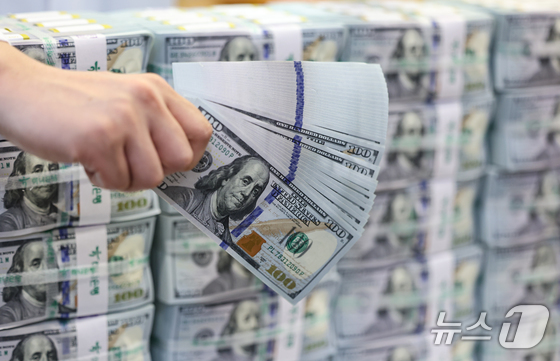
High Exchange Rates, Fuel Surcharges, and Tips… Travel to the U.S. Remains a Financial Burden for Koreans
However, the barriers to traveling to the U.S. remain high for Korean travelers.
According to the U.S. Department of Commerce, the number of Korean visitors to the U.S. in 2025 was 1,647,142, remaining at about 72% of the 2019 level (2,298,279). Compared to the total number of South Koreans traveling abroad that same year (29,575,501), which had fully recovered to pre-COVID-19 levels, this represents a slow recovery.
This is due to the combination of high airfare prices—a characteristic of long-haul routes—coupled with the burden of fuel surcharges, as well as the rising cost of living in the U.S. caused by the persistent weakness of the won (high exchange rate). Furthermore, rising prices for local hotels, food and beverages, and transportation, along with the increasingly prevalent U.S.-specific tipping culture, are contributing to additional expenses.
According to data from the U.S. Department of Commerce, the average per-person travel expenditure for South Korean visitors to the U.S. in 2024 reached 5,220 USD.
A travel industry official noted that travel to the U.S. is a prime example of a high-cost, long-haul market, so price sensitivity is extremely high, and suggested that for the U.S. government to achieve its goals for attracting foreign visitors, it must improve entry procedures while simultaneously expanding air capacity and ensuring that travel packages are genuinely price-competitive.