

Here’s the converted version of [translateContent] with numerical and financial data adjusted based on [originContent]:
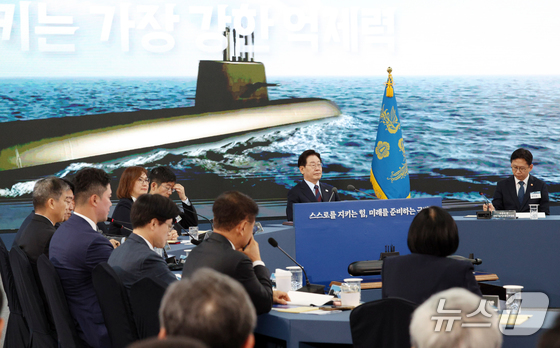
A U.S. Navy official has urged South Korea to provide clear military justification and operational purposes for acquiring nuclear-powered submarines.
Although the U.S. agreed to approve South Korea’s acquisition of nuclear submarines and initiate follow-up procedures for securing nuclear fuel during last year’s summit, related discussions have been stalled for nearly a year.
Given that the Donald Trump administration has prioritized countering China as the primary objective of its Indo-Pacific security strategy, there are speculations that South Korea may be expected to play a role in countering China during the process of introducing nuclear submarines.
Self-Reliant Defense & Easing U.S. Burden vs Countering China… Divergent Dreams of South Korea and U.S. on Nuclear Submarines
According to foreign media reports, including Japan’s Yomiuri Shimbun on September 13, a U.S. Navy official stated during a meeting with Asia-Pacific reporters at a Hawaii base on September 9 that it would be wrong to purchase nuclear submarines merely as a symbol of national prestige, emphasizing the need to find valid reasons for their acquisition.
He added that the U.S. cannot provide those reasons and that South Korea must find them on its own.
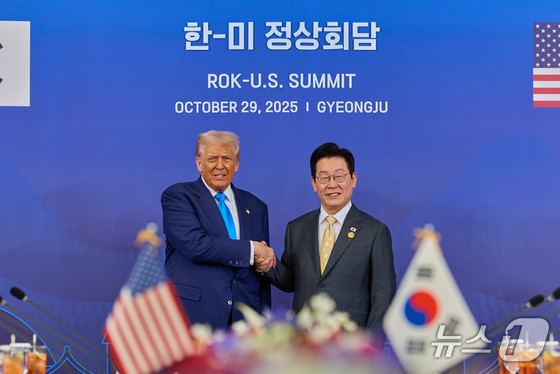
While both countries agreed to approve South Korea’s acquisition of nuclear submarines and engage in follow-up discussions during last October’s summit, they have shown subtle differences regarding the role of these submarines. The recent statement by the U.S. Navy official is seen as highlighting these differences.
The South Korean government has emphasized the need for nuclear submarines as a means of self-reliant defense to alleviate the U.S. security burden.
President Lee Jae Myung stressed during the summit that if fuel supply is permitted, South Korea could build several submarines with conventional weapons using its own technology, conducting maritime defense activities in the East and West Seas of the Korean Peninsula, which could significantly reduce the burden on U.S. forces. He also mentioned the purpose of countering North Korea and China, noting that diesel submarines have limited submerging capabilities, restricting their ability to track North Korean or Chinese submarines.
Defense Minister Ahn Gyu-back, when announcing the basic plan for the nuclear submarine development Jangbogo N Project in May, clearly stated the objectives of countering North Korea and self-reliant defense, describing it as a symbol of South Korea’s will to take responsibility for peace and security on the Korean Peninsula and playing a crucial role in responding to North Korea’s submarine-based nuclear and missile threats.
In contrast, the U.S. has repeatedly emphasized that South Korea’s acquisition of nuclear submarines is intended to counter China.
U.S. Chief of Naval Operations Daryl Caudle, during his visit to South Korea last November, told reporters that it’s a natural assumption to use nuclear submarines to deter China, emphasizing that China’s gray zone activities are a global concern and that partnership with South Korea is increasingly important.
Admiral Caudle also stated that he believes South Korea largely shares the U.S. concerns about China, which is considered a key competitive threat, and expressed hope that South Korea and the U.S. would achieve common goals related to China.
It wasn’t until June, more than six months after the summit, that the South Korea-U.S. government delegations held their first meeting to discuss the follow-up on nuclear submarine acquisition and uranium enrichment and spent nuclear fuel reprocessing issues (revision of the South Korea-U.S. nuclear agreement). At the time, there were expectations for a second round of talks in July this year, but the schedule has not been confirmed yet.
For this reason, there are observations that South Korea needs to present more concrete military necessities and roles for nuclear submarines to accelerate discussions with the U.S. on this matter.
U.S. Emphasizes First Island Chain… Maintains South Korea-U.S.-Japan Exercises Despite Reduction in Bilateral Drills
The statements by U.S. government officials linking South Korea’s nuclear submarine acquisition to countering China align with the anti-China stance outlined in the Trump administration’s security strategy document, the National Security Strategy (NSS).
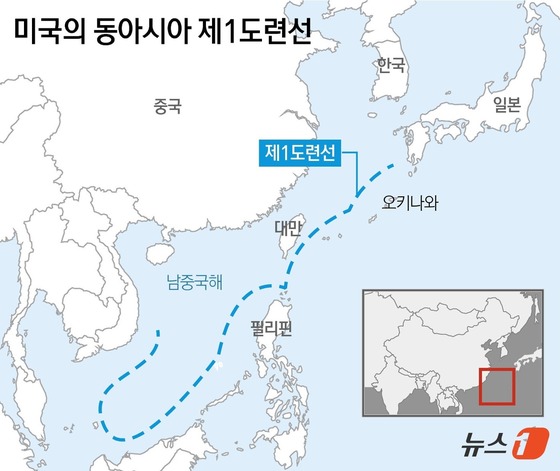
The NSS emphasizes strengthening the capabilities of the U.S. and its allies to prevent attempts such as China’s occupation of Taiwan by connecting maritime security issues along the ‘First Island Chain,’ stating that while they will build military power capable of deterring aggression anywhere along the First Island Chain, this cannot be done by U.S. forces alone. It stresses that allied countries must spend and do much more for collective defense.
The First Island Chain is a maritime defense line connecting Japan’s Kyushu, Taiwan, the Philippines, and the South China Sea, also known as a containment line to prevent China’s invasion of Taiwan and expansion into the Pacific.
The U.S. commitment to project power along the First Island Chain is also evident in the press release distributed by the U.S. Eighth Army ahead of the regular South Korea-U.S. joint exercise Ulchi Freedom Shield (UFS) held in the latter half of last month.
The U.S. Eighth Army emphasized that this year’s UFS exercise would demonstrate the alliance’s ability to rapidly project combat power within the First Island Chain and secure key terrain.
While South Korea’s Joint Chiefs of Staff emphasizes that the UFS exercise is a defensive exercise preparing for contingencies on the Korean Peninsula, the U.S. side’s overt emphasis on power projection to the First Island Chain has been seen as unusual by some observers.
Although President Trump ordered a reduction in the UFS exercise, he maintained the South Korea-U.S.-Japan trilateral joint exercise Freedom Edge, which began on September 4 in waters southeast of Jeju, at the same level as previous years.
This has led to interpretations that while joint exercises have been reduced due to Trump’s criticism of South Korea not helping in the Middle East war, it also reflects an aspect of alliance modernization and strengthening deterrence against China by increasing South Korea’s share in Korean Peninsula security.
Middle East War, U.S. Investment, China Deterrence, Coupang Issue… U.S. Negotiation Cards Surrounding Nuclear Submarine Acquisition
Even if South Korea aligns with the U.S. stance on countering China to acquire nuclear submarines, negotiations are not expected to be smooth. The U.S. may present different negotiation cards, individually or simultaneously, under the banner of alliance contributions.
Along with the nuclear submarine acquisition, South Korea and the U.S. previously agreed on a 350 billion USD investment in the U.S. and are continuing detailed implementation discussions. Additionally, the U.S. is seeking support from its allies for the Strait of Hormuz in the Middle East conflict that began in February.
The U.S. has hinted at its position that it would be difficult to initiate security-related discussions without a promise to guarantee the personal safety of Coupang Inc. Board Chairman Kim Bom-seok regarding the Coupang personal information leak incident, citing the non-discrimination against digital companies mentioned in the Joint Fact Sheet (JFS) released after last year’s South Korea-U.S. summit.
U.S. investment, Middle East war contribution, participation in countering China, and the Coupang incident are all separate demands, but they could all influence negotiations on nuclear submarine acquisition. Unless South Korea presents options that meet U.S. demands or results that meet expectations, even if one task is fulfilled, the U.S. could prolong negotiations by demanding contributions to other tasks.