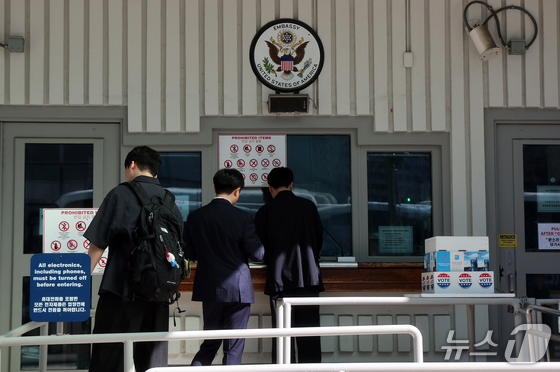
On Tuesday, the National Intelligence Service (NIS) of South Korea refuted media reports claiming that the U.S. government had denied visa issuance for its personnel scheduled for deployment. The NIS stated that this is not true. They explained that some delays in visa processing are due to personal background checks related to the U.S.’s enhanced entry procedures and are unrelated to South Korea-U.S. intelligence cooperation.
In a press release on the same day, the NIS clarified that some reasons for visa delays are related to the visa process concerning personal backgrounds, which is part of the U.S.’s enhanced entry procedures. They emphasized that these issues have absolutely no connection to South Korea-U.S. intelligence cooperation.
The NIS also disclosed that they are in close consultation with the U.S. regarding this matter. Addressing concerns that visa delays could disrupt exchanges between South Korean and U.S. intelligence authorities, they stressed that currently, intelligence cooperation between South Korea and the U.S. is proceeding actively.
Earlier, a media outlet had reported that the U.S. government suspended visa issuance and diplomatic status approval for NIS personnel scheduled to be dispatched to the South Korean embassy in Washington. The report suggested that differences between the two countries over various issues, including the Coupang situation, could be causing delays in visa issuance and might potentially disrupt intelligence exchanges.
The NIS expressed deep regret over what they called distorted reporting related to intelligence agency activities that could significantly impact national security and national interests. They urged the media to exercise caution in their reporting on such sensitive matters.