The business communities of South Korea and the U.S. agreed to bolster cooperation in strategic and cutting-edge sectors, including shipbuilding, semiconductors, batteries, artificial intelligence (AI) infrastructure, energy, and pharmaceuticals and biotechnology. This meeting in Seoul followed the recent announcement of specific strategic investment projects by both governments, with industry leaders from the two nations convening to solidify their commitment to concrete actions.
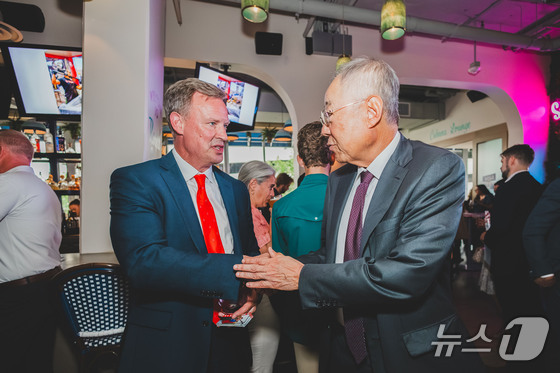
The Korea-U.S. Business Council announced on Thursday that it hosted the 36th Korea-U.S. Business Council General Assembly at the FKI Tower Conference Center in Yeouido, Seoul, in collaboration with the U.S. Chamber of Commerce.
The assembly drew over 60 high-ranking officials and experts from both countries. The South Korean delegation included Ryu Jin, Chairman of the Korea-U.S. Business Council (Korean Co-Chair), Minister of Trade, Industry and Energy Kim Jeong-kwan, and Foreign Minister Cho Hyun, alongside business leaders such as Hanjin Group Chairman Cho Won-tae, Youngone Corporation Vice Chairperson Sung Rae-eun, and Samsung Electronics President Park Seung-hee, representing major U.S. investors like SK, Hyundai, and LG.
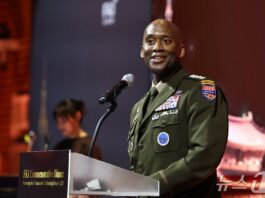
The U.S. delegation featured Evan Greenberg, Chairman of Chubb Group and U.S. Co-Chair, U.S. Ambassador to South Korea Philip Goldberg, House Speaker Kevin McCarthy, and Charles Freeman, Vice President of the U.S. Chamber of Commerce.
In his opening remarks, Ryu Jin emphasized that the strategic investments agreed upon by both governments have now entered a full implementation phase, stating that it is the businesses that will transform the framework for cooperation established by the governments into tangible outcomes.
According to the Export-Import Bank of Korea’s overseas direct investment statistics for 2016-2025, South Korea’s direct investment in the U.S. over the past decade reached 206.3 billion USD, averaging over 20 billion USD annually. In the past year alone, investments totaled 22.3 billion USD, surpassing the average annual amount from the last decade.
Ryu noted that these investments contribute not only to job creation and the expansion of the manufacturing base in the U.S. but also to the establishment of stable supply chains between the two countries. He emphasized that Korean companies will continue to expand their role as reliable partners in creating future industrial ecosystems alongside American businesses.
Evan Greenberg, U.S. Co-Chair of the Korea-U.S. Business Council, reaffirmed the strong trust between the economic sectors of both countries in his opening remarks. He expressed a shared commitment to strengthening public-private cooperation to ensure companies can continue investing and expanding collaboration in a predictable environment.
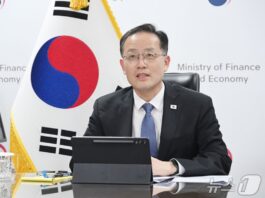
This assembly took place following the announcement of specific strategic investment projects by both governments earlier this month. Minister Kim Jeong-kwan, who led the negotiations on behalf of the South Korean government, delivered a keynote speech outlining the significance and prospects of this announcement.
Kim stated that in the past, the Korea-U.S. alliance strengthened the ndustrial cooperation; now, industrial cooperation serves as a core driving force that solidifies the alliance. He urged that in the face of increasing uncertainty in the global trade environment, it must deepen economic cooperation in areas such as supply chain stabilization, AI and advanced technology innovation, and enhancing the competitiveness of advanced manufacturing based on shared values and mutual trust.
Following this, representatives from leading think tanks in both countries, including the Korea Economic Research Institute, the Korea Institute for Industrial Economics and Trade, and the U.S. Center for Strategic and International Studies (CSIS), engaged in discussions on enhancing economic cooperation between the two nations from a security perspective, under the theme Global Policy Shift, Economic Security, and the Korea-U.S. Alliance.
Subsequent sessions featured businesses from both countries examining current issues and cooperation opportunities across various industrial sectors. The strategic industry session, themed From Chips to Ships, focused on collaboration strategies in key sectors such as shipbuilding, semiconductors, AI, and energy. Major topics included joint responses to the surging power demand driven by the expansion of advanced industries and the implementation of the Korea-U.S. shipbuilding partnership.
The final session addressed From Drug Discovery to Commercialization, discussing ways to strengthen cooperation between the two countries in responding to aging populations and fostering the pharmaceutical and biotech ecosystem. Participants broadly covered topics such as enhancing the resilience of critical pharmaceutical supply chains and collaborative research and development (R&D) and clinical partnerships.
Following these discussions, the economic representatives from both countries adopted a Joint Statement encapsulating their shared messages. The statement called for the establishment of a predictable and market-friendly business environment to support stable investment activities, along with requests for practical investment support from both governments, including expedited processing of permits and visa issues to facilitate personnel exchanges.
Additionally, they agreed to enhance public-private communication and cooperation to solidify collaboration in next-generation industries, including AI infrastructure and supply chain cooperation in pharmaceuticals and biotechnology.