

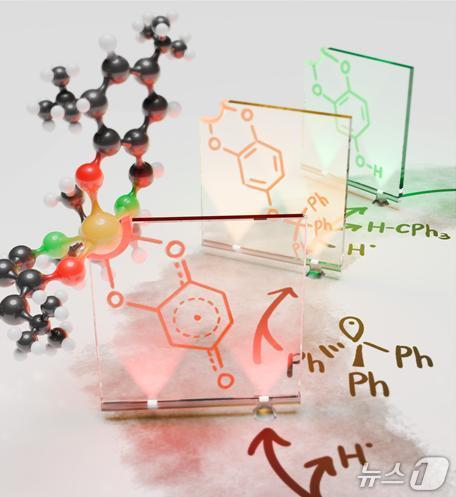
A research team led by Yoon Jung Baek, a chemistry professor at KAIST, has developed a novel molecular catalyst system that combines quinone—a key molecule in biological energy production—with titanium metal (Ti), as announced on March 26.
Quinone plays a crucial role in energy metabolism by transferring electrons and hydrogen. This study, which mimics mitochondrial energy production mechanisms, has overcome the challenge of semiquinone’s instability—a reactive intermediate of quinone—by chemically stabilizing it with metal, resulting in a catalyst capable of repeated reactions.
The research team solved the long-standing instability issue by ingeniously designing a molecular system that pairs quinone with cost-effective and abundant titanium metal. This innovative approach is poised to open new avenues in the design of artificial catalysts utilizing biological molecules.
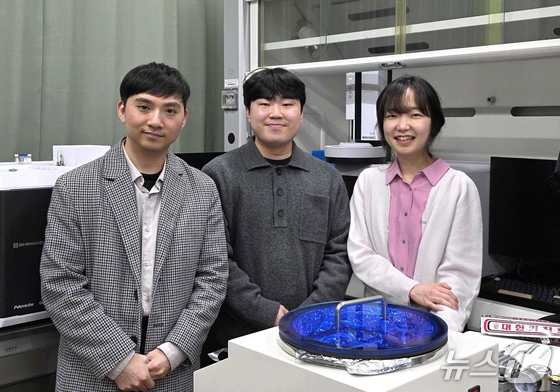
Professor Baek said the team has overcome key limitations in harnessing quinone, which plays an essential role in nature but has been difficult to utilize in artificial systems. She added that the breakthrough could serve as a foundation for the development of next-generation energy and environmental catalysts.
The lead author of this study is Chang Hyun Won, a student in the integrated master’s and doctoral program at KAIST’s Department of Chemistry. The findings were published in the February 20 issue of the Journal of the American Chemical Society, a prestigious publication of the American Chemical Society.
This research was supported by the Ministry of Science and ICT’s Basic Research Program for Excellent Young Researchers, the Global Leading Research Center (SRC) of the National Research Foundation of Korea, and the Ministry of Trade, Industry and Energy’s materials and components development project.