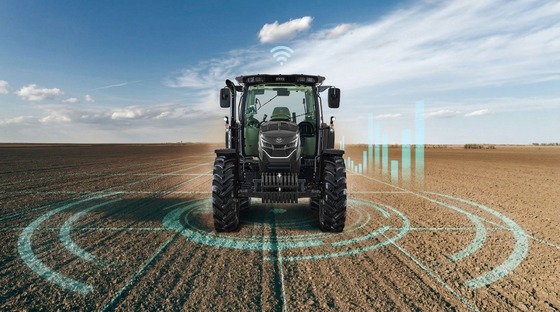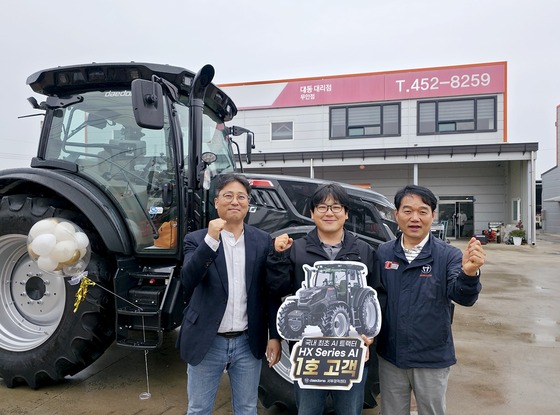
Daedong Corporation has launched its pioneering Artificial Intelligence (AI) Tractor Model 1 at a green onion and onion farm in Sinan, South Jeolla Province, marking a significant milestone in the commercialization of Agricultural Physical AI.
Industry sources reported on Wednesday that the first customer for Daedong’s vision AI-based tractor is Mr. Park Sang-bum, who cultivates various vegetables, including green onions and onions, across 5 hectares (about 15,000 pyeong) in Sinan.
Mr. Park noted that even with the existing autonomous work kit, he experienced a 10% reduction in work time. After witnessing the Daedong AI tractor demonstration, he decided to adopt it, anticipating further improvements in work efficiency and safety.
He added that the introduction of the AI tractor has piqued his interest in Daedong’s precision agriculture solutions and connected services.
Green onion cultivation involves a lengthy growth period from sowing to harvest, with numerous variables in irrigation, fertilization, and pest management, Mr. Park explained. It’s crucial to establish the initial field environment and manage growth data effectively. It’ll need to transition to a farming approach based on environmental data for each crop.
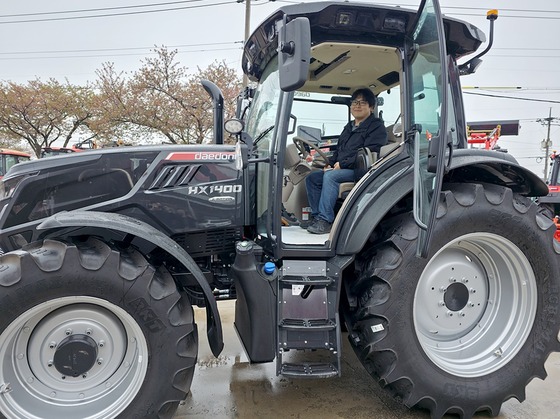
The AI tractor is equipped with six cameras that provide 360-degree environmental awareness. Its vision AI autonomously identifies field boundaries, obstacles, and the types of attached implements. This information enables the tractor to determine optimal driving routes and working methods for various tasks.
The AI tractor complies with international safety standards for unmanned agricultural machinery (ISO 18497) and features enhanced safety measures, including the ability to detect and brake for obstacles up to 15 meters (about 49 feet) away.
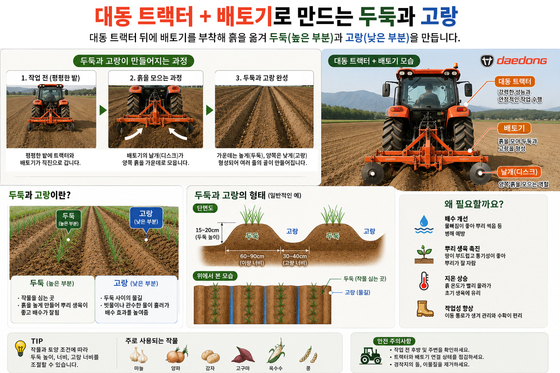
Work quality uniformity is another key advantage. For vegetables like onions, garlic, peppers, and cucumbers, the precision in creating ridges and furrows for planting seeds or seedlings directly impacts crop yield.
The AI tractor maintains consistent spacing and straightness, forming ridges and furrows with road-like precision, minimizing unworked areas and reducing the need for rework and time waste.
Daedong reports that field tests have demonstrated a reduction of over 95%, and up to 99%, in unworked areas typically encountered during standard operations.
Since 2022, Daedong has amassed over 5.1 million physical AI image datasets, meticulously labeling field boundaries, crops, and ridges using drones and tractors. This data integrates cognitive, decision-making, and control processes on an on-device AI platform. By implementing Machine Learning Operations (MLOps), they’ve designed a system that enhances autonomous work performance and precision as operational data accumulates.
Daedong aims to transition from equipment sales to a subscription-based model centered on Robot as a Service (RaaS), offering recurring revenue and data-driven services as an AI agricultural solutions provider.
At last month’s 2026 Tech Day in Changnyeong and Daegu, Daedong showcased their AI tractor, autonomous transport robot (RT100), and app-based integrated control technology, which are viewed as early successes of this strategic shift.
Choi Hyung-woo, head of Daedong’s domestic business division, stated that by accumulating real-world data, it aims to enhance autonomous work performance and task completion, leading the agricultural field robot market with solutions optimized for the domestic agricultural landscape.