As Hyundai Motor Group strengthens its alliance with NVIDIA, industry experts anticipate a swift transition in the group’s autonomous driving technology. This shift is expected to leverage artificial intelligence (AI) for enhanced vision, language, and action (VLA) capabilities.
Of particular interest is NVIDIA’s potential involvement in Hyundai’s Physical AI project, which could lead to Hyundai adopting NVIDIA’s advanced autonomous driving AI model, Alphamayo.
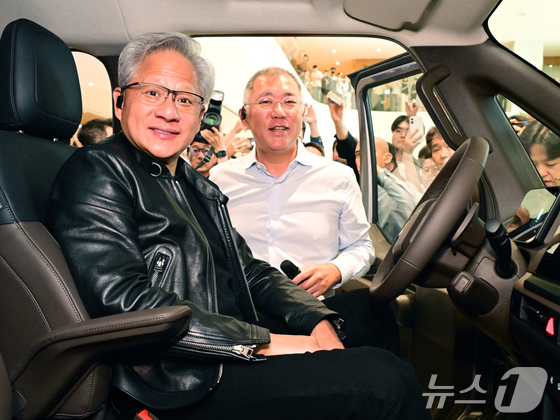
On Monday, Hyundai Motor Group Chairman Chung Euisun and NVIDIA Chief Executive Officer (CEO) Jensen Huang met at Hyundai’s Yangjae headquarters. During this meeting, Chairman Chung presented the group’s ambitious Saemangeum project, a Physical AI initiative, which Huang enthusiastically dubbed an AI Valley.
Hyundai Motor Group has earmarked a substantial investment of 9 trillion KRW (approximately 5.9 billion USD) for the Saemangeum site in North Jeolla Province. This investment will fund the gradual development of a robotics manufacturing and learning hub, alongside a state-of-the-art AI data center. The project will utilize 50,000 NVIDIA Blackwell graphic processing units (GPUs), which Hyundai announced it would acquire last October. Should NVIDIA participate in this AI Valley, it would mark a significant leap beyond mere component exchange, potentially fostering a robust Physical AI ecosystem in the Saemangeum region.
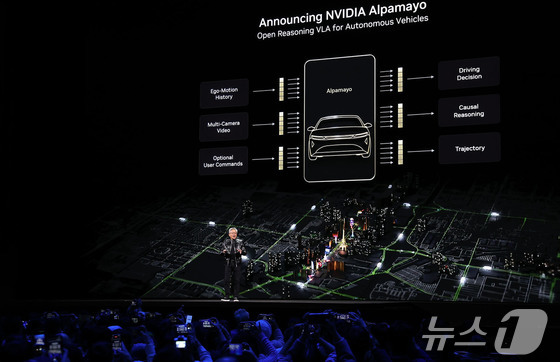
As collaboration intensifies across the Physical AI ecosystem, industry analysts predict that Hyundai Motor Group will likely partner with NVIDIA in developing autonomous driving technology. A key factor in this potential partnership is NVIDIA’s Alphamayo, an autonomous driving AI model unveiled at the Consumer Electronics Show (CES) in January. Alphamayo represents a breakthrough in autonomous driving, integrating perception, decision-making, and control into a single, comprehensive AI neural network.
Alphamayo: Tackling the Black Box Challenge with Advanced Reasoning, Promising Cost-Effective R&D Through Hyundai-NVIDIA Synergy
Alphamayo stands out as the world’s first autonomous driving model to incorporate causal reasoning through the vision-language-action (VLA) method, building upon the end-to-end (E2E) approach where AI learns from human driving behaviors. While E2E systems excel at handling unexpected road situations compared to traditional rule-based methods, they have been criticized for their black box nature, making it difficult to explain decision-making processes. The VLA method addresses this by introducing language-based causal reasoning, offering clarity in the decision-making process.
The potential adoption of NVIDIA’s Alphamayo by Hyundai could yield significant benefits for both companies, including reduced development costs and enhanced synergy between autonomous driving hardware and software. Lee Jae-kwan, a research fellow at the Korea Automotive Technology Institute, notes that while Alphamayo’s VLA concept is impressive, integrating it into vehicles will require substantial investment, comparable to developing mass-production cars, as it’s not yet embedded software. Conversely, Hyundai possesses mass production technology and real-world data, but developing comprehensive autonomous driving software in-house would be financially challenging.
The appointment of Park Min-woo as president of Hyundai’s Advanced Vehicle Platform (AVP) division and CEO of 42Dot in January has further fueled expectations for Alphamayo’s adoption. Park’s background as a former NVIDIA vice president, where he oversaw autonomous driving software development and commercialization, positions him as a key figure in potentially bridging the gap between research and practical application of VLA technology in vehicles.
Choi Jun-won, a professor at Seoul National University’s Department of Electrical and Computer Engineering, observes that Park’s appointment has deepened the collaboration with NVIDIA, sparking speculation about joint efforts in Alphamayo’s mass production. This aligns with both companies’ goals of expanding their business through Physical AI advancements.
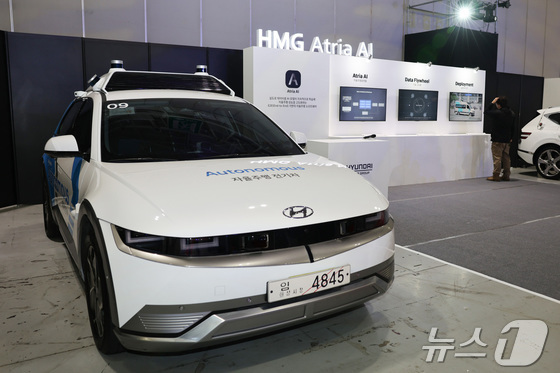
However, even if Hyundai adopts Alphamayo, the group is likely to continue developing its proprietary autonomous driving AI models. Hyundai plans to equip approximately 200 vehicles with its in-house E2E autonomous driving AI model, Atria AI, for demonstration projects in Gwangju starting in the latter half of this year. This marks a significant shift from traditional rule-based systems to E2E autonomous driving on public roads, viewed by the industry as a major milestone. Several domestic autonomous driving startups, including Autonomous A2G and RideFlux, will participate in these demonstrations, aiming to develop and refine Korean-specific AI autonomous driving technologies.