LSCUS, the U.S. subsidiary of LS Cable & System, has recently secured contracts for artificial intelligence (AI) data center projects from tech giants like Google, Meta, and Amazon.
Industry sources reported on Tuesday that LSCUS has accelerated its North American market expansion by adding a new project worth approximately 4 trillion KRW (about 2.57 billion USD) to its existing busduct supply contracts in the U.S. AI data center market, which it began securing last year.
Busducts, often called the arteries of AI data centers, are power distribution systems that supply electricity to servers and racks within data centers. Unlike traditional wiring methods that use multiple cables, busducts efficiently transmit high currents through copper or aluminum conductors housed in metal enclosures.
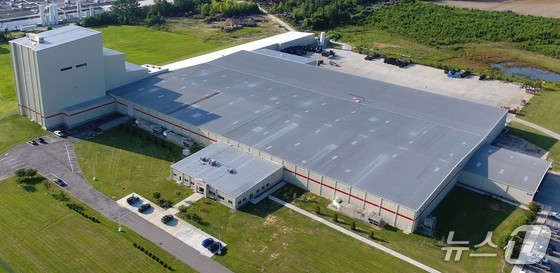
LSCUS leverages its local U.S. production system to supply products to global tech firms. The company’s revenue is projected to surge by over 60%, from about 463.5 billion KRW (about 298 million USD) in 2025 to 772.5 billion KRW (about 496 million USD) this year.
Market research firm MarketsandMarkets forecasts the global data center busduct market to grow from 5.3 billion USD in 2025 to 9.6 billion USD by 2032.
The busduct market differs significantly from the general wire market. While power companies, energy performance certificates (EPCs), and construction firms dominate the wire market, the busduct market primarily serves data center operators, semiconductor companies, electrical design firms, and global equipment manufacturers.
LS Cable, the market leader in South Korea’s busduct sector, has supplied products to major landmarks and industrial facilities worldwide, including Seoul’s Lotte World Tower, Samsung Electronics’ Pyeongtaek campus, Singapore’s Marina Bay Sands, and Dubai’s Burj Al Arab. Industry experts consider this track record one of the strongest barriers to entry in the busduct market.
An industry insider emphasized that busducts aren’t products you can supply immediately after certification. Customer trust is built on decades of design expertise, construction experience, and operational performance.
This underscores LSCUS’s competitive edge. The company is establishing a local production system and customer network in the U.S., drawing on LS Cable’s accumulated busduct technology and project execution experience. Recent AI data center project wins further highlight this advantage.
Industry observers view these contract wins as more than just new agreements. They signal Gaon Cable’s evolution from a traditional wire manufacturer focused on power cables to a key supplier of power infrastructure for AI data centers.
The financial impact is substantial. While Gaon Cable reported consolidated revenues of approximately 2.6 trillion KRW (about 1.7 billion USD) last year, LSCUS’s long-term supply contracts are said to exceed 5 trillion KRW (about 3.2 billion USD). Given the nature of framework agreements, supply volumes could increase further as data center construction expands. Profitability is also expected to surpass that of traditional wire businesses.
Gaon Cable has also been preparing to enter the U.S. distribution cable market. The company can now supply both power cables for transmission and distribution networks and busducts for internal data center power distribution. This positions them to cover the entire power infrastructure spectrum for AI data centers, from external grids to internal systems.
An industry expert noted that in the AI era, power infrastructure is becoming as crucial as semiconductors. Gaon Cable exemplifies the transformation of a traditional wire manufacturer into a cutting-edge power infrastructure provider for AI data centers.