LG is accelerating the creation and spread of artificial intelligence (AI) era standards across three key areas: humanoid robots, AI factories, and mobility, all built on NVIDIA’s platform. They’ve announced plans to fast-track the development of next-generation humanoid robots using NVIDIA’s Isaac GR00T inference model, with a public unveiling slated for Q1 next year.
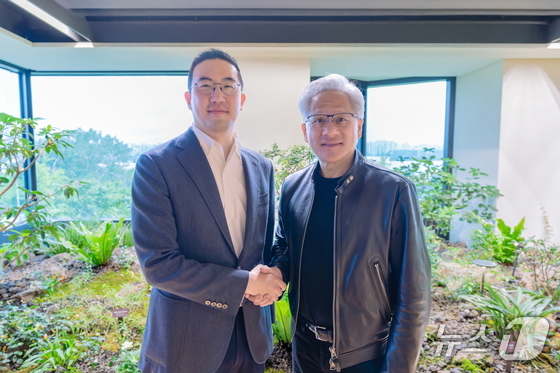
On Thursday, LG Chief Executive Officer (CEO) Koo Kwang-mo and NVIDIA CEO Jensen Huang inked a Memorandum of Understanding (MOU) for strategic business collaboration at NVIDIA’s headquarters in Santa Clara, California.
This MOU aims to move beyond mere tech exchanges and solution provisions. Instead, it focuses on concrete collaboration in pivotal future industries like robotics, AI factories, and mobility, emphasizing tangible outcomes and swift cooperation.
Koo noted that as the partnership gains momentum, they’ve clearly defined the joint endeavors in AI factories, physical AI, and mobility. The goal is to accelerate AI adoption by establishing industry-leading benchmarks.
Huang stated that leveraging years of partnership, it’s combining LG’s product engineering and manufacturing prowess with NVIDIA’s tech to usher in a new era for robots, AI factories, and self-driving vehicles.
The signing ceremony was attended by key figures including LG Chief Operating Officer (COO) Kwon Bong-seok, LG Electronics CEO Ryu Jae-cheol, LG Uplus CEO Hong Beom-sik, LG CNS CEO Hyun Shin-kyun, LG Science Park head Jeong Soo-heon, and LG AI Research Institute co-chair Lee Hong-rak.
Humanoid Robot Development Aims For Q1 2027 Debut
In robotics, LG is ramping up development of a bipedal humanoid robot based on NVIDIA’s Isaac GR00T, targeting a public reveal in early 2027.
Isaac GR00T serves as a reference design platform for open humanoid robot development. Isaac enables robots to learn intelligence and behaviors through simulations, while GR00T acts as the general-purpose robotic foundation model, mimicking human brain functions.
The robot will also incorporate NVIDIA’s Halos for Robotics and Jetson Thor. Halos is a comprehensive safety system for industrial settings, covering physical safety to cybersecurity. Jetson Thor is a high-performance computing module designed for on-device AI in next-gen robotics and autonomous driving, particularly humanoid robots.
LG plans to integrate technologies from its major affiliates into this robot, including LG Electronics’ actuators, LG Innotek’s sensors, and LG Energy Solution’s batteries. This strategy aims to showcase LG’s unified physical AI capabilities, merging NVIDIA’s AI tech with LG’s expertise.
Additionally, LG will deploy its wheel-based humanoid robot, Cloyde, in the washing machine production line at its Tennessee factory this year. This real-world test aims to enhance the robot’s performance and versatility, with plans to expand its use to various settings, from global manufacturing facilities to homes and commercial spaces.
LG CNS will also collaborate on building a robot data factory using its PhysicalWorks platform. This partnership aims to implement a Physical AI data factory in real-world settings, iterating through data collection, generation, learning, and validation.
Through its NVIDIA partnership, LG will gain valuable experience with robot data and manufacturing environments, bolstering its in-house Robot Foundation Model (RFM). The company plans to leverage NVIDIA’s Isaac GR00T ecosystem to continually enhance its AI capabilities and secure a competitive edge in robotics.
Both firms will form a joint task force of technical and business experts to ensure effective collaboration. This team will work closely on research and development (R&D), field testing, and commercialization to quickly turn key projects into concrete results.
AI Factories and Next-Gen AIDV to Cement LG’s Unified Competitiveness
LG and NVIDIA are joining forces to create a market-leading AI factory. This concept refers to a smart production system that uses data as raw material to consistently produce and distribute AI models and services. It includes infrastructure like AI data centers (AIDC) designed for high-performance graphic processing unit (GPU) computing.
NVIDIA’s DSX AI factory architecture aims to create a unified LG presence in the AI data center field. It will integrate LG Electronics’ cooling solutions, LG Energy Solution’s batteries, LG CNS and LG Uplus’s design and operational expertise, and LS’s power solutions. DSX is NVIDIA’s AI factory optimization platform, managing everything from design to simulation and operation.
In the first half of 2027, they’ll establish a reference site to test and validate LG’s cooling, power, and IT technologies based on NVIDIA’s Vera Rubin. By early 2028, they plan to expand this to an 80-megawatt facility in Cheonan, South Chungcheong Province.
In mobility, LG will commercialize the next-gen AI Defined Vehicle (AIDV) platform using NVIDIA’s technology. AIDV represents a new mobility concept where AI leads all aspects of vehicle operation. It goes beyond software-defined vehicles, using learning-based algorithms for driving decisions and services, with embedded AI and large language models enabling real-time perception, prediction, and personalization.
LG aims to develop a high-performance computing platform for next-gen AIDVs by combining its in-vehicle infotainment and software capabilities with NVIDIA’s DRIVE Hyperion platform.
By leveraging NVIDIA’s AI-based autonomous driving tech and vehicle computing platform, LG plans to expand from its current focus on in-vehicle infotainment to the autonomous driving sector. This move aims to offer next-gen vehicle solutions integrating self-driving features and in-car AI services to global automakers, opening new growth opportunities in the mobility market.