SK Telecom said on July 15 that it has identified early-stage candidate compounds that could be used in the development of targeted therapies for hard-to-treat cancers through joint research with SK Biopharmaceuticals (326030) using artificial intelligence (AI).
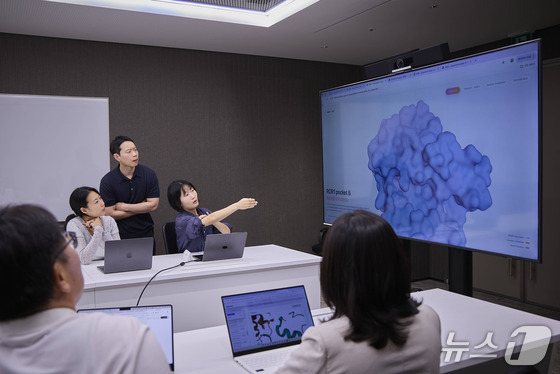
Through the research, the two companies generated and screened a large number of binder candidates capable of binding to “ROR1,” a protein expressed on the surface of cancer cells.
The companies then confirmed through laboratory testing that two of the selected binders showed potential as early-stage candidate compounds.
A binder is a substance designed to bind to a specific target, such as cancer cells. Discovering new binders requires evaluating multiple factors simultaneously, including whether they effectively bind to the target and whether the molecular structure remains stable.
ROR1 is a tumor-associated cell surface protein that is highly expressed in various blood cancers and solid tumors. Because it appears at higher levels than normal in some cancer types, it has drawn attention in the development of targeted cancer therapies.
In the research, SK Biopharmaceuticals established a strategy for discovering new binders based on its experience in drug development.
SK Telecom used AI technology to generate large numbers of new binder candidates and analyzed their potential to bind with ROR1, selecting candidates for laboratory validation.
The companies applied machine learning techniques that combine and represent protein fragments in various ways. They also used reinforcement learning (RL), allowing AI to assign higher rewards to combinations with greater structural stability and identify optimized new binder structures.
During the screening process, SK Telecom used its GPU resources to process multiple new binder candidates in parallel. The AI model then rapidly predicted and analyzed how each candidate could structurally bind with ROR1 and the likelihood of actual binding, efficiently narrowing down candidates for laboratory testing.
As a result, the research was completed in about five months. This shortened the early-stage drug discovery period by more than 60% compared with SK Biopharmaceuticals’ conventional approach, which typically took one to two years.
Cho Dong-yeon, head of AI Convergence at SK Telecom, said, “Based on this achievement, we are also considering expanding technological collaboration across the broader bio-AI field, including the development of bio-specialized large language models (LLMs) using our proprietary AI foundation models.”
Meanwhile, SK Biopharmaceuticals is also conducting joint AI drug discovery research with Insilico Medicine, a global generative AI-based drug development company. The company is utilizing Insilico’s AI drug discovery platform, “Pharma.AI,” during the early discovery and preclinical stages.