Global tech giants like Google and Tesla are ramping up their investments in artificial intelligence (AI), sparking optimism in South Korea’s semiconductor industry, particularly for companies like Samsung Electronics and SK Hynix. The surge in AI infrastructure investments is bolstering demand for high-bandwidth memory (HBM) and server dynamic random access memory (DRAM), indicating that the semiconductor boom is likely to persist. This trend is also expected to alleviate concerns about a potential market peak.
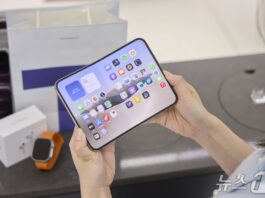
Of particular interest is Samsung’s decision to incorporate its proprietary mobile application processor (AP), the Exynos 2600, into the newly launched Galaxy Z Flip 8. This move is anticipated to boost performance in the company’s struggling non-memory semiconductor division.
Big Tech Doubles Down on AI Investments, Fueling Robust Demand for HBM and DRAM
Industry reports from Thursday reveal that Alphabet, Google’s parent company, is set to expand its AI infrastructure investments following strong growth in its cloud business during the second quarter.
Google Cloud’s revenue skyrocketed to 24.8 billion USD, marking an 82% year-over-year increase. The division’s operating profit margin climbed to 35.6%, while its cloud backlog swelled by over 50 billion USD to reach 514 billion USD.
In response, Alphabet has revised its capital expenditure (CapEx) forecast upward from 180-190 billion USD to 195-205 billion USD. Despite significantly boosting data center capacity over the past three years, demand continues to outpace investment, resulting in ongoing supply constraints. The company also projects substantial CapEx increases for 2027.
Analysts predict that Google’s investment expansion will drive up demand for memory semiconductors. Jung Woo-sung, an analyst at LS Securities, noted that the simultaneous occurrence of supply constraints and increased capital expenditure bodes well for sustained AI demand in the memory sector. LS Securities also highlighted that the majority of Google’s tensor processing unit (TPU) system contracts are slated for revenue recognition in 2027, enhancing visibility for future AI accelerator and HBM demand.
Tesla is also ramping up investments in future technologies, including AI and robotics. The company invested 5.79 billion USD in the second quarter alone, with annual capital investment expected to exceed 25 billion USD. This represents a 142% year-over-year increase in quarterly investment and a tripling of annual investment.
The ongoing expansion of AI computational infrastructure for autonomous driving, robo-taxis, and humanoid robots like Optimus is expected to underpin semiconductor demand. While Tesla’s business model differs from Google’s, its commitment to AI investments despite performance pressures underscores the persistent global enthusiasm for AI.
The unwavering AI investments from Big Tech are a positive sign for Samsung Electronics and SK Hynix. Large-scale AI data centers require not only HBM but also various memory semiconductors, including server DRAM and NAND. As AI investments translate into actual data center expansions, the demand base for memory is set to broaden.
Samsung’s Exynos Gains Ground, Non-Memory Sector Shows Promise
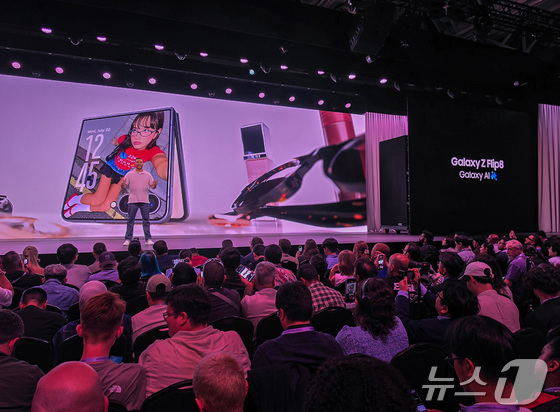
Samsung Electronics is poised for a rebound in both memory and non-memory sectors. On Wednesday, Samsung unveiled its new foldable phone, the Galaxy Z Flip 8, featuring its in-house mobile AP, the Exynos 2600. This move follows the incorporation of its proprietary AP in the Galaxy S26 series earlier this year, marking a continued push into flagship smartphones.
Reports suggest that the Z Flip 8 will feature a mix of the Exynos 2600 and Qualcomm Incorporated’s Snapdragon, depending on the region.
Industry observers are closely watching the continued adoption of Exynos in flagship devices. As Exynos chips are designed by Samsung’s System LSI division and manufactured by foundries, increased shipments are expected to boost the performance of the non-memory business.
The deployment of the Exynos 2600 in both the Galaxy S26 and Z Flip 8 is seen as validation of its performance and mass production capabilities. This success could pave the way for broader application and increased volume of Samsung’s proprietary APs. The company is already developing the next-generation Exynos 2700, targeting integration into next year’s flagship smartphones.
Recent upticks in memory prices are also beneficial for Samsung’s semiconductor business. While rising memory costs pressure the Device Experience (DX) division responsible for smartphones, they boost selling prices and profitability for the Device Solutions (DS) division, which handles semiconductors.
However, aggressive AI investments by Big Tech don’t automatically translate to windfalls for domestic semiconductor firms. Prolonged massive capital expenditures could necessitate investment pace adjustments, potentially leading to a slowdown in memory demand.
Nevertheless, analysts currently see stronger signals of demand expansion than AI investment deceleration.