

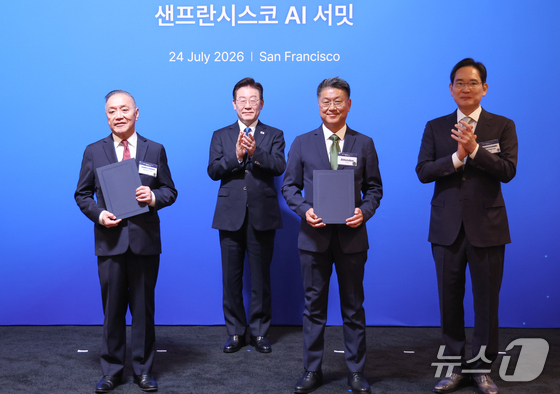
Samsung Electronics has secured a major partnership with U.S. fabless semiconductor company Broadcom to manufacture next-generation artificial intelligence (AI) chips, marking a significant milestone in the company’s efforts to revive its foundry business. Industry analysts say the deal demonstrates renewed confidence in Samsung’s advanced 2-nanometer manufacturing technology and strengthens its position against market leader TSMC.
The agreement also expands Samsung’s growing roster of AI customers, following recent wins with Tesla and Anthropic, further reinforcing its ambitions to compete in the advanced semiconductor market.
AI customer wins validate 2nm technology
According to industry sources on July 27, Samsung and Broadcom recently signed a five-year memorandum of understanding (MOU) covering the supply of advanced memory products and AI chip manufacturing.
Broadcom is one of the world’s leading fabless semiconductor companies, supplying AI networking and data center chips.
Under the agreement, Samsung will supply next-generation high-bandwidth memory (HBM), including HBM4 and HBM4E, while manufacturing Broadcom’s next-generation AI processors using its sub-2nm foundry process and advanced packaging technologies.
The partnership comes as Samsung continues to build momentum in advanced chip manufacturing.
Earlier this year, Samsung secured a contract to manufacture Tesla’s next-generation AI6 autonomous driving chip using its 2nm process. It will also produce AI startup DeepX’s DX-M2 processor on the same technology.
Samsung’s 4nm process is currently used for products including Nvidia AI chip components, Samsung’s HBM4 base die, and Rebellions’ neural processing unit (NPU). Other customers across Samsung’s process portfolio include IBM’s Telum II processor and Spyre accelerator, Arm’s automotive chips, IBM Power processors, Nintendo Switch 2 GPUs, and Apple’s image sensors.
Industry observers say Broadcom’s decision to adopt Samsung’s 2nm technology is particularly significant. Leading fabless chipmakers typically select manufacturing partners based not only on cost, but also on production yields, manufacturing reliability, and advanced packaging capabilities.
The agreement is widely viewed as evidence that Samsung’s gate-all-around (GAA) 2nm process has gained meaningful credibility in the global market. It also suggests Samsung is beginning to translate improvements in advanced manufacturing technology into major commercial wins, narrowing a competitive gap that has long favored Taiwan Semiconductor Manufacturing Co. (TSMC).
Chairman Lee’s global outreach bears fruit
The Broadcom partnership is also being seen as the result of Samsung Chairman Lee Jae-yong’s ongoing global business strategy.
Lee has recently traveled to the United States, meeting with executives from major global technology and semiconductor companies as Samsung seeks to expand strategic partnerships. The South Korean government has likewise prioritized semiconductor and AI cooperation with the United States as part of broader economic diplomacy efforts.
Industry experts believe Lee’s global network, combined with government support and Samsung’s technological capabilities, helped pave the way for the agreement.
Brokerage firms also view the partnership as the beginning of a long-term relationship rather than a one-time deal.
In a report released on July 27, Meritz Securities analyst Kim Sun-woo said the long-term memorandum of understanding with Broadcom is “only the beginning,” adding that the collaboration is likely to expand into long-term supply agreements for HBM and server DRAM products.
Industry analysts believe the Broadcom partnership could become a turning point for Samsung’s foundry business. Although concerns over manufacturing yields and customer acquisition have weighed on the company in recent years, Samsung’s recent success in securing leading AI customers for its advanced manufacturing processes is beginning to shift market sentiment in its favor.