

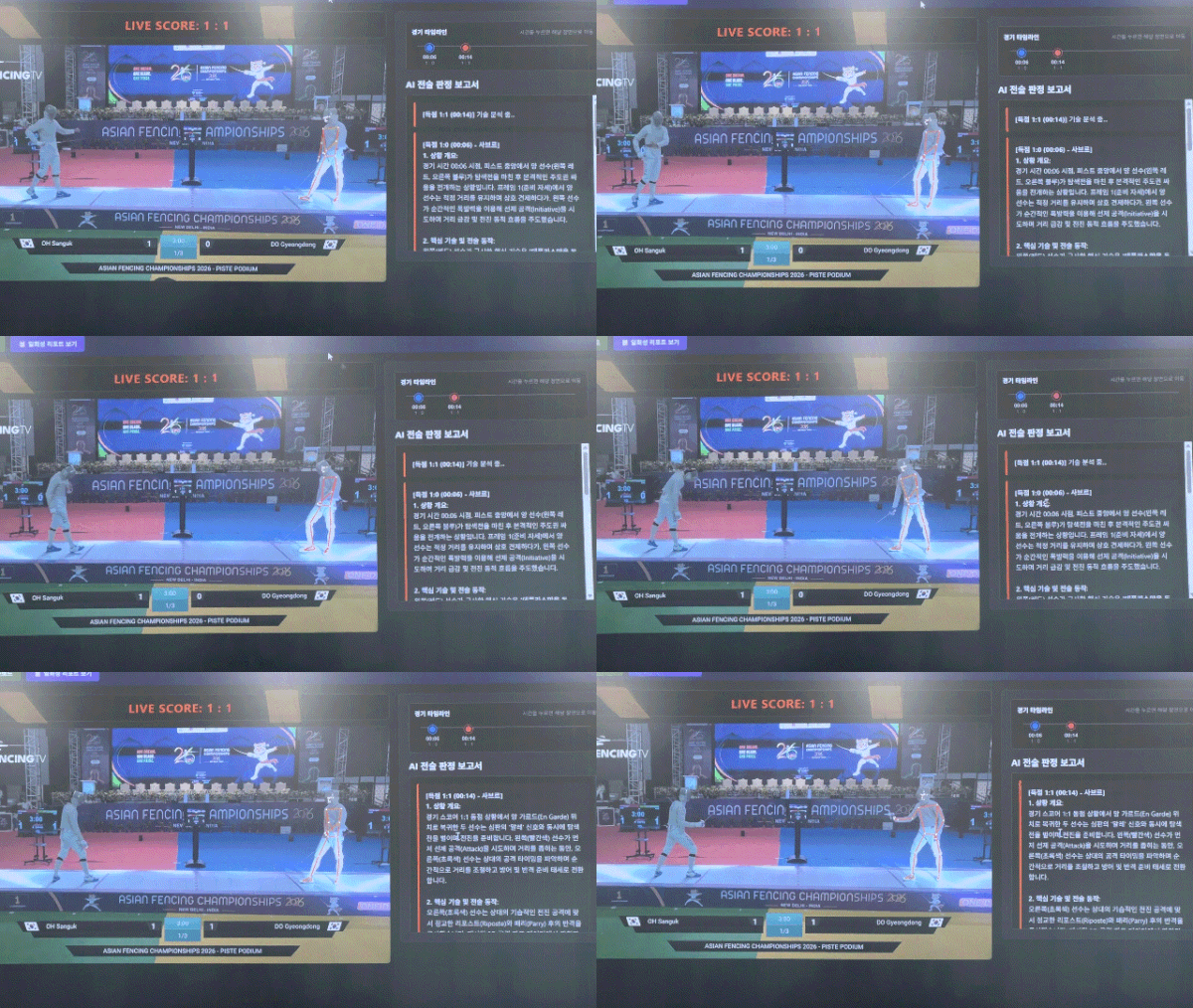
When I clicked the replay button for the game I just played, a timestamp appeared at the bottom of the screen. Clicking on the red markers along the timeline instantly replayed key battle scenes.
While this replay feature is familiar to gamers and eSports enthusiasts, it’s a different story in traditional sports.
Fencing, which requires close examination of opponents’ skills and referees’ judgment tendencies, has heavily relied on human analysis. After a match, performance analysts had to manually review entire footage to identify each scoring moment.
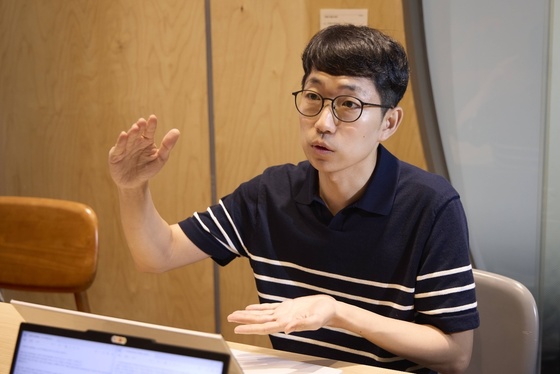
Choi Jong-hyuk, a manager at SK Telecom’s sports marketing team who has supported the national fencing team for over a year, wondered if artificial intelligence (AI) could automatically find important moments like in video games, helping players analyze their performances. This idea led to the development of the Fencing AI Nexus (SKT-FAN).
Before leading the fencing team, Choi gained experience in the eSports scene while managing T1, the team of renowned player Faker Lee Sang-hyeok. He drew inspiration for SKT-FAN from League of Legends’ replay feature.
Fencing is incredibly fast-paced, with each athlete moving differently and slight variations in referees’ decisions, Choi explained. Players review match videos to analyze their performance and identify areas for improvement, so there’s a significant need for efficient video analysis.
Taking Matters Into His Own Hands: AI as a Development Partner
In meetings with fencing athletes and coaches, the consistent request was for better video analysis tools. Players needed to review countless match videos to study opponents’ movements and their own performances, but finding and organizing relevant clips was time-consuming.
Choi initially envisioned an app where AI could identify scoring moments and create highlights.
He didn’t plan to develop it himself at first. After consulting external companies, he received a staggering 30 billion KRW (about 22.3 million USD) estimate for server costs alone. The budget and timeline made it impossible to meet the 2026 Asian Games deadline through outsourcing.
Determined to see his vision through, Choi decided to leverage generative AI for development. He purchased a server with his own funds, set it up at home, and took charge of everything from installing the operating system to creating the development environment and managing the server.
As a non-professional developer, Choi relied on generative AI as a development assistant. He would consult AI about the pros and cons of new technologies, conduct tests himself, and troubleshoot errors by modifying code. He compared various AI models, including ChatGPT, Gemini, and Qwen, to find the most suitable one for video analysis.
At first, his computer wasn’t powerful enough, and analyzing a single video could take hours, Choi recalled. An 8-hour video would take nearly 8 hours to analyze. If the results were incorrect, he had to start the entire process over.
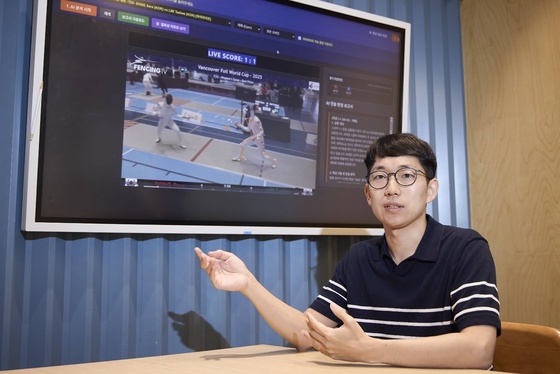
The first SKT-FAN prototype featured a simple highlight function where AI automatically identified and extracted scoring moments from videos.
Feedback from athletes and coaches transformed the prototype into a comprehensive performance analysis system. Choi continuously met with the coaching staff preparing for this year’s Asian Games, gathering input on essential features for training and match analysis, which he then incorporated into development.
Currently, SKT-FAN recognizes scoreboard changes and athletes’ movements to identify scoring moments, automatically generating timelines and highlights.
The system employs sensorless motion capture technology to track athletes’ joints and movements using standard match footage, enabling data collection on steps and posture changes.
By combining algorithms tailored to specific events like foil, epee, and sabre with large language models (LLMs), the system automatically generates performance analysis reports detailing athletes’ strengths, weaknesses, and match characteristics. The national fencing team has been using SKT-FAN in training since August.
From a Home Server to National Team’s AI Coach
As the system’s capabilities grew, managing it from a single home server became impractical. That’s when SK Telecom stepped in to provide development support.
What began as a single server purchased with personal funds expanded to eight servers and eventually 14 with company backing. This growth allowed for simultaneous analysis and processing of more videos and areas of focus.
Support staff joined Choi’s solo video analysis efforts. The in-house multimodal platform team helped apply existing video analysis technologies to fencing, while the server management team took over operations, allowing Choi to focus on development.
From a personal idea that started with a solo prototype, SKT-FAN evolved into a system used for national team training, backed by company resources and expertise.
The biggest reason this project succeeded was the trust of leaders who believed in him despite the uncertainties, Choi said. They encouraged him to try, even though he wasn’t a developer and it wasn’t his original role. They supported him with any necessary training, which was invaluable.
SK Telecom offers various participatory programs and internal training to enhance employees’ AI capabilities.
After the athletes and coaching staff use SKT-FAN during this year’s Asian Games, the team plans to refine its functionalities based on feedback from the 2027 event. They aim to continuously accumulate and analyze match data to improve accuracy, ultimately optimizing the system for the 2028 Los Angeles Olympics.
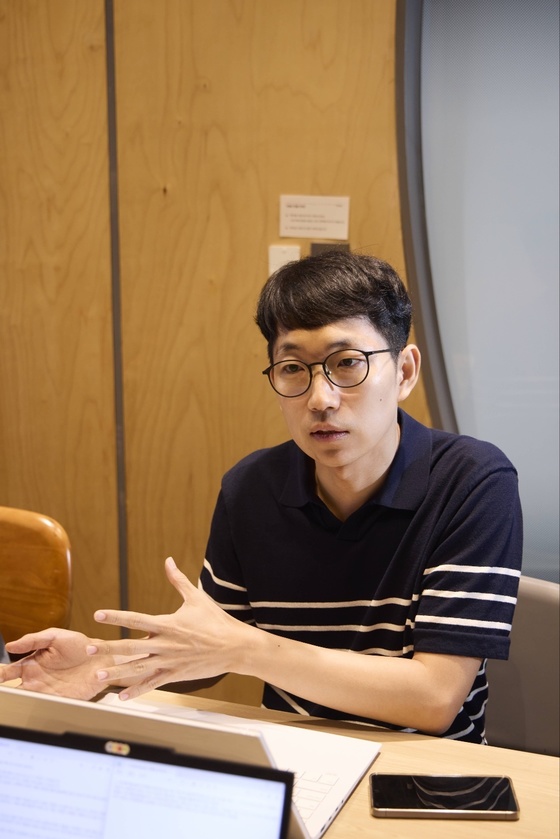
Looking ahead, Choi aims to continue innovating to support athletes’ success.
He believes a sports marketing manager’s role is to create the optimal environment for athletes to perform their best, he stated. The goal is to automate areas where AI excels, allowing coaching staff and athletes to focus on critical aspects of their performance.
Having created a service using AI as a non-developer, Choi emphasizes the importance of combining technical skills with domain expertise.
Rather than trying to create something grand from the start, he recommends addressing small work-related inconveniences with AI, Choi advises. A solid foundation in development skills combined with deep domain knowledge is essential to implement effective AI-driven solutions.