

Kakao is unveiling an artificial intelligence (AI) service that enables users to send messages or manage schedules with just a voice command on KakaoTalk.
Users can summon the beloved character Ryan on the KakaoTalk screen to request various tasks. The company plans to expand this service to handle orders, reservations, and money transfers via AI in the future.
KakaoTalk Introduces Agentic AI Service with Kanana Space
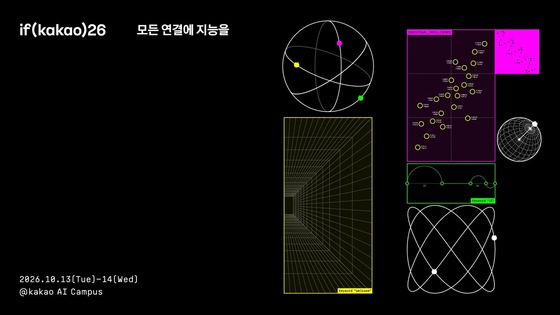
On Tuesday, Kakao revealed its AI strategy at the developer conference if Kakao 26 held at the Kakao AI Campus in Yongin, South Korea.
During the keynote session, Kakao Chief Executive Officer (CEO) Jeong Shin-a reflected on the company’s 15-year journey of connecting everything in the world, linking people, daily life, and online-offline experiences. She announced Kakao’s intention to elevate these connections to a new dimension.
Jeong introduced the concept of an Agentic AI Service, which aims to provide more intuitive ways for users to make requests and receive contextually appropriate responses based on individual preferences.
To realize this vision, Kakao unveiled several AI tools: Kanana Space, an AI assistant for KakaoTalk; Kanvas, a personal computer (PC)-based AI agent service; and Kanana, their proprietary AI model.
Kanana Space allows users to interact with the Ryan character, which appears when users swipe with two fingers on the KakaoTalk screen.
Users can use voice or text to send messages, manage schedules, conduct web searches, and adjust KakaoTalk settings. Casual conversations with Ryan are also possible.
Kakao plans to enhance Kanana Space, enabling users to place orders, send gifts, make reservations, and transfer money using voice commands alone.
For example, if a user mentions needing bottled water during a conversation, they can simply say, Order bottled water. The AI will then select the previously ordered water, apply any available coupons, and handle the ordering and payment process.
Starting today, Kakao is accepting pre-registrations on the Kanana Space website. In December, select applicants will be invited to participate in a closed beta test (CBT).
Kim Dae-nyun, Kakao’s head of design, emphasized that Kanana Space aims to make AI assistance accessible to everyone without requiring users to learn new interfaces. He stated that they’re making it easier to unlock KakaoTalk’s diverse capabilities with just a simple voice command.
Introducing Kanvas: Create Your Own AI Agent Team
Kakao also unveiled Kanvas, a service allowing users to create and run their own AI agents on PCs.
Kanvas connects users with appropriate tools and skills based on their requests, enabling them to configure the necessary functions for execution.
Within user-defined parameters, these agents can handle repetitive tasks, confirming critical steps with the user before completing assignments.
Kakao is also developing a feature that will allow users to share their custom-made agents.
The company envisions implementing an Integrated Agentic AI Interface that seamlessly connects various agents to users’ daily lives.
A small-scale CBT for Kanvas is planned for later this year, with a broader rollout expected in the first half of next year, introducing a new space in KakaoTalk where users can connect with their personalized agent teams.
Kakao plans to support not only agents created with Kanvas but also those developed using other tools, making them accessible through KakaoTalk.
The company also outlined the technological direction for its in-house AI model, Kanana.
Kakao’s strategy involves using on-device models for smartphone-compatible requests while connecting more complex tasks to larger models to enhance performance and efficiency.
They showcased the omnilingual model Kanana-o, which understands text, images, and voice, responding vocally, as well as Kanana Live, a full-duplex technology enabling simultaneous listening and speaking.
Kakao developed both the encoder and decoder for Kanana-o in-house and plans to release them as open-source to contribute to the domestic and global AI ecosystem.
The company is also preparing Project Mosaic, which aims to connect users’ memories and experiences into meaningful contexts.
This project will allow agents to access only necessary information within approved boundaries based on user requests and desired outcomes, enabling agents with different roles to understand and collaborate within a shared context.
Additionally, Kakao plans to strengthen its safety framework to ensure that agent actions and plans are executed only within user-agreed limits.
CEO Jeong reaffirmed that connecting everyone remains Kakao’s unwavering commitment, even in the AI era. She emphasized their goal to enhance these connections with intelligence that understands individual needs, making AI accessible in everyday life for everyone.
This year’s if Kakao conference, themed Intelligence for All Connections, runs until October 14. It features 55 sessions covering topics such as AI direction, trust and safety, models and agents, stability, and infrastructure.