

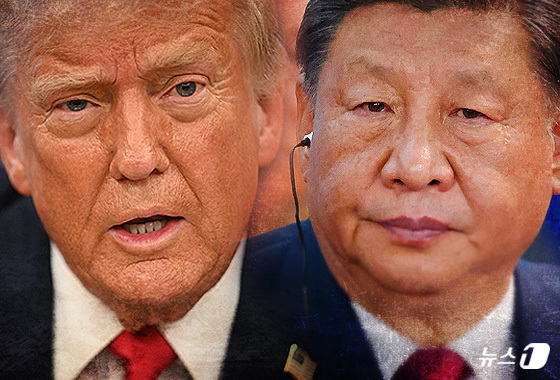
The global shipping industry is on edge as the maritime power struggle between U.S. President Donald Trump and Chinese President Xi Jinping intensifies.
China has established a legal basis for potential retaliatory measures against U.S. sanctions on its shipping companies, including port access restrictions and additional fees.
Experts warn that if the U.S.-China conflict escalates, it could lead to long-term decreases in cargo volumes and shipping rates.
On Thursday, international media reported that Li Qiang, Premier of China’s State Council, signed and promulgated amendments to China’s International Maritime Shipping Regulations on September 28.
The revised regulations empower the Chinese government to implement retaliatory measures such as increasing port docking fees, limiting port access, and restricting shipping data access if specific countries, including the U.S., discriminate against Chinese shipping companies, vessels, or crew members.
This move is widely interpreted as a response to the U.S. Trade Representative’s (USTR) decision to impose phased port usage fees on Chinese shipping companies and foreign-built car carriers starting mid-October.
In just two weeks, ships owned and operated by Chinese companies will face a fee of 50 USD per ton, while Chinese-built vessels will incur 18 USD per ton. These fees are set to increase annually, potentially reaching 140 USD and 33 per ton USD, respectively, by 2028.
The shipping industry is concerned that this conflict could disrupt U.S.-China maritime logistics. A contraction in bilateral trade could lead to a long-term decrease in overall cargo volumes, putting pressure on shipping companies’ profitability.
The Shanghai Container Freight Index (SCFI), which reflects global shipping route freight rates, has already fallen to its lowest level in 21 months, hitting the 1,100 mark.
Wall Street analysts project that HMM, South Korea’s largest container shipping company, will see its third-quarter operating profit plummet by 84% year-over-year to approximately 233.4 billion KRW (about 167 million USD).
Commenting on the situation, a professor of International Logistics at Chung-Ang University stated that while China’s measures may not directly impact our shipping industry significantly, the ongoing decline in U.S.-China freight rates will likely accelerate due to this conflict.
A shipping industry insider noted that the proliferation of regulations ultimately becomes an obstacle to trade, adding that shipping companies need to diversify their portfolios to mitigate potential difficulties.
However, some analysts suggest that both sides are engaging in a war of nerves to strengthen their negotiating positions ahead of an upcoming summit, implying that actual conflict may not materialize.