

On Monday, Minister of Trade, Industry, and Energy Kim Jung-kwan reported that U.S. Secretary of Commerce Howard Lutnick highly appreciates the agreement to pass the Special Investment Law for the U.S. in March.
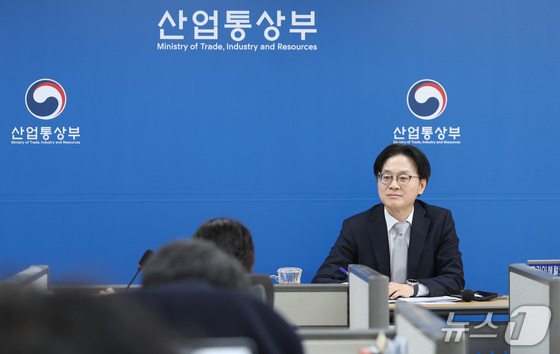
During a background briefing with reporters at the Government Complex in Sejong, Minister Kim revealed that he held two video conferences with Secretary Lutnick last week. They’re making gradual progress in the discussions.
He added that while he can’t predict if this evaluation influenced the delay in tariff increases, it seems to have had a positive effect. Typically, publishing in the government gazette takes 3 to 7 days. However, it’s been two weeks since President Donald Trump mentioned the increase. He believes its multi-faceted efforts have resonated with the U.S.
Below is a Q&A session between Minister Kim and the press:
Q: Do you think President Trump’s tariff increase comments will lead to an actual increase through the U.S. government gazette?
A: It is not predicting the timing of any tariff increase. Usually, the publication process takes 3 to 7 days, but it’s been about two weeks since President Trump mentioned it on January 27. Kim believes the various efforts have been communicated to the U.S. It’ll do its best to avoid any tariff increases.
Q: What arguments did you present to Secretary Lutnick right after the tariff increase policy was announced?
A: The U.S. likely expected progress from December after our November agreement on tariffs and investments. However, December had budget deliberations in the National Assembly, and January saw tensions between parties due to confirmation hearings. This made it difficult to discuss the Special Investment Law until now. Kim explained that Korea wasn’t intentionally delaying or being negligent, acknowledging that the U.S. might be comparing our progress unfavorably to Japan, where specific projects are being discussed without needing new legislation.
After returning to Korea, Kim had two more video conferences with Secretary Lutnick. They’ve made steady progress. Kim shared that they’ve agreed to pass the Special Investment Law in March. Secretary Lutnick highly valued this agreement. While he can’t say for certain if this evaluation influenced the delay in tariff increases, it seems to have had a positive impact.
Q: If the Special Investment Law passes the National Assembly, will the tariff increase be postponed or withdrawn?
A: Given that President Trump linked the tariffs to this law, Kim believes there’s a high chance of postponement if it passes. While situations can change, they’re focusing on resolving this issue as per the President’s statement.
Q: Some experts suggest the need for long-term preparations, even if we avoid this tariff increase, due to the possibility of future increases.
A: The current trade landscape is highly uncertain, regardless of tariffs, and we’re in for a long-term challenge. The policies, like the Manufacturing Artificial Intelligence (AI) Transformation (M.AX) initiative and the 5 Regions, 3 Special growth strategy, are preparing us for long-term competitiveness beyond just trade negotiations. Its immediate goal is to avoid any tariff increases.
This uncertainty will likely persist. The best it can do is manage it effectively. If both countries honor the agreements, Kim believes it can navigate these tariff issues.
Q: There’s speculation about the first major U.S. investment project, including energy and nuclear sectors. What’s the current status?
A: They’re discussing several projects, not just one specific one. Due to mutual security concerns, Kim can’t provide details, but it’ll announce them when appropriate.
It is also preparing various shipbuilding cooperation projects. Once the legislation passes and it reaches an agreement with the U.S., it’ll be able to announce these.
Q: Alongside tariff pressure, there’s also pressure from non-tariff barriers, like the recent congressional hearings on Coupang. Do you think this will impact the tariff situation?
A: It views the tariff and investment discussions separately from the Coupang issue. The core concern with Coupang is data privacy, an area where the U.S. is actually stricter than Korea. When Kim explained that its actions were in response to a potential leak of 80% of adults’ personal data, U.S. officials seemed to understand the position.
Regarding non-tariff barriers, they’re continuously engaging with relevant industries and departments, independent of the Coupang situation. It’ll convene the joint committee under the Korea-U.S. Free Trade Agreement (FTA) as needed.
Q: The U.S. Supreme Court’s ruling on President Trump’s mutual tariff policy is pending. How is it preparing?
A: It has an internal contingency plan for various scenarios: full unconstitutionality, partial unconstitutionality, and constitutionality. Kim can’t disclose specifics.
Q: Kim recently visited Canada to discuss submarine exports. It is competing with Germany; what are the chances?
A: Canada is discussing manufacturing cooperation with both South Korea and Germany under similar conditions, so it’s hard to predict. It is working closely with its submarine industry and will do the utmost to secure this opportunity.
Q: The Korea Chamber of Commerce and Industry (KCCI) announced an investigation into its controversial press release. Some say addressing fake news exceeds Kim ministry’s scope.
A: Kim was initially concerned about Korea’s inheritance tax issue based on reports of wealthy individuals emigrating. However, he was surprised to learn of problems with the data. He expected the KCCI to use credible sources, but it turned out to be from an immigration consulting firm that didn’t even mention inheritance taxes.
The public trusts KCCI announcements, which is why this is problematic. As a public institution, it must ensure it doesn’t spread misinformation.
This investigation is more about oversight of the KCCI than addressing fake news. It’ll decide on any actions based on the investigation results.
Q: There have been issues of embezzlement and mismanagement in resource public enterprises. What’s the plan for reform?
A: As the responsible minister, Kim takes these issues very seriously. The moral hazard and complacency in these enterprises are unacceptable for 21st-century South Korean public institutions. He apologizes to the public and is preparing reform measures.
Q: Kim has been visiting regions regarding the 5 Regions, 3 Special policy. Is he considering incentives for local business investments?
A: Kim is gathering input on bold incentives during these visits. It’ll discuss with relevant departments before announcing. Meeting with local youth has deepened my concern about regional growth. As policymakers and the older generation, it must find ways to support these young people effectively.