

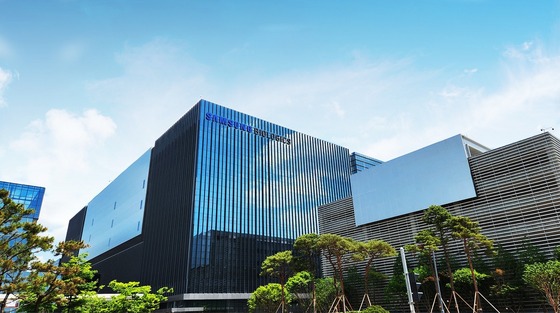
Samsung Biologics is gaining prominence as a pure-play biopharmaceutical contract development and manufacturing organization (CDMO). The company has solidified its market capitalization at around 80 trillion KRW (about 56.2 billion USD). Through a strategic spin-off, Samsung Biologics has positioned itself as a dedicated CDMO, while Samsung Bioepis now focuses on pharmaceutical research and development (R&D).
According to Samsung Biologics’ audit report released on Thursday, the spin-off of Samsung Bioepis last year resulted in the exclusion of 13 companies from the consolidated financial statements, including Samsung Bioepis and Samsung Bioepis U.S. This change reflects the accounting impact of the spin-off.
On the same day, Samsung Biologics’ stock opened at 1,733,000 KRW (about 1,217 USD), up 5,000 KRW (about 3.5 USD) from the previous day’s close. The company’s market capitalization stands at approximately 80 trillion 2,454 billion KRW (about 56.38 billion USD).
Earlier, on May 22 of last year, Samsung Biologics’ board of directors approved the establishment of Samsung Epis Holdings, effective October 1. The company’s revised listing and Samsung Epise Holdings’ relisting took place on May 29 last year.
Following the spin-off, Samsung Biologics now maintains only its subsidiary, Samsung Biologics America, as a consolidated entity.
Post-split, Samsung Biologics is concentrating on growth strategies to become a global top-tier CDMO. The company aims to achieve a production capacity of 1.32 million liters across eight plants by 2030. It plans to expand its facilities for various modalities, including monoclonal antibodies (mAb), bispecific antibodies (BsAb), mRNA, antibody-drug conjugates (ADC), and adeno-associated viruses (AAV).
Samsung Biologics has secured global production bases in the U.S. and Japan and has established relationships with 17 of the top 20 pharmaceutical companies worldwide. The company expects to expand its CDMO client base to include the top 40 pharma firms.
The company plans to enhance its capabilities in high-value new modalities, focusing on pre-filled syringes (PFS), ADC finished pharmaceuticals (DP), and cell and gene therapies (CGT).
The spin-off was deemed necessary to ensure sustainable growth in the CDMO business amid rapidly changing external factors such as tariffs and drug price reductions. It also aims to address fundamental risks, including potential conflicts of interest in parent-subsidiary relationships that could concern clients.
The newly established Samsung Epis Holdings is leveraging its experience from growing Samsung Bioepis into a top-five global biosimilar company within a decade. The company is now focusing on developing new business areas, including novel modalities.
Samsung Epise Holdings plans to launch over 20 biosimilar products through Samsung Bioepis by 2030. It has already rolled out major products like Enbrel, Humira, Rituxan, Soliris, and Stelara globally in its first two waves. The company intends to commercialize its third wave of products in line with patent expirations of drugs such as Keytruda, Eylea, and Prolia.
Additionally, it will oversee the discovery of new businesses based on platform technologies, investments in cutting-edge technologies, and the development of global mergers and acquisitions (M&A) strategies. As an R&D-focused holding company, it is poised to serve as a springboard for enhancing long-term growth drivers.