

On Thursday, the South Korean government announced that it had deliberated and approved the 2026 Settlement Support Implementation Plan for North Korean Defectors. This plan includes discussions on expanding the use of the term North Korean residents, strengthening self-reliance support systems, and other related measures.
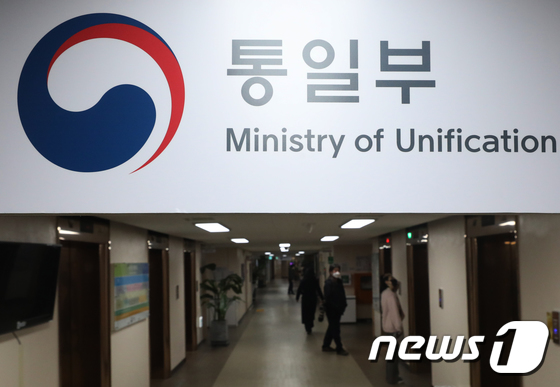
The Ministry of Unification held a full meeting of the Council for the Protection and Settlement Support of North Korean Defectors, which included participation from 38 organizations. This marked the first such meeting since the current administration took office and was held in person for the first time in about two years.
This implementation plan, based on the Fourth Basic Plan for North Korean Defectors Settlement Support (2024-2026), outlines policy tasks in areas such as education, employment, awareness improvement, and crisis management. It comprises six key strategies and 45 specific tasks.
The six key strategies are: 1) Shifting perception to embrace North Korean residents as partners in unification, 2) Strengthening protection and initial settlement support under the principle of universal acceptance, 3) Supporting education for future generations and healthy family formation, 4) Promoting quality job creation and self-sufficiency, 5) Establishing a comprehensive safety net without blind spots, and 6) Enhancing governance of policies for North Korean residents. Detailed tasks for each strategy were presented separately.
Notably, to improve awareness and promote social integration, the government plans to expand the use of the term North Korean residents instead of the widely used defectors. This new term means people with North Korea as their homeland. The government aims to actively gather public opinion and build societal consensus around this new terminology. They will also consider appropriate English translations to convey the term’s intended meaning and usage.
However, exceptions will be made in cases where defection itself carries specific meaning, such as in discussions about defection routes, experiences, motivations, or history, as well as when referring to pre-defection occupations. This distinction is necessary to avoid confusion, especially when discussing occupations that may have dual meanings.
The Ministry of Unification selected North Korean residents as the preferred term after comprehensive reviews of research and expert advice from September to November last year. They believe this term neutrally and inclusively expresses the complex identity of North Korean defectors living as South Korean citizens.
The ministry will also explore ways to strengthen protective measures for North Korean defectors who request personal safety. In particular, they plan to review adding regulations for handling personal belongings (such as retrieval or disposal) beyond the current legal requirements for checking items of those residing in temporary protection facilities.
The government aims to promote a culture of hiring North Korean residents and enhance incentives for companies that employ them. Specifically, they plan to expand the priority purchase system for products made by exemplary employers of North Korean residents through amendments to the North Korean Defectors Act.
Kim Nam-jung, the Vice Minister of Unification and chair of the Council for the Protection and Settlement Support of North Korean Defectors, stated that while settlement conditions are gradually improving thanks to policy support from various agencies and the efforts of each North Korean resident, there are still gaps in the system. He urged all sectors to address these gaps and faithfully implement the established action plan.
The meeting included participation from various central government departments, including the Ministries of Education, Foreign Affairs, Unification, Justice, National Defense, Interior and Safety, Culture, Sports and Tourism, Agriculture, Food and Rural Affairs, Trade, Industry and Energy, Health and Welfare, Employment and Labor, Gender Equality and Family, Land, Infrastructure and Transport, Oceans and Fisheries, SMEs and Startups, as well as the Office for Government Policy Coordination, National Security Office, National Intelligence Service, and National Police Agency. Representatives from 17 metropolitan and provincial governments also attended.