

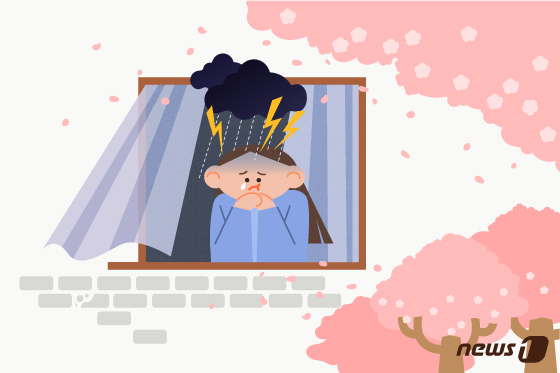
Spring, often seen as a season of renewal, can be a difficult time for some. This period is particularly notable for having the highest suicide rates, underscoring the critical need for awareness and early intervention in depression. Mental health experts stress the importance of not overlooking even subtle signs of emotional distress.
As biological rhythms shift in spring, paying attention to depressive symptoms becomes especially important.
Medical professionals said that the increased sunlight in spring naturally boosts serotonin levels, often called the “happiness hormone,” which can elevate mood. While this generally enhances overall well-being and energy, individuals experiencing depression may struggle to adapt to these rapid physical and hormonal changes.
The sudden spike in serotonin levels can create a dissonance with existing feelings of sadness, potentially exacerbating anxiety and deepening depression. It’s comparable to being momentarily blinded by a sudden bright light; the mind, accustomed to darkness, becomes disoriented by the abrupt change.
Dr. Kim Min Kyung, a psychiatrist at Ilsan Cha Hospital, said that while most people adapt well to seasonal changes, those with depressive tendencies often find the transition difficult, which can intensify anxiety and depression.
Spring is a season of new beginnings, marked by school admissions and job searches, which can create significant psychological pressure for many. If persistent sadness interferes with daily activities like studies or work, or if it’s accompanied by excessive guilt or suicidal thoughts, it’s crucial to seek professional help.
According to suicide statistics from the Ministry of Health and Welfare, spring consistently shows higher suicide rates, with monthly suicide deaths from March to May about 20% higher than in winter months. This phenomenon, known as the “Spring Peak,” is observed globally.
Dr. Lee Ah Ra from Kyung Hee University Hospital said the increase likely reflects a combination of factors, including increased activity leading to fatigue, higher social expectations, and feelings of loneliness.
Individuals with severe depression can experience dramatic emotional fluctuations even with minor daily changes, often feeling intense despair. During spring, when biological rhythms are in flux, it’s vital for friends and family to be especially attentive. Improving depression often involves a combination of medication, psychotherapy, and cognitive behavioral therapy, guided by trusted healthcare professionals.
During acute phases, medication is typically the most effective treatment. Patients must be cautioned against prematurely discontinuing medication, even if symptoms improve, as this significantly increases the risk of relapse.
Overcoming depression requires not only personal effort but also strong support from one’s social circle. Expressing emotions openly rather than suppressing them aids recovery. Keeping a journal or having honest conversations with trusted individuals can also be beneficial.
It’s crucial for supporters to listen without judgment and offer genuine empathy rather than trying to solve the problem. Warm concern and support can significantly alleviate depressive feelings. Depression is often likened to a cold of the mind, with a recovery process that can mirror that of a physical illness.
Dr. Lee noted that depression can become harder to treat with each recurrence, emphasizing the importance of following medical advice and adhering to treatment plans. She added that recognizing depression as a treatable condition is an important first step toward recovery.
To prevent depression, experts recommend maintaining stable daily routines to support biological rhythms. Practices such as mindfulness, focusing on the present rather than the past or future, and developing self-acceptance may also be beneficial.
Dr. Kim added that just as physical health is maintained through regular exercise, consistent small efforts to support mental well-being can help prevent depression, and seeking help from a mental health professional should not be delayed when needed.