

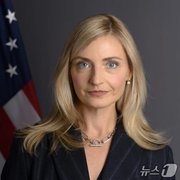
Sarah B. Rogers, U.S. Under Secretary of State for Public Diplomacy and Public Affairs, has announced plans to discuss the revised Network Act during her visit to South Korea.
After concluding her Japan trip, Under Secretary Rogers tweeted on Monday that she’s heading to South Korea to discuss shipbuilding, the Network Act, and K-pop diplomacy.
This statement formalizes the intent to directly convey concerns about the Network Act through diplomatic channels.
Under Secretary Rogers has previously criticized the Network Act.
On December 30 last year, she tweeted that while South Korea’s Network Act revision appears to address deepfakes, it actually has far-reaching implications that could undermine tech cooperation.
She argued that allowing victims to seek redress through civil lawsuits would be preferable to granting censorship powers to regulators, directly challenging the South Korean government’s legislative approach.
The State Department has also officially expressed serious concerns, warning that the law’s vague definition of false information could encourage platforms to preemptively censor content to avoid penalties.
The U.S. is particularly worried about the economic impact. The Trump administration views this legislation as an unnecessary trade barrier targeting American tech giants like Google and Meta.
They’ve noted similarities to the European Union’s (EU) Digital Services Act (DSA), which the U.S. considers discriminatory against its companies and has led to retaliatory measures, including travel bans on certain EU officials.
This U.S. stance goes beyond rhetoric and implies potential trade retaliation. U.S. Trade Representative Jamieson Greer has warned of a possible Section 301 investigation if South Korea doesn’t roll back its digital regulations.
In fact, on March 11, the Donald Trump administration initiated a Section 301 probe targeting 16 major trading partners, including South Korea, China, the EU, Japan, Taiwan, and India, to establish a new tariff system replacing those deemed illegal by the Supreme Court.
The Network Act allows courts to impose punitive damages up to five times the actual harm if media outlets or content creators intentionally spread false information causing damage to others.
It also requires large platform operators to implement self-regulatory policies to prevent the spread of false information and take measures like content removal and account suspension.
This law has faced strong opposition from media and civil society groups in South Korea, who argue it could stifle free speech. As Under Secretary Rogers visits, all eyes are on whether the South Korean government can address U.S. concerns and find a diplomatic solution.