

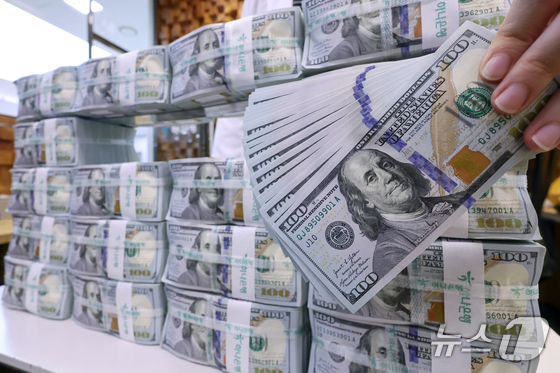
The KOSPI reached an all-time high amid growing expectations for a second round of negotiations between the U.S. and Iran, while the Dollar-Won exchange rate also opened lower.
In the Seoul Foreign Exchange Market on Tuesday morning, the Dollar-Won exchange rate started at 1,472.4 KRW (about 1 USD), down 4.8 KRW (about 0.0033 USD) from the previous week’s closing price.
This development is attributed to increased optimism for a second round of talks after President Donald Trump announced that Vice President JD Vance’s negotiating team is en route to Pakistan.
As a result, the USD has weakened, with the Dollar Index hovering around 98. Meanwhile, foreign investors returned to net buying in the KOSPI market, driving it to a new record high.
Lee Min-hyuk, an economist at KB Kookmin Bank, analyzed that the renewed risk appetite stemming from expectations for U.S.-Iran negotiations is likely to keep downward pressure on the exchange rate. Despite foreign dividend payments, USD demand has been less intense than anticipated. The supply from export negotiations and potential inclusion in the World Government Bond Index appears to be substantially offsetting the demand for foreign dividend remittances.