

While South Korea’s pharmaceutical and biotech industries boast world-class technological prowess, experts suggest that improvements in storytelling and governance systems are crucial. They emphasize that attracting global investments and expanding partnerships hinges not only on the technology itself but also on how effectively it’s communicated.
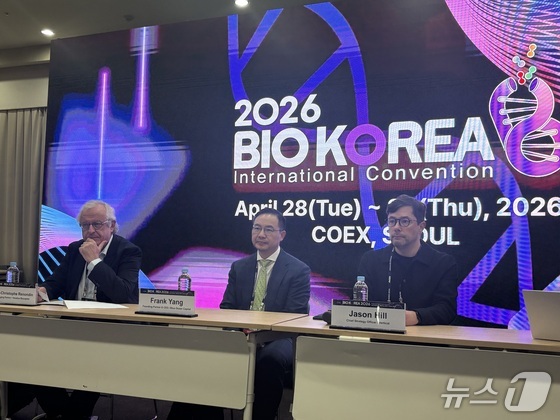
At Bio Korea 2026, held in Seoul on Tuesday, three global venture capital (VC) leaders shared their insights on the South Korean biotech market. Jason Hill, Vertical Lead; Jean-Christophe Renondin, Managing Partner at Vesalius Biocapital; and Yang Feng, Chief Executive Officer (CEO) of Blue Ocean Capital, described the market as being at a critical juncture.
Hill spearheads strategy and Artificial Intelligence (AI) at Vertical, a Northern Europe-based healthcare accelerator. Renondin brings over two decades of healthcare investment expertise, while Feng, founder of Blue Ocean Capital, has overseen investments exceeding 1 billion USD.
From an accelerator’s standpoint, South Korea’s biotech investment landscape is undergoing a significant shift, Hill noted. The companies gaining traction recently have demonstrated their real-world value through clinical achievements and operational excellence.
He highlighted South Korea’s strength, saying that the country’s biotech healthcare firms possess cutting-edge technology, particularly in AI diagnostics and precision medicine, rivaling global standards.
However, Hill pointed out room for improvement in communication. It’s not just about language proficiency, he explained. There’s a need to enhance storytelling capabilities – translating technical and scientific strengths into compelling narratives that resonate with investors.
Lenongdeng emphasized South Korea’s world-class competitiveness in the contract development and manufacturing organization (CDMO) sector, leveraging its manufacturing prowess. He suggested adopting more transparent governance structures between investors and companies, similar to U.S. and European models, including more open financial disclosures.
When investing in early-stage companies, Renondin advised, it’s crucial to look beyond initial public offering (IPO) returns and collaborate with investors on long-term growth strategies. Aligning with management on the company’s direction is key.
Feng shared insights from China, noting that private capital is increasingly flowing into early-stage biotech investments. He observed that while South Korea tends to favor later-stage investments for stability, thorough due diligence and evaluation of early-stage opportunities could yield higher returns.
The panel identified entry into clinical stages as a critical factor for securing global partnerships. Renondin explained that big pharma has become cautious about phase 1 assets, preferring companies with proven efficacy in at least phase 2. Demonstrating both safety and efficacy significantly boosts collaboration prospects.
Partnerships are built on trust, not just technology, Hill concluded. He stressed the importance of clearly articulating one’s value proposition and fostering close collaborative relationships.