

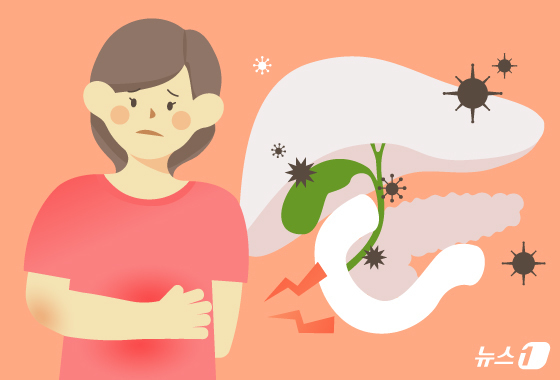
After retiring from a 30-year career, Mr. Park (65) was enjoying a healthy retirement filled with hiking and golf. One day, a hiking companion remarked that his skin looked yellowish and expressed concern about his liver health. Mr. Park, whose liver function tests had always been normal, brushed off the comment. However, a month later, he experienced severe abdominal pain and noticed his urine had turned brownish. Realizing the gravity of his situation, he sought medical attention and was diagnosed with cholangiocarcinoma.
Cholangiocarcinoma: A Hard-to-Treat Cancer with Lower 5-Year Survival Rate than Liver or Lung Cancer
Cholangiocarcinoma, or bile duct cancer, is a lesser-known malignancy with a poor prognosis due to late detection. Its early stages often present no clear symptoms, leading to discovery only after significant progression. This makes early diagnosis and precise treatment crucial. The bile duct, a narrow tube carrying bile from the liver through the hepatic hilum to the gallbladder, pancreas, and duodenum, is where this cancer originates.
Bile duct and gallbladder cancers make up 2.7% of all cancer cases. Cholangiocarcinoma, a malignant tumor arising from bile duct epithelial cells, is classified as intrahepatic, hilar, or distal based on its location. It ranks as the 10th most common cancer in men and 9th in women, primarily affecting those over 60.
With a five-year survival rate of just 29%, cholangiocarcinoma is classified as a challenging cancer to treat. Its early stages often lack clear symptoms and can mimic liver disease, leading to misdiagnosis. As the cancer advances, patients typically experience jaundice, itching, abdominal pain, and weight loss. Jaundice, characterized by yellowing of the eyes and skin, is particularly common.
While the exact causes remain unclear, several risk factors have been identified. These include recurrent bile duct inflammation, smoking, repeated bile duct stones, parasitic infections, primary sclerosing cholangitis, viral hepatitis, ulcerative colitis, and gallbladder polyps. Prolonged bile duct obstruction can also increase cancer risk. Additional risk factors include advanced age, chronic liver disease, smoking, and obesity.
Regular Check-ups and Imaging Tests Essential for Early Detection
Diagnosis involves serum tumor marker tests and imaging studies such as abdominal ultrasound, computed tomography (CT) scans, and Magnetic Resonance Imagings (MRIs). In some cases, doctors may perform endoscopic retrograde cholangiopancreatography (ERCP) or endoscopic ultrasound to directly examine the bile ducts and conduct biopsies. After assessing the tumor’s location and extent, a multidisciplinary team determines the appropriate treatment based on the cancer stage.
For early-stage cancer without major blood vessel invasion or distant metastasis, surgical resection is the preferred treatment. Procedures may include liver resection, bile duct resection, or pylorus-preserving pancreatoduodenectomy, depending on the tumor’s location. Advanced cases may require chemotherapy, radiation therapy, endoscopic radiofrequency ablation, or bile duct stenting.
Recently introduced endoscopic radiofrequency ablation not only alleviates malignant bile duct obstruction but also extends stent viability and directly destroys tumor tissue. Additionally, immunotherapy drugs like Keytruda (pembrolizumab) and Imfinzi (durvalumab) have shown promising results when combined with existing treatments, offering new options for managing intractable cholangiocarcinoma.
Dr. Lee Jae-min, Professor of Gastroenterology at Korea University Anam Hospital, notes that the absence of clear symptoms can hinder early detection. This cancer progresses rapidly and is often diagnosed late. He stresses the importance of prevention and early detection through lifestyle changes like quitting smoking, moderating alcohol intake, maintaining a healthy weight, and undergoing regular blood tests and abdominal ultrasounds.
Dr. Yoo Dae-kwang, Professor of Hepatobiliary Surgery at Soonchunhyang University Seoul Hospital, adds that while early symptoms are subtle, regular check-ups and imaging tests can significantly improve early diagnosis rates. If you experience jaundice, unexplained weight loss, or persistent abdominal pain, don’t dismiss these as minor digestive issues. It’s crucial to seek immediate medical attention for thorough evaluation.