

The Wall Street Journal (WSJ) reported on June 7 that North Korea’s economy is experiencing its most vibrant period in years, driven by arms sales and troop deployments to Russia, as well as expanded trade with China.
Drawing from testimonies of recent foreign visitors to North Korea, satellite imagery, and South Korean think tank reports, the WSJ noted that the North Korean economy is showing an unexpected recovery since the COVID-19 lockdown. The changes are particularly evident in Pyongyang, home to Kim Jong Un, the General Secretary of the Workers’ Party of Korea, and the elite class, with notable developments in consumption, services, and construction.
The WSJ reported that Pyongyang has recently seen the introduction of smartphone taxi-hailing apps and mobile QR code payment services. There’s also been a noticeable increase in Chinese electric vehicles and imported cars on the streets. New businesses have emerged, including pet shops, internet gaming cafes, and high-end car dealerships.
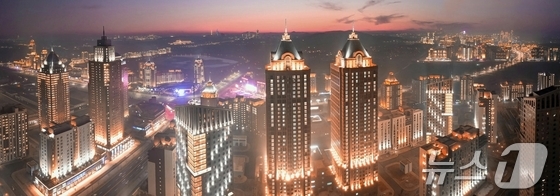
Construction projects in North Korea have also gained momentum. According to the WSJ, the country built 10,000 new housing units in Pyongyang last year. Outside the capital, construction of hospitals, greenhouse complexes, beach resorts, and factories is underway.
The WSJ identified the intensified military cooperation following Russia’s 2022 invasion of Ukraine as a key driver behind North Korea’s economic recovery.
The National Security Strategy Institute, an affiliate of South Korea’s National Intelligence Service, estimates that North Korea has dispatched over 15,000 troops and ammunition to the Ukrainian front. From summer 2023 to the end of last year, it’s believed to have earned over 15.4 trillion KRW (about 10 billion USD) from arms sales to Russia.
The institute also reports that North Korea secured over 770 billion KRW (about 507 million USD) through military cooperation with Russia. Much of this payment is likely in the form of sensitive military technology, weapon components, and various supplies.
Expanded trade with China is another factor bolstering North Korea’s economy. The WSJ reported that, based on Chinese statistics, North Korea’s monthly trade volume with China hit an eight-year high in April. Chinese consumer goods and components are playing a crucial role in the proliferation of smartphones and the increase in electric and imported vehicles in North Korea.
North Korea’s cybercrime activities are also cited as a significant source of foreign currency.
The WSJ highlighted analyses from various governments and cybersecurity firms indicating that North Korean hackers, operating from China, have secured billions of dollars by hacking cryptocurrency exchanges. They benefit from the relatively easy environment for internet access and concealment in China.
The Bank of Korea estimates that North Korea’s economy will grow by 3.7% in 2024, marking its fastest growth rate in eight years. South Korean think tanks believe this growth trend will continue.
However, the WSJ cautioned that the economic recovery appears to be concentrated in Pyongyang and a few selected areas. North Korea doesn’t disclose official economic statistics and strictly controls the movement and observation of external visitors. A United Nations (UN) report estimates that nearly half of North Korea’s 26 million residents still suffer from malnutrition.
Despite these limitations, the WSJ noted that satellite images and external reports support the possibility that North Korea’s economic recovery is not merely propaganda. There’s increased activity around North Korea’s oil storage facilities, more vehicles in parking lots, and nighttime illumination has become about three times brighter than five years ago.
North Korea’s economic recovery could pose challenges for U.S. denuclearization negotiation strategies. The U.S. has previously used sanctions relief and economic incentives to encourage North Korea to freeze, reduce, or eliminate its nuclear program. However, if North Korea can secure funds and resources through China and Russia, these pressure tactics may lose effectiveness.
The WSJ analyzed that as North Korea continues to develop nuclear weapons and missiles, it now has greater flexibility to allocate more resources to internal economic management and construction projects.