Despite the USD-KRW exchange rate soaring above 1,500 KRW (about 0.96 USD), Korean investors made record-breaking net purchases of U.S. stocks in April. This trend reaffirms the ongoing appetite for American equities among Suhakgaemi (Korean retail investors dabbling in U.S. stocks), even in the face of high exchange rates and concerns about U.S. market valuations.
While the domestic stock market remains robust and hopes for capital repatriation persist, the return of funds to Korea appears to be limited.
Analysts predict that the preference for U.S. stocks will likely continue in the near term. However, they note that recent exchange rate fluctuations have been more heavily influenced by foreign investors selling Korean stocks rather than individual Koreans investing overseas.
In April, Korean investors recorded a staggering 15.113 billion USD in net purchases of U.S. stocks, marking the highest figure since the U.S. Treasury began tracking this data.
According to the U.S. Treasury’s International Capital Flow (TIC) statistics released on Tuesday, the net purchase amount for April hit 15.113 billion USD.
Using the average exchange rate of 1,485.03 KRW (about 0.96 USD) in April, this translates to roughly 22.4 trillion KRW (about 14.4 billion USD).
This represents the largest monthly total since these statistics were first published in January 2023. The previous record was set in April last year, when net purchases peaked at 11.721 billion USD during the height of the Suhakgaemi frenzy.
47-Fold Jump in Just One Month, From $300M to 14.1B USD, Undermines Expectations of Onshoring
The April net purchase amount shows a dramatic surge compared to March, when Korean investors only net bought 320 million USD in U.S. stocks. The April figure skyrocketed to more than 47 times that amount.
In February, Korean investors had actually recorded a net sale of 1.655 billion USD in U.S. stocks, marking their first net sale in 12 months.
At that time, expectations for the introduction of registered investment advisor (RIA) accounts, a bullish domestic stock market, and potential inclusion in the World Government Bond Index (WGBI) fueled speculation that funds tied up in overseas stocks might return to Korea.
However, the significant net purchase in April, following a slight uptick in March, suggests that this trend of domestic fund repatriation may not be solidifying as a consistent pattern.
Despite concerns over high valuations in the U.S. stock market and increased currency exchange costs due to the weakening KRW, the preference for U.S. stocks among Suhakgaemi has been reaffirmed.
Fourth After Singapore, France and Ireland, Buying More Than Germany and Japan
Compared to other major countries, Korea’s net purchase of U.S. stocks was substantial.
In April, Singapore led with net purchases of 35.14 billion USD, followed by France at 24.249 billion USD and Ireland at 18.252 billion USD.
Korea’s net purchase of 15.113 billion USD placed it among the top-ranking countries. This amount surpassed Germany (13.669 billion USD), Japan (6.720 billion USD), Taiwan (3.271 billion USD), and China (404 million USD).
On the flip side, Canada recorded a net sale of 40.197 billion USD. The United Arab Emirates (-8.737 billion USD) and the Netherlands (-4.576 billion USD) also net sold U.S. stocks.
Market watchers caution that the substantial purchases of U.S. stocks by Korean investors, despite the burden of high exchange rates, could put pressure on the foreign exchange market.
However, it’s important to note that the TIC statistics on net purchases of U.S. stocks by Korean investors can’t be definitively attributed solely to individual retail investors.
The TIC data reports transactions between foreign residents and U.S. reporting institutions. This means transactions from Korean financial institutions, pension funds, or asset management companies operating in the U.S. may also be included in these figures.
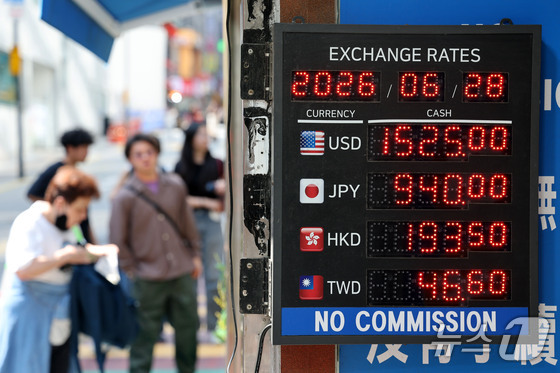
Experts: Preference for U.S. Stocks Unlikely to Fade, Limited Impact on Exchange Rate
Economists, including Lee Young-hwa from Busan Bank, believe that efforts to attract domestic funds through RIA accounts may not have had a significant impact. As tax benefits are reduced, there’s potential for renewed buying interest in U.S. stocks, Lee noted.
He also pointed out that the trend of investing in U.S. stocks continues steadily, particularly among younger investors. Lee added that increased volatility in the domestic stock market could drive funds back to U.S. equities.
However, some analysts argue that in the recent foreign exchange market, factors such as foreign selling of domestic stocks have had a more significant impact than the buying activities of Suhakgaemi.
Currently, the overseas stock purchases by retail investors don’t seem to be exerting substantial influence on the foreign exchange market, Lee explained. Other factors, such as export companies holding back on USD sales or large corporations’ demand for dollar settlements, also affect exchange rates.
Baek Seok-hyun, an economist at Shinhan Bank, also observed that the tax benefits of RIA accounts can only yield short-term effects, and these benefit rates are decreasing. He noted that as the SpaceX initial public offering (IPO) approaches in the second half of the year, it might see a gradual revival in U.S. stock investments.
Baek further stated that recent exchange rates have been more influenced by foreign selling of domestic stocks than by Koreans buying U.S. stocks.
When Suhakgaemi were purchasing U.S. stocks at levels more than double the daily trade surplus, it affected the exchange rate, he explained. However, recently, that influence has diminished, and foreign selling of South Korean stocks is currently having a greater impact on the exchange rate.