

North Korea’s economy grew by 3.5% last year, marking the third consecutive year of growth in the 3% range. This expansion was largely driven by continued growth in manufacturing and construction sectors, along with a turnaround in agricultural production. External factors, such as economic cooperation between North Korea and Russia, also played a significant role.
The Bank of Korea reported on July 31 that North Korea’s real Gross Domestic Product (GDP) increased by 3.5% compared to the previous year.
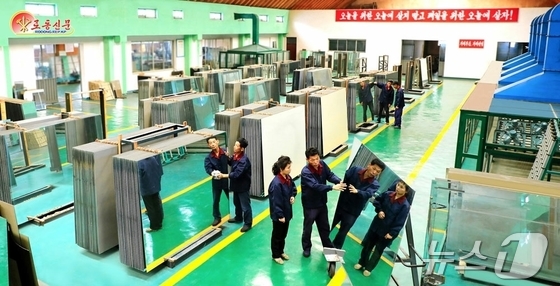
Seo Jeong-seok, head of the National Income Division at the Bank of Korea, explained that the 20X10 policy, which aims to build 20 light industrial factories annually over ten years, has boosted light industry growth. This has resulted in increased production of consumer goods and positively impacted service production, particularly in retail and wholesale sectors.
Seo emphasized that externally, the expansion of economic cooperation between North Korea and Russia, along with increased trade with China, significantly impacted the economy. He particularly highlighted the substantial effect of strengthened cooperation between North Korea and Russia.
In the manufacturing sector, weapons exports boosted production in related industries. The service sector saw growth due to an increase in Russian tourists, which led to expanded transportation networks, benefiting the accommodation and food service industries, according to the Bank of Korea.
The deployment of troops to Russia led to a surge in foreign currency income, contributing to rising household incomes. North Korea’s nominal Gross National Income (GNI) reached 48.5 trillion KRW (about 33.9 billion USD), a 9.4% increase from the previous year. This figure represents just 1.8% of South Korea’s nominal GNI, which stood at 2,717.1 trillion KRW (about 1.9 trillion USD).
North Korea’s per capita GNI rose to 1.873 million KRW (about 1,309 USD), a 9.0% increase over the year. However, this still amounted to only 3.6% of South Korea’s per capita GNI of 52.57 million KRW (about 36,730 USD).
Gross National Income, which accounts for all money earned by citizens including income from abroad while excluding income earned by foreigners within the country, serves as an indicator of the true financial situation of citizens.
Notably, the agricultural sector, which had recorded a -1.9% growth in 2024, rebounded to 3.6% growth, marking a transition to positive growth. The mining sector grew by 1.6%, a significant slowdown from the previous year’s 8.8% growth rate.
These economic growth trends have influenced North Korea’s industrial structure. Last year, the industrial composition of North Korea’s nominal GDP showed the mining and manufacturing sector accounting for the highest share at 30.1%, followed closely by the service sector at 29.6%, and agriculture at 21.2%.
While agriculture’s share increased by 0.3 percentage points compared to the previous year, mining and services decreased by 0.4 and 0.2 percentage points, respectively. Within the mining and manufacturing sector, manufacturing grew to 20.9%, a 0.4 percentage point increase, while mining decreased to 9.1%, down by 0.9 percentage points.
North Korea’s external trade volume reached 3.13 billion USD, a 16.0% increase from 2.7 billion USD the previous year. Exports surged by 30.0%, driven primarily by pharmaceuticals, wigs, toys, and sports equipment. Imports rose by 13.9%, mainly in clothing and vegetable oils.
Despite the overall increase in external trade compared to the previous year, exports amounted to 470 million USD, while imports reached 2.66 billion USD, indicating a significant trade imbalance.
The estimates for North Korea’s external trade exclude any inter-Korean trade. However, even considering this, there have been no recorded inter-Korean trade activities since 2023.