Decentralized perpetual futures exchange Hyperliquid is poised to enter the U.S. regulatory framework, buoyed by support from former President Donald Trump. This development has triggered a sharp 30% surge in the price of Hyperliquid’s token, HYPE.
On August 20, Michael Selig, Commissioner of the U.S. Commodity Futures Trading Commission (CFTC), announced during the inaugural Innovation Advisory Committee meeting that both CFTC-registered entities and unregistered exchanges could be designated as Designated Contract Markets (DCMs). This designation would allow them to offer leveraged or margin trading of digital assets under CFTC oversight.
This decision paves the way for decentralized exchanges like Hyperliquid, which are not currently registered with the CFTC, to obtain DCM status and continue operations within the U.S. DCMs are exchanges authorized by the CFTC to trade futures and options contracts.
Commissioner Selig also revealed that he has directed his staff to develop frameworks enabling on-chain financial protocol developers to legally offer their services in the U.S. This move could potentially bring blockchain-based decentralized services, such as Hyperliquid, into the U.S. regulatory fold.
Selig’s statements align with comments made by former President Trump the previous day.
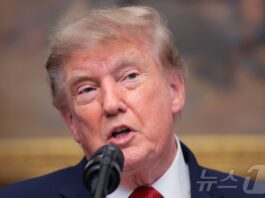
On August 19, during a White House meeting with CFTC and Securities and Exchange Commission (SEC) officials and cryptocurrency industry leaders, Trump mentioned that he was aware of Commissioner Selig’s efforts to legally bring Hyperliquid into the U.S. market.
Industry observers interpret these developments as a sign that the U.S. is seeking to incorporate decentralized perpetual futures exchanges into its regulatory framework, recognizing Hyperliquid’s recent growth trajectory.
Until now, Hyperliquid has been unable to offer its flagship perpetual futures trading service to U.S. users. The company has been submitting proposals to the CFTC since last year. Given Hyperliquid’s rapidly increasing trading volume, U.S. regulators likely see the benefits of bringing it into the regulatory fold.
In contrast, discussions about allowing cryptocurrency derivatives, including perpetual futures, are virtually non-existent in South Korea. Current regulatory debates in the country focus primarily on business operator regulations, stablecoins, and permitting initial coin offerings (ICOs).
South Korean financial authorities maintain a highly conservative stance on cryptocurrency leverage. For example, when domestic exchanges launched coin lending services last year, regulators requested a review and subsequently established separate guidelines.
While cryptocurrency lending and perpetual futures are distinct products, this episode illustrates the cautious approach South Korean authorities take toward cryptocurrency leverage.
A cryptocurrency industry insider commented that the U.S. appears to be embracing perpetual futures and decentralized trading, where investor demand already exists, into its regulatory framework. In contrast, South Korea lacks any meaningful discussion about these markets, causing demand to shift overseas entirely. This exodus of users to foreign platforms makes it increasingly challenging for domestic authorities to effectively supervise and protect investors.