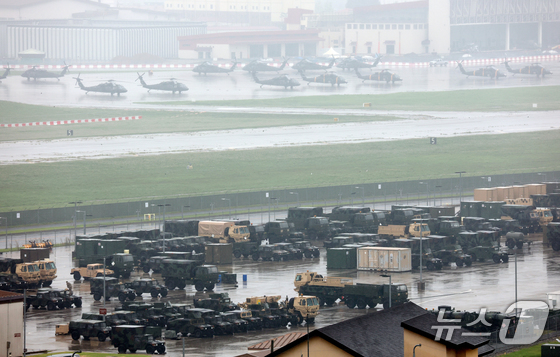
The U.S.-South Korea joint exercise, Ulchi Freedom Shield (UFS), concluded prematurely on August 21, about a week earlier than planned, following an unexpected directive from President Donald Trump.
This exercise was a critical opportunity to enhance interoperability between U.S. and South Korean forces and strengthen the South Korean military’s command capabilities in preparation for the transfer of wartime operational control. However, the planned counter-offensive drills against potential North Korean aggression were scrapped, and the associated field training exercises (FTX) were significantly scaled back, resulting in a compromised training session.
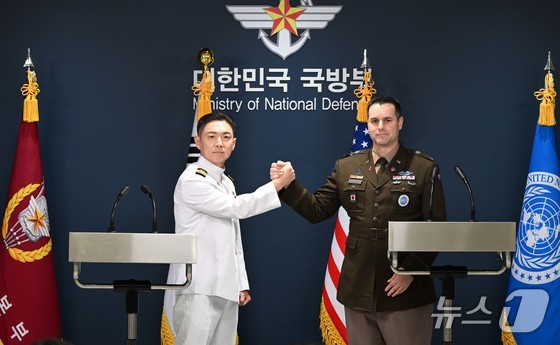
Training Duration and FTX Frequency Halved; Counter-Offensive Drills Against North Korean Attacks Never Materialized
Military officials report that U.S. and South Korean forces wrapped up the UFS exercise following the scheduled training on the afternoon of August 21. The exercise, which began on August 17, concluded after only about a week, having completed just the first part of the five-day defensive exercise simulating a North Korean invasion. Originally slated to run until August 27, the latter half was supposed to include counter-offensive drills.
The battalion-level FTX linked to the exercises was also cut from 14 to 7 events. While UFS primarily focused on command post exercises (CPX) simulating pre-determined scenarios, FTX had been incorporated to enhance realism. The remaining 7 FTX events were to be conducted by August 28th, with U.S. and South Korean officials still discussing the timing and scale of these exercises for the remainder of the year.
This exercise garnered attention for incorporating lessons from recent conflicts, such as U.S.-Iran tensions and North Korea’s troop deployments to Russia. It was also seen as a crucial opportunity to bolster South Korea’s command capabilities ahead of the wartime operational control transition. Despite completing the full operational capability (FOC) evaluation during the 2022 joint exercises, challenges remained in ensuring command structure stability and operational readiness.
During a joint briefing with the U.S.-ROK Combined Forces Command on August 10, the Joint Chiefs of Staff emphasized that this exercise would further the conditions-based transition of wartime operational control agreed upon by both nations, aiming to enhance South Korea’s ability to lead joint operations.
The Ministry of National Defense maintains that the joint evaluation conducted during the first part of the exercise satisfies mutual agreement criteria, ensuring the wartime operational control transition remains on track. Defense Minister An Kyu-back confirmed during a National Assembly Defense Committee meeting on August 20 that two evaluations, including one on firepower warfare, were successfully completed during UFS’s first phase.
The wartime operational control transition process involves evaluation and verification stages: initial operational capability (IOC), full operational capability (FOC), and full mission capability (FMC). The government aims to complete the FOC phase verification, evaluated in 2022, this year and finalize the transition timeline.
Despite Trump’s order to scale back training, North Korea responds with multiple missile launches
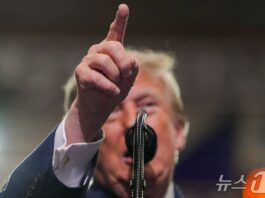
The exercise was abruptly curtailed on August 17, its first day, when President Trump unexpectedly called for a reduction in U.S.-ROK joint exercises while extending an olive branch to North Korea. On social media, Trump stated that given his very good relationship with Kim Jong Un, he disapproved of the long-standing agreement for U.S.-ROK joint military exercises. He argued that these drills are costly and send inappropriate, hostile signals to non-threatening countries that respect the U.S.
The day after Trump’s statement, U.S. Forces Korea Commander General Javier Brunson canceled his official schedule to meet with Minister An at the Ministry of National Defense. On August 19, the Joint Chiefs of Staff announced the early conclusion of UFS by August 21, citing a U.S. proposal. The Pentagon also officially confirmed the significant reduction and premature end of the UFS exercise.
Trump’s directive to scale back the training appears to be a strategic move to foster dialogue on the Korean Peninsula while avoiding provocation of North Korea, possibly in anticipation of a summit with Kim Jong Un later this year. Historically, North Korea has denounced U.S.-ROK joint exercises as invasion war drills, often responding with strong condemnations and missile tests.
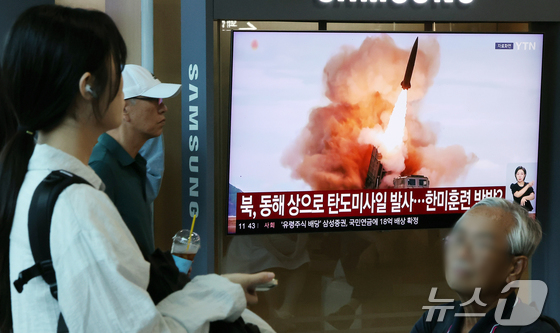
However, North Korea’s response to these conciliatory gestures has been cold. Shortly after the training reduction was announced, Kim Yo-jong, Deputy Director of the Workers’ Party, issued a statement on August 19 asserting that reducing the scale or duration of the exercises doesn’t alter their provocative and aggressive nature. She claimed that the scaled-back drills could still be substituted by previous joint training, effectively pouring cold water on U.S.-ROK efforts to promote dialogue.
On August 20, North Korea launched over ten short-range ballistic missiles (SRBMs) into the East Sea as a show of force. In a second statement, Kim mockingly criticized the South Korean government and military, stating that Seoul now finds itself in a pitiful situation where it must abandon its favorite war games at Trump’s sudden command.
As North Korea maintains its uncooperative stance despite U.S.-ROK concessions, concerns are growing that the reduction of this joint exercise may weaken the U.S.-ROK defense posture, potentially creating security vulnerabilities rather than advancing peace and denuclearization talks on the Korean Peninsula.