

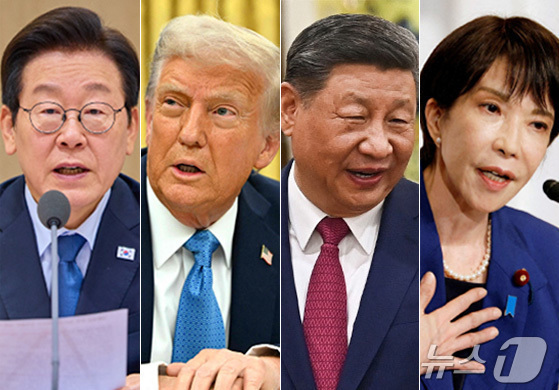
The U.S., while exploring ways to restart dialogue with North Korea, has decided to proceed with the trilateral military exercise Freedom Edge involving South Korea, the U.S., and Japan at a scale similar to previous years. This stands in contrast to the reduced scope of the bilateral Ulchi Freedom Shield (UFS) exercise planned for the latter half of the year.
On August 28, the Joint Chiefs of Staff (JCS) announced that the three nations will conduct the 2026 Freedom Edge exercise from September 7 to 11 in the waters east and south of Jeju Island. This five-day exercise mirrors last year’s Freedom Edge, which took place from September 15 to 19 in the same area.
The JCS emphasized that this annual defensive exercise aims to counter North Korea’s nuclear and missile threats while safeguarding regional peace and stability.
Freedom Edge emerged from a commitment made during the 2023 Camp David summit, where the three countries agreed to implement multidomain training. The inaugural exercise was held in June 2024, followed by subsequent drills in November 2024 and September 2025.
While the three nations have previously conducted various one-time joint military drills at sea and in the air, including search and rescue operations, missile warning exercises, and strategic bomber escort missions, Freedom Edge marks the first regular multidomain training initiative.
Last year’s exercises encompassed maritime missile defense, anti-submarine warfare, aerial operations, air defense, counter-piracy drills, and cyber defense training.
This year’s exercise comes in the wake of President Donald Trump’s recent order to significantly scale back the UFS exercise as part of a conciliatory approach toward North Korea. This move raised speculation about potential reductions in other joint drills. However, the U.S. appears to be maintaining its commitment to Freedom Edge, likely as part of its strategy to counter China’s influence in the region through strengthened trilateral cooperation.
In announcing last year’s Freedom Edge, the U.S. Indo-Pacific Command emphasized bolstering capabilities within the first island chain. This conceptual maritime defense line, connecting Japan’s Kyushu, Taiwan, the Philippines, and the South China Sea, is often viewed as a strategic barrier to prevent Chinese expansion into the Pacific and potential aggression against Taiwan.
Notably, the U.S. stance differs from the South Korean JCS’s emphasis on countering North Korean nuclear and missile threats in its announcement of this year’s exercise.
On August 16, President Trump, highlighting his personal relationship with North Korean leader Kim Jong Un, directed the Department of Defense to reduce joint exercises. He subsequently posted photos of Kim on social media, signaling his willingness to reopen dialogue with North Korea.