Global telecommunications giant Ericsson has unveiled cutting-edge network technologies designed for the artificial intelligence (AI) era. The company showcased AI-RAN, which boosts wireless network performance and operational efficiency, alongside Integrated Sensing and Communication (ISAC) technology that can detect the location and movement of nearby objects. This presentation outlined the network evolution from 5G Standalone (SA) to 5G Advanced, culminating in AI-native 6G.
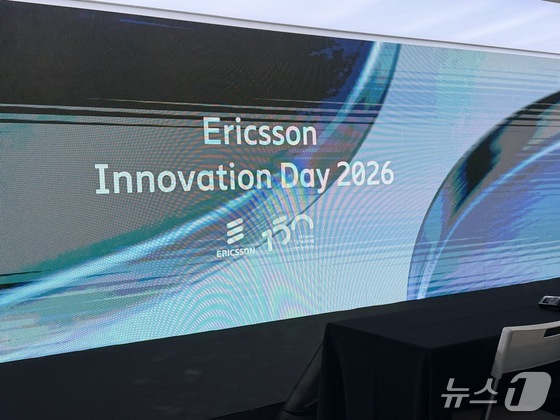
On Tuesday, Ericsson Korea hosted a media briefing as part of its Ericsson Innovation Day 2026 Korea event. The briefing, aimed at key clients, explored how AI is revolutionizing network performance, operations, services, and business models.
The event was organized to introduce key technologies Ericsson showcased at Mobile World Congress (MWC) 2026 to domestic telecom operators, industry partners, and ecosystem stakeholders. It also provided insights into the evolution of 5G SA, 5G Advanced, AI, and 6G in the Korean market.
Ericsson highlighted two main trajectories for network evolution: Network for AI and AI for Network.
As AI-powered services like smart glasses, self-driving cars, and robotics become more prevalent, the need for robust telecommunications networks to support these services has grown. These applications demand high uplink capacity, consistent low latency, reliable connectivity, and seamless mobility.
Concurrently, Ericsson plans to integrate AI within the network itself. AI will manage wireless resources and traffic to enhance performance, boost energy efficiency, and automate operations. The company aims to implement these features based on 5G SA and 5G Advanced, paving the way for AI-native 6G.
Among the key technologies driving this network evolution is AI-RAN.
Ericsson views AI-RAN not as a technology limited to specific products or AI accelerators, but as an architecture that applies AI across the entire Radio Access Network (RAN). The goal is to deliver the communication performance required by applications while enabling the network to autonomously improve its performance and operational efficiency.
Ericsson explained that existing telecom networks can evolve into AI-native networks through AI in RAN software and AI-supporting hardware compatible with current 5G networks.
The event also spotlighted ISAC as a core technology. ISAC integrates communication and sensing capabilities within a single network.
While traditional mobile networks primarily exchanged data, ISAC-enabled networks can detect the surrounding environment and objects using radio waves, identifying their location and movement. This technology is widely considered a key advancement for the 6G era.
By leveraging ISAC, the telecom network itself can function as a type of sensor. Ericsson highlighted potential applications of ISAC in various sectors, including critical infrastructure, transportation, industrial sites, and low-altitude airspace.
Ericsson sees 6G not as a completely new generation of technology disconnected from existing networks, but as an extension of the network evolution that began with 5G SA and 5G Advanced.
The company envisions gradually implementing AI functionalities, open and programmable networks, and automation technologies based on 5G SA, ultimately evolving into AI-native 6G. This approach suggests that current investments in 5G networks will remain relevant for 6G, serving as a foundation for immersive services, autonomous driving, industrial automation, and other emerging applications.
Sibel Tombaz, Chief Executive Officer (CEO) of Ericsson Korea, emphasized that competitiveness in the AI era starts with the network. It must provide the high uplink capacity, predictable performance, and stable connectivity that AI services demand, while simultaneously evolving the network itself to become more intelligent and efficient through AI.