

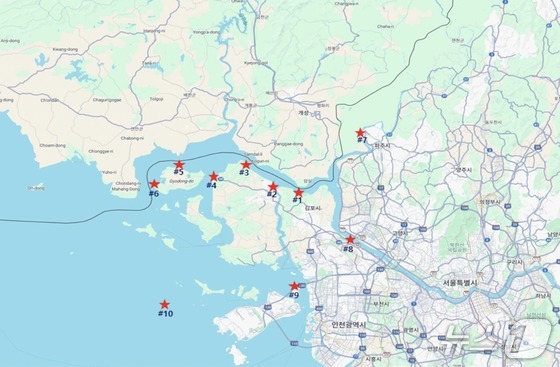
Amid growing concerns about the potential influx of wastewater from North Korea’s Pyongsan uranium refinery into South Korea via the Ryesong River, the South Korean government has launched a special investigation. Officials will directly assess the contamination levels of radioactive materials and heavy metals in areas near the North Korean border, including Ganghwa Island and the Han River estuary.
On Thursday, the Nuclear Safety and Security Commission, the Ministry of Oceans and Fisheries, and the Ministry of Environment of South Korea announced plans to investigate ten locations near the Ryesong River estuary, including Ganghwa Island and the Han River estuary, for radioactive materials and heavy metals starting on Friday. This investigation has expanded significantly since 2019, increasing the number of sites from six to ten and broadening the target substances from uranium alone to include cesium and heavy metals. The investigation now involves multiple agencies, including the Nuclear Safety and Security Commission, the Ministry of Oceans and Fisheries, and the Ministry of Environment.
Results from the investigation are expected to be made public after a two-week analysis period. The government plans to conduct regular monthly monitoring to ensure ongoing surveillance and will share updates through an inter-agency committee.
A meeting chaired by the head of the Ministry of Unification’s policy office included representatives from the Nuclear Safety and Security Commission, the Ministry of Oceans and Fisheries, the Ministry of Environment, the Ministry of National Defense, and the National Intelligence Service to discuss response measures. The South Korean government pledged to continue monitoring North Korea’s nuclear activities, including the uranium refinery, and to work collaboratively to safeguard the health and environmental safety of South Korean citizens.