

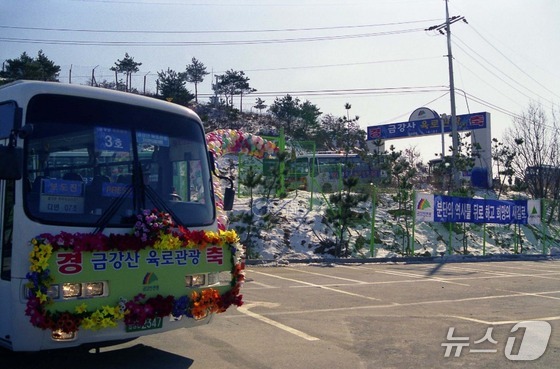
On November 18, 1998, the cruise ship Kumgang departed from Donghae Port in Gangwon Province, marking the beginning of Mount Kumgang tourism. This groundbreaking initiative, the first of its kind since the Korean peninsula’s division, symbolized a new era in inter-Korean relations and ushered in a significant period of reconciliation. By 2003, land-based tours to Mount Kumgang had commenced, and prior to the’incident in 2008, the region had welcomed a staggering 1,955,951 visitors.
The dawn of July 11, 2008, was shattered by gunfire along the Mount Kumgang tourist area’s coastline. South Korean tourist Park Wang-ja lost her life to shots fired by a North Korean guard. This tragic event became a pivotal moment in inter-Korean relations, abruptly shifting the atmosphere from reconciliation to a prolonged period of tension.
In a statement released on July 12, the day following the incident, a spokesperson for North Korea’s Comprehensive Development Bureau for Scenic Sites expressed regret while simultaneously placing full responsibility on South Korea. They demanded an apology and measures to prevent future occurrences.
On July 16, North Korean officials provided details of the incident to Yoon Man-jun, president of Hyundai Asan. Their account placed the shooting between 4:55 a.m. and 5:00 a.m. on July 11, contradicting their earlier statement from July 12 that had cited 4:50 a.m. They claimed Park was first spotted 800 meters (about 0.5 miles) from the fence marking the military control zone, and that shots were fired after she had fled approximately 500 meters (about 0.3 miles), asserting the shooting occurred about 300 meters (about 0.2 miles) from the fence.
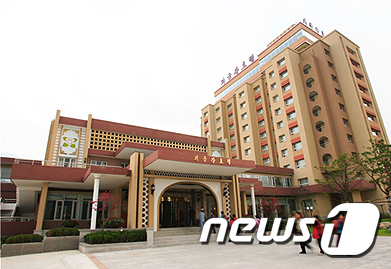
The South Korean government, however, presented a different narrative. Closed-circuit television (CCTV) analysis showed Park leaving her room at the Kumgang Family Beach Hotel around 4:18 a.m. on July 11, with the shooting occurring just 200 meters (about 0.1 miles) from the fence. Eyewitness accounts and photographic evidence suggested the incident could have happened as late as 5:16 a.m. Given these discrepancies in both location and timing, Seoul emphasized the necessity for a joint investigation to uncover the truth.
Kim Ho-nyeon, then spokesperson for the Unification Ministry, stated that it recognizes the need for a thorough investigation into this tragic incident and will push for an exhaustive inquiry as soon as possible. He urged North Korea’s full cooperation in the matter.
The South Korean government twice sent official communications to North Korea, expressing regret and calling for cooperation in the investigation. However, Pyongyang flatly refused to acknowledge these messages.
The Planned Joint Entry of North and South Korea at the Beijing Olympics, Scheduled for the Following Month Also Cancelled
On the day of the incident, then-President Lee Myung-bak was set to deliver a policy address at the opening of the 18th National Assembly. Upon learning of Park’s death, he considered revising his North Korea message but ultimately maintained language calling for renewed inter-Korean dialogue, referencing both the June 15 Joint Declaration and the October 4 Summit Declaration.
North Korea’s refusal to engage with South Korea’s efforts to investigate the incident led to the collapse of plans for a joint Olympic entry in Beijing that August. This also precipitated a sharp decline in tourism to Kaesong, which was completely halted by year’s end.
In a surprising move in October 2019, Kim Jong Un visited the Mount Kumgang tourist area and ordered the demolition of South Korean facilities. While he instructed that South Korean authorities be consulted, the onset of the COVID-19 pandemic prevented any meaningful discussions.
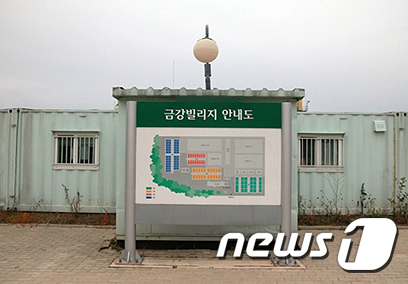
Since 2022, North Korea has systematically dismantled South Korean facilities in Mount Kumgang, beginning with the Haegumgang Hotel. Recent satellite imagery indicates that most South Korean structures in the area have been razed, including facilities built for reunions of separated families.
Regulations on Personal Safety and Joint Investigation Obligations… A Lesson the Government Dreaming of Resuming Tourism Must Heed
One can’t help but wonder: What if a robust system for ensuring tourist safety had been in place before the shooting? What if North Korea had agreed to a joint investigation, allowing for a thorough examination of the facts? How might inter-Korean relations and the broader geopolitical landscape on the Korean Peninsula look today if Mount Kumgang tourism had continued uninterrupted?
On December 19, the Unification Ministry presented its 2026 strategic plan to President Lee Jae Myung, outlining a vision to revive inter-Korean exchanges through mutual, multilateral, and innovative cooperation. A key component of this plan is the proposed International Wonsan Kalma Peace Tourism initiative, to be implemented in three phases.
North Korea’s recently unveiled Wonsan Kalma Coastal Tourism Zone is central to this strategy. The first phase aims to facilitate individual tourism for overseas Koreans via travel agencies in China and elsewhere. The second phase envisions creating travel programs allowing Chinese tourists to visit both Koreas. The final phase would work towards resuming tourism for South Korean citizens.
Following the opening of the Kalma area, North Korea has announced plans to develop new tourist destinations across the country in the coming year. Tourism remains a vital source of foreign currency for the regime. They are also developing the area around Mount Paektu, revered as the revolutionary holy site of the Kim dynasty, into a tourist attraction.
While both North and South Korea share a keen interest in tourism, any resumption of cross-border travel will require time and careful planning. It’s crucial that it looks beyond immediate economic interests and prioritize the safety and security of its citizens. Any future tourism initiatives must be built on a foundation of robust safety guarantees and clear protocols.