

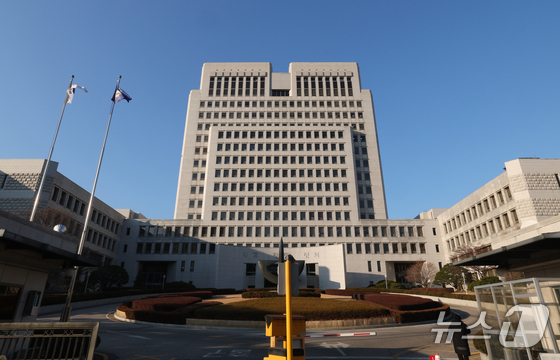
The South Korean Supreme Court has upheld a prison sentence for Ha Yeon-ho, co-representative of the Jeonbuk People’s Action Group, who was charged with exchanging information with North Korean operatives and key domestic political figures over several years.
According to legal sources on Wednesday, the Supreme Court’s second division, presided over by Justice Oh Kyung-mi, confirmed the original ruling that sentenced Ha to two years in prison for violating the National Security Law (specifically regarding illicit meetings and communications).
Ha was indicted for meeting with a North Korean operative, identified as A, in Hanoi, Vietnam, and in Beijing, Changsha, and Zhangjiajie, China, between August 2013 and November 2019 to coordinate meeting schedules.
Investigations uncovered that Ha used aliases and foreign email accounts to communicate with North Korea and report on key domestic developments.
Emails authored by Ha contained content promoting North Korean propaganda, including anti-American rhetoric, calls for autonomy, and advocacy for a peace treaty. The messages also detailed methods for receiving operational funds and techniques for steganography (a security technology that conceals content through encryption).
In his communications, Ha employed coded language and even sent a congratulatory message for the first anniversary of Kim Jong Un’s rule, which included the phrase strong military leader.
The district court found Ha guilty of the communication and meeting charges. However, it determined that his actions did not pose an immediate threat to national security, resulting in a sentence of 18 months in prison with a three-year probation.
Ha maintained his innocence and appealed the decision, while the prosecution also filed an appeal.
The appellate court ruled in favor of the prosecution, sentencing Ha to two years in prison and ordering his immediate detention.
The appeals court stated that it is reasonable to conclude that the defendant was aware of A’s role as a North Korean operative. The court noted that Ha communicated covertly using programs with private messaging and auto-delete features, as well as documents with enhanced security measures.
The court elaborated that evidence shows that Ha approached A at the airport feigning unfamiliarity, delivered documents, and later confirmed their deletion via email while receiving operational funds. They concluded that such actions pose a significant threat to South Korea’s democratic foundations.
The Supreme Court affirmed the appellate court’s judgment, rejecting appeals from both Ha and the prosecution.
The court declared that the original ruling adhered to logical and experiential principles, did not exceed the bounds of judicial discretion, and correctly interpreted the relevant legal doctrines.