

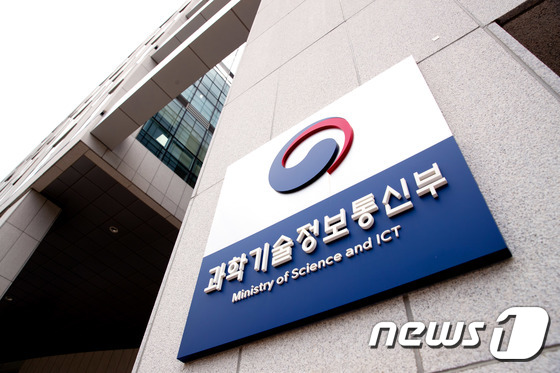
The Ministry of Science and Information and Communication Technology (ICT) has refuted claims that a letter sent by the U.S. two weeks ago urging the implementation of the Korea-U.S. Joint Fact Sheet is directly linked to the recent announcement of tariff increases.
In a statement released on Tuesday afternoon, the ministry confirmed that the U.S. Embassy in Korea had delivered a letter to the Deputy Prime Minister of Science and ICT. They noted that the Minister of Trade, Industry, and Energy also received the letter for reference. However, they emphasized that the letter’s main focus was on urging non-discrimination against U.S. companies in digital issues. The ministry clarified that this does not directly relate to President Donald Trump’s assertion that the Korean National Assembly has not enacted the necessary legislation to implement the trade agreement between Korea and the U.S., which he cited as a reason for the tariff increase.
According to relevant authorities, U.S. Chargé d’Affaires Jim Heller sent a letter to Deputy Prime Minister and Minister of Science and ICT, Lee Bae-keun, on January 13, urging the implementation of the Korea-U.S. Joint Fact Sheet. The letter also referenced Minister of Trade, Industry, and Energy Kim Jeong-kwan, Minister of Foreign Affairs Park Jin, and Chairman of the Fair Trade Commission Jo Byeong-ki.
A spokesperson from the Ministry of Science and ICT stated that the letter addressed the need to avoid discrimination against U.S. companies in digital issues, a topic they’ve been discussing since last year. It doesn’t believe this is directly related to the current tariff increases.
The letter emphasized ensuring fair treatment of U.S. companies in policies related to network usage fees and online platform regulations. However, some interpret this as part of a broader U.S. push for comprehensive trade agreement implementation, suggesting the tariff threat may serve as a preemptive warning.
In response to allegations that the government remained passive after receiving the U.S. letter, the Ministry of Science and ICT strongly denied this claim.
The ministry explained that it has consistently communicated to the U.S. that our digital-related legislation and measures do not discriminate against U.S. companies. Furthermore, it is actively discussing response strategies by sharing real-time updates on U.S. trade issues among relevant government departments through various channels.