

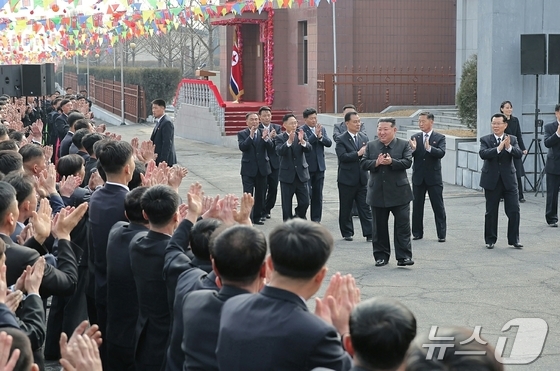
The government has revealed that North Korea replaced approximately 75% of its existing delegates through the Supreme People’s Assembly election held on March 15.
On Tuesday, the Ministry of Unification reported that about 520 of the 687 newly elected delegates were fresh faces. North Korea has consistently elected 687 delegates since the 9th Supreme People’s Assembly elections. This latest turnover rate is the highest in history, compared to the 40-50% changes seen in the 11th to 14th elections.
Moreover, the approval rate was 99.93%, breaking the perfect 100% approval rate that had been maintained since the first delegate election in 1948. In August 2023, North Korea amended its electoral laws, introducing separate yes/no ballot boxes and allowing multiple candidate nominations to promote transparent elections. However, some analysts suggest that the appearance of dissenting votes might be a calculated move to showcase a seemingly transparent electoral system.
While Supreme People’s Assembly elections typically occur every five years, this election took place seven years after the last one in 2019. This timing appears to align the cycles of the Workers’ Party Congress and the Supreme People’s Assembly, which resumed in 2016 after a 36-year hiatus.
The Ministry of Unification speculated that the two-year delay likely contributed to the significant turnover of delegates. The generational shift, coupled with Kim Jong Un’s direct involvement in rooting out corruption among officials, is believed to have played a role in this sweeping change.
The Ministry interpreted that the emphasis on performance and capability, highlighted during last month’s 9th Party Congress, was reflected in this delegate election as well. At the Party Congress, North Korea appointed 139 new individuals, comprising 55.6% of the 250 members and candidate members of the Central Committee.
Most key officials from the Party leadership appear to have been elected as delegates. Notable names include Kim Yo-jong, deputy director of the Party, Jo Yong-won, a member of the Political Bureau, and Prime Minister Pak Thae-song. In contrast, senior figures who seem to have stepped down during the Party Congress, such as Choe Ryung-hae, chair of the Standing Committee of the Supreme People’s Assembly, former deputy chairman of the Party’s Central Military Commission Pak Jong-chon, economic policy advisor Oh Soo-yong, and advisor Kim Yong-chol, were absent from the delegate list.
The list of elected delegates prominently features influential figures from the diplomatic corps. Names like Kim Song-nam, international secretary of the Party, Choe Son-hui, the foreign minister, as well as Jang Geum-cheol, who previously headed the United Front Department, and Ri Son-gwon, a longtime overseer of inter-Korean and foreign policy, were among those elected as delegates.
Following the 2019 constitutional amendment that prohibits the Supreme Leader from serving as a delegate, Kim Jong Un, the Party’s General Secretary, was once again not included in the list of elected delegates.