

Train and flight services connecting North Korea and China are set to resume shortly.
Chinese railway authorities have announced that starting from March 12, they will operate the Dandong-Pyongyang route once daily and the Beijing-Pyongyang route four times a week. Air China also plans to restart its Beijing-Pyongyang service on March 30.
In response, Chinese travel agencies are launching North Korean tourism packages and actively recruiting customers. Although North Korean authorities have yet to officially announce the reopening of tourism, signs of increased people-to-people exchanges between North Korea and China are becoming evident.
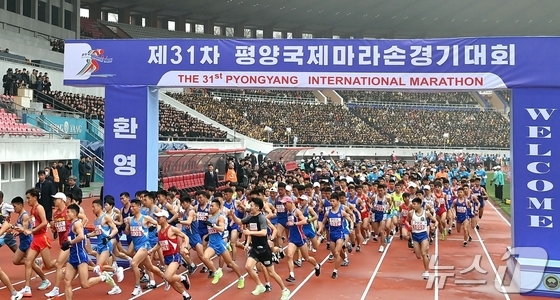
However, in stark contrast, the Pyongyang International Marathon, one of North Korea’s key tourism events, was abruptly canceled about a month before its scheduled date. Koryo Tours, the official partner, reported the cancellation on March 9, stating that full refunds are being processed despite completed participant recruitment and fee payments.
The Pyongyang International Marathon, which attracts hundreds of foreign participants annually, has been considered a significant source of foreign currency for North Korea. It’s peculiar that North Korea is resuming train and flight routes to expand tourism while simultaneously canceling an already scheduled event.
Signal of Easing North Korea–China Ties… Trade Indicators Also Clearly on the Rise
According to China’s General Administration of Customs, trade between North Korea and China for January and February 2026 reached 2.94 billion CNY (approximately 426 million USD), a 19.6% increase from the same period last year. Notably, North Korea’s exports to China surged by 34.1%, while China’s exports to North Korea rose by 16.2%.
This upward trend continues on an annual basis. In 2025, North Korea-China trade volume amounted to approximately 19.55 billion CNY (about 2.8 billion USD), marking a roughly 26% increase from the previous year. This figure represents nearly a tenfold increase compared to the approximately 20 billion CNY (about 290 million USD) recorded in 2021, when trade plummeted due to COVID-19.
However, current trade volumes have not yet returned to pre-sanction levels. Trade between North Korea and China peaked in 2017 at approximately 34.3 billion CNY (about 4.97 billion USD) but declined sharply due to international sanctions and pandemic-related border closures. Recent measures to resume railway and air routes have supported a rapid recovery in trade.
Nevertheless, North Korea has canceled international events that could benefit its economy while fully activating exchanges with China. This suggests a preference for selective opening, limiting the influx of foreign personnel.
The Asian Youth Table Tennis Championships, scheduled for June in Pyongyang, has also been canceled. The Asian Table Tennis Union (ATTU) cited delays in visa issuance and logistical issues related to international travel and equipment transport as reasons for the cancellation.
The ATTU executive committee attempted an on-site inspection in Pyongyang in January to assess event preparations, but North Korea reportedly did not cooperate with visa issuances, preventing the inspection from taking place.
Seen as Move Aligned with Current Conditions… Possible Increase in Chinese Tourists This Summer
Analysts indicate that North Korea, sensitive to international circumstances, is avoiding large-scale inflows of foreign personnel due to instability from recent events in the Middle East.
Observations suggest that North Korea remains seriously concerned about COVID-19, as the Pyongyang International Marathon was previously affected by health issues.
In 2015, the country banned foreign participants due to the Ebola outbreak in Africa, only to reverse that decision less than ten days later. The first post-pandemic event occurred last year, five years after the outbreak. However, persistent interpretations suggest that North Korea has not yet established comprehensive health protocols, hindering its ability to expand tourism.
The case of North Korea’s Rason tourism initiative last year exemplifies a failed attempt at opening due to internal control issues.
North Korea selected Rason Special City as the first tourist destination to reopen after COVID-19, permitting limited group tourism from Russia starting in 2023. By mid-February 2025, it also opened its doors to Western tourists, excluding those from the U.S. However, just three weeks after tourism resumed, North Korean authorities abruptly halted it without any official explanation.
While North Korea has not publicly commented on this, external observers speculate that authorities became uncomfortable with Western tourists sharing their experiences and revealing North Korean realities through media interviews and personal social media posts, leading to the closure. However, some reports suggest that health concerns were a more significant factor.
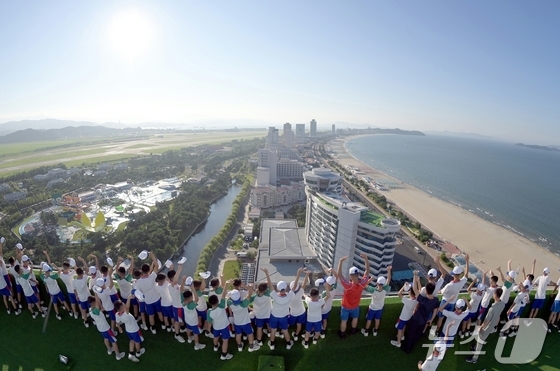
Nonetheless, forecasts indicate that the opening of transportation and logistics between North Korea and China will gradually expand. As North Korea opened the Wonsan-Kalma Coastal Tourist Area in Gangwon Province last year, the influx of Chinese tourists is deemed essential.
Given the challenges of attracting Western tourists due to international sanctions and political constraints, Chinese tourists, who offer both geographical accessibility and political stability, represent a crucial customer base. Consequently, the resumption of air and rail routes between North Korea and China, along with securing groups of Chinese tourists, will likely play a pivotal role in determining the success of North Korean tourism.