

The U.S. has reportedly restricted sharing of satellite-gathered intelligence on North Korean technology following protests over comments made by South Korea’s Unification Minister Chung Dong-young about nuclear facilities in North Korea’s North Pyongan Province.
South Korea’s Defense Ministry has dismissed concerns about security gaps, asserting that both nations’ intelligence agencies continue to maintain robust information-sharing protocols, particularly regarding North Korean missile activities.
At a press briefing on Tuesday, Defense Ministry spokesperson Jeong Bit-na addressed questions about the duration and conditions for normalizing U.S. restrictions on information sharing. She emphasized that South Korean and U.S. intelligence agencies continue to maintain comprehensive information-sharing mechanisms, especially concerning North Korea’s missile developments.
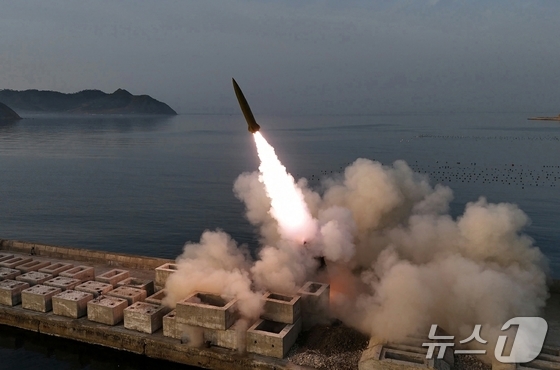
Jeong further clarified that intelligence sharing between the allies is reciprocal and complementary. She cited the recent North Korean ballistic missile launch on April 19 as an example of effective bilateral cooperation in information analysis and public reporting.
The spokesperson confirmed that South Korea and the U.S. successfully coordinated their response to North Korea’s test of the Hwasong-11 ground-to-ground tactical ballistic missile on April 19.
When pressed about ongoing U.S.-South Korea talks to lift the information restrictions, Jeong declined to comment further.
Minister Chung had previously disclosed at a National Assembly committee meeting on March 6 that the International Atomic Energy Agency (IAEA) Director General Rafael Grossi reported the existence of uranium enrichment facilities in Yongbyon, Kusong, and Gangseon. He added that while Iran’s uranium enrichment reaches 60%, North Korea is believed to be producing weapon-grade uranium at 90% enrichment.
The U.S. reportedly viewed Minister Chung’s statements as a breach of classified intelligence shared between the allies, going beyond previously known locations of North Korean uranium enrichment facilities. This apparently prompted the U.S. to begin limiting certain intelligence sharing related to North Korea.
Sources indicate that the restricted information primarily consists of satellite-derived intelligence on North Korean technology. However, South Korean military officials maintain that the exchange of reconnaissance data on North Korea continues unimpeded, ensuring no compromise to military readiness.