

The U.S. Trade Representative (USTR) has announced plans to impose an additional 12.5% tariff on major trading partners, including South Korea, citing inadequate efforts to block imports of goods produced with forced labor. This move has sparked interest in the government’s strategic response.
Notably, the U.S. is not only investigating forced labor issues but also conducting separate probes into overcapacity problems, raising concerns about potential increased tariff pressure in the future.
Experts suggest that South Korea should avoid rushing to finalize a response at this stage. Instead, they recommend carefully analyzing the scope and criteria of the U.S. investigation while focusing on strengthening supply chain management systems and emphasizing the benefits of investments in the U.S. market.
Key factor in Determining Forced Labor is Indirect Supply Chain… Urgent Need to Improve Supply Chain Management Systems
The U.S. is primarily concerned with whether countries have established effective systems to prevent raw materials or intermediate goods produced in regions with forced labor from indirectly entering the U.S. market through global supply chains.
Consequently, experts advise that South Korea needs to bolster its supply chain management systems.
The European Union (EU), Canada, and Mexico have been subject to relatively lower tariffs after enhancing their supply chain due diligence systems and regulations related to forced labor.
In a conversation with News1 on Thursday, Professor Huh Yoon from Sogang University’s Graduate School of International Studies stated that while it’s premature to discuss government responses solely based on forced labor measures, South Korea should establish a more robust supply chain tracking and due diligence system.
He emphasized the importance of risk management for products from China’s Xinjiang Uyghur region. Even if companies don’t directly import from that area, related raw materials could still enter the supply chain through various stages, he explained. He urged both businesses and the government to conduct preemptive checks as the U.S. expands its regulatory scope to cover entire supply chains.
Since 2022, the U.S. has been enforcing the Uyghur Forced Labor Prevention Act (UFLPA). This law targets not only products from the Xinjiang region but also third-country products containing raw materials or components from that area.
From 2022 to 2025, U.S. Customs and Border Protection (CBP) designated 8.55 million USD worth of South Korean exports for UFLPA-related review and detention. Of this, 8.41 million USD was flagged in 2025 alone, with most cases concentrated recently.
While this figure seems small compared to South Korea’s annual exports to the U.S. of 122.8 billion USD in 2025, the concern lies in the country rankings. The value of South Korean exports rejected or subjected to additional scrutiny under the UFLPA ranks 10th globally and 9th among the 60 countries investigated under Section 301.
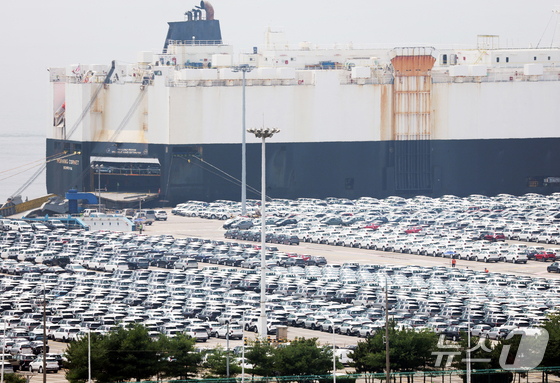
After Section 301 Investigation on Forced Labor, Focus Shifts to Overcapacity… Response Should Emphasize Investment Ties
While the Section 301 investigation on forced labor ostensibly aims to enforce human rights norms, analysts suggest it’s part of a broader strategy to reinstate tariff levels after the U.S. Supreme Court invalidated mutual tariffs under the International Emergency Economic Powers Act (IEEPA).
Following the IEEPA ruling in February, the U.S. announced plans for a 10% global tariff for 150 days until late July. It then initiated Section 301 investigations into both forced labor and overcapacity.
Kim Soo-dong, head of the Global Competitiveness Strategy Research Division at the Korea Institute for Industrial Economics and Trade, observed that the U.S. seems to be rushing the forced labor Section 301 investigation results to minimize tariff gaps before the global tariff expires in late July. He added that while South Korea’s systems have some deficiencies, this investigation primarily serves to justify imposing tariffs.
The government has stated that it confirmed with the U.S. its commitment to maintain the agreed tariff levels established through last year’s Korea-U.S. tariff negotiations and summit agreements.
According to the joint fact sheet released last year, both countries agreed to cap the tariff burden, including Section 232 mutual tariffs and automotive and steel tariffs, at around 15%. Despite Section 232 mutual tariffs being invalidated by the Supreme Court, the government expects substitute tariffs, including Section 301, to align with the agreed 15% level.
However, with the U.S. already proposing a 12.5% tariff in the forced labor Section 301 investigation, maintaining the 15% cap will require lowering this rate and minimizing additional tariffs in the upcoming overcapacity investigation.
Kim Soo-dong emphasized that South Korea should actively engage in discussions to aim for a reduction to around 10% in the forced labor investigation. He added that even if successful, the final rate could still reach 15% when factoring in the future overcapacity investigation results.
Professor Huh advised that regarding overcapacity that it’s crucial to proactively explain South Korea’s industrial structure to prevent U.S. misunderstandings.
He noted that while some sectors, like petrochemicals, face declining utilization rates due to Chinese oversupply, South Korea could be miscategorized as an overcapacity country if the U.S. judges solely on equipment utilization rates.
For future negotiations, he identified the impact of U.S. investments as South Korea’s strongest argument.
South Korean companies are rapidly increasing U.S. investments, particularly in semiconductors, batteries, and automobiles, playing a significant role in America’s manufacturing revival.
Experts highlight that South Korea’s export structure to the U.S. is another negotiation asset. These exports primarily consist of intermediate goods like semiconductors, battery materials, and chemical products, rather than final consumer goods, directly supporting U.S. manufacturing competitiveness and supply chain stability.
Analysts suggest the government should emphasize that additional tariffs on South Korean products could increase production costs and weaken U.S. manufacturing competitiveness.
Professor Huh concluded that South Korea’s exports primarily support U.S. production activities rather than expanding consumer goods sales. It’s crucial to consistently highlight how South Korean investments and intermediate goods supply contribute to rebuilding U.S. manufacturing throughout negotiations.