


The Korean Veterinary Medical Association (KVMA) and the Korea Institute of Drug Safety and Risk Management (KIDS) have joined forces to enhance the safety management of narcotic drugs in veterinary medicine.
On Monday, the two organizations signed a memorandum of understanding (MOU) at the KVMA headquarters in Seongnam, Gyeonggi Province. They pledged to promote safe drug use practices and expand data utilization in the veterinary field.
The agreement outlines several collaborative initiatives, including: educating and promoting safe narcotic drug use, integrating narcotic information systems with veterinary data for improved information exchange, conducting academic research in veterinary and health fields, and facilitating the exchange of human resources.
The signing ceremony was attended by KVMA President Woo Yeon-cheol, Vice President Park Cheol, One Health Committee Chair Kim So-hyun, and Deputy Team Leader Kim Hong-seok. KIDS was represented by Director Son Soo-jung, Head of Narcotic Information Management Choi Kwang-yeon, and Team Leader Park Joo-yeon.
Rising Narcotic Prescriptions in Veterinary Clinics Underscore the Need for Stricter Management
KIDS Director Son Soo-jung emphasized the growing importance of narcotic management in the evolving landscape of veterinary medicine.
Analysis from the Narcotic Information Management System (NIMS) shows that narcotic prescriptions in veterinary clinics have increased by about 9% compared to last year, with a 4% rise in the number of veterinarians involved, Son stated. Notably, the number of registered veterinarians now exceeds that of dentists.
Son added that this agreement is crucial as it faces the need to strengthen narcotic management in veterinary clinics. Veterinarians play a vital role not only in treatment but also in ensuring medication safety. It will actively collaborate with the KVMA to provide comprehensive training on narcotic handling and safety management, as well as accurate information.
Animals’ inability to express pain drives expanded use of narcotic medications
The uptick in narcotic use in veterinary clinics reflects a growing awareness of the importance of managing animal suffering.
KVMA President Woo stressed the need for appropriate use of narcotic medications, highlighting the importance of managing not just physical pain but also anxiety, fear, and stress in animals during treatment.
Animals can’t verbalize their pain, which may intensify their suffering, Woo remarked. The effective and timely use of narcotic medications has become a crucial trend in veterinary care.
He continued that as veterinary approaches like Fear Free evolve to reduce animal anxiety and stress, it must deepen the understanding of related medications. This agreement will allow them to actively explain and communicate the methods and nuances of their use in veterinary medicine.
Propofol Use Clinically Necessary, Highlighting Field and Regulatory Challenges
Following the signing, participants discussed concerns about differing perceptions of narcotic use in veterinary clinics.
Vice President Park explained that while propofol usage may seem high in veterinary clinics, it’s primarily for medical necessities such as managing seizures or respiratory distress, where it needs to suppress spontaneous breathing and switch to assisted ventilation. Smaller animals may require relatively higher doses, which requires understanding.
Park added that regulations and management systems designed for humans create practical challenges for veterinary clinics, such as the burden of disposing of unused medications after small-scale use.
KIDS’ Choi stated that it currently categorizes about 50 types of narcotic substances into priority and general management. This includes not only narcotic analgesics like morphine but also propofol due to misuse concerns.
Choi continued that if the use of these substances in veterinary clinics is medically justified, it can be approved through a review process when clearly documented. It needs to actively guide practitioners on these criteria.
The discussion also addressed the challenge of linking NIMS with electronic medical records in veterinary clinics.
KIDS Team Leader Park explained that while about 98% of human medical institutions use automated reporting through software integration, only 64% of veterinary clinics do so, with some still relying on manual reporting.
In response, KVMA President Woo noted that unlike human medicine, the veterinary field lacks specific support for medication usage reporting, burdening clinics. It needs to develop systems tailored to veterinary needs and gradually expand integration through discussions with electronic medical record providers.
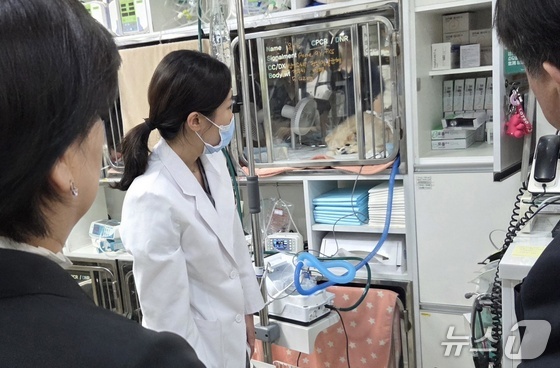
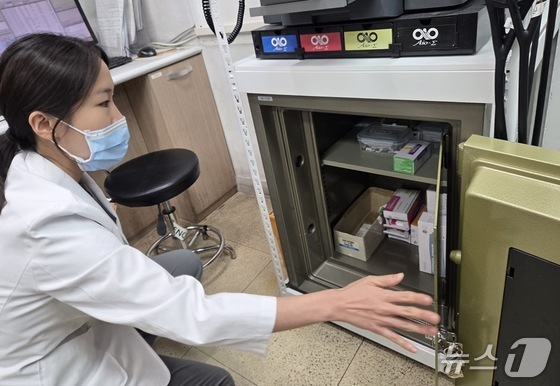
Following the signing ceremony, both organizations visited Haemaru Veterinary Clinic to assess current narcotic management practices in veterinary settings.