

For alliances to endure, they must adapt. Relying on outdated strategies is no longer viable.
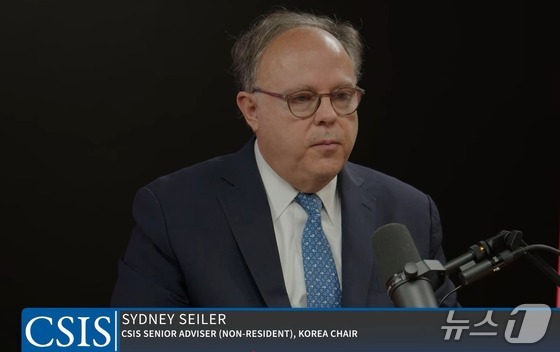
Sydney Seiler, a senior advisor at the Center for Strategic and International Studies (CSIS) and one of America’s foremost North Korea experts, shared this insight during a written interview with News1 on April 26.
The ripple effects of the National Defense Strategy (NDS), unveiled by the Donald Trump administration in January, have surpassed initial expectations. The U.S. is now explicitly calling on various allies, South Korea included, to shoulder greater responsibilities and make concrete contributions beyond merely maintaining the status quo.
Seiler, who has spent decades in the diplomatic arena, including roles as the Korea director at the National Security Council (NSC) and special envoy for the Six-Party Talks on North Korea’s nuclear program, emphasized that it’s a natural progression for economically prosperous nations to take on a larger role in their own defense.
In an exclusive interview with News1, Seiler assessed the current state of the U.S.-South Korea alliance amidst the rapidly evolving Indo-Pacific landscape and offered his perspective on South Korea’s strategic positioning. The following is a transcript of the Q&A session.
– The 2026 NDS has been released. One year into Trump’s second term, how do you evaluate South Korea’s evolving role in the Indo-Pacific order?
▶ Today’s global landscape is fundamentally different from the post-World War II era when the alliance system was established. Previously, the U.S. took the lead in security while investing in the economic recovery of former adversaries like Japan and Germany. Now, many allies, including South Korea, have achieved remarkable economic growth and prosperity.
In an increasingly volatile global environment, it’s natural for these nations to assume greater responsibility for their own defense. For alliances to remain robust and sustainable, they must evolve. South Korea’s collaboration with the U.S. on regional and global issues will not only contribute to international stability but also create diplomatic and economic opportunities while bolstering deterrence against North Korea and China.
– Kim Jong Un has set recognition of North Korea’s nuclear state status as a precondition for dialogue. Is there a possibility that President Trump might tacitly acknowledge North Korea as a de facto nuclear power and seek a compromise?
▶ There are two non-negotiable principles.
First, we cannot accept North Korea as a nuclear power. Second, history shows that denuclearization has always been a gradual, step-by-step process of action for action. Denuclearization, dialogue, and deterrence are not mutually exclusive goals. Engagement and deterrence must be pursued concurrently.
In the long run, peace without denuclearization is temporary and illusory. President Trump understands this principle, as evidenced by his stance in the Hanoi negotiations. However, there may be room for dialogue if both the U.S.’s long-term denuclearization objective and North Korea’s current nuclear stance are acknowledged at the outset. Despite the setbacks in diplomacy during 2018-2019, it’s worth noting that these peace efforts did not significantly undermine the readiness or deterrence capabilities of the U.S.-South Korea alliance.
– Some argue that South Korea faces a trade-off, potentially having to make economic concessions for security due to strong U.S. trade pressures and tariff measures.
▶ I don’t view this as a zero-sum game where South Korea must sacrifice its economic interests for security. Instead, I see it as a potential long-term win-win scenario.
South Korea has demonstrated remarkable adaptability in the volatile global trade environment over recent months. This underscores South Korea’s continued recognition of the U.S. as a crucial trading partner. President Trump also acknowledges the importance of the U.S.-South Korea trade relationship.
We’re in an era where negotiations are ongoing processes rather than one-time events. Given that no deal is ever set in stone, South Korea’s flexibility and creativity become even more critical.
President Trump emphasizes fairness. Trade agreements must benefit American businesses and workers, while security obligations should manifest as shared responsibilities, similar to the burden-sharing in the Strait of Hormuz.
– There’s a prevailing view that the growing ties between Russia and North Korea have crossed a critical threshold. Some voices are again calling for South Korea to pursue independent nuclear armament. What’s your take on this?
▶ The transactional cooperation among China, Russia, Iran, and North Korea is deeply concerning. As evidenced by China’s recent sale of reconnaissance satellites to Iran, these nations are attempting to circumvent the existing rules-based order by exchanging military assets and expertise, even without formal alliances.
However, this makes it more crucial than ever for the U.S. and its traditional allies to respond effectively. South Korea’s unilateral push for independent nuclear armament would only signal a lack of confidence in the U.S.-South Korea alliance. This could potentially exacerbate the situation and undermine the credibility of U.S. extended deterrence. Strengthening deterrence within the framework of the alliance remains the most prudent course of action.
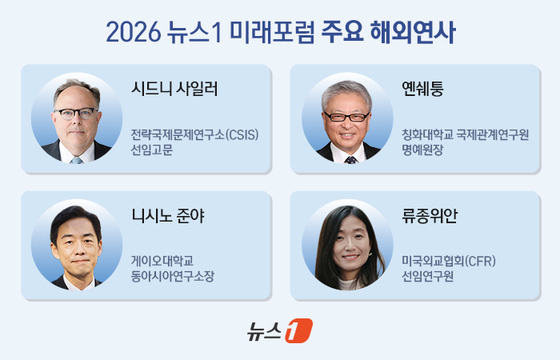
Seiler is slated to speak at the upcoming News1 Future Forum (NFF) 2026 on May 7, where he will deliver a keynote address on Global Uncertainty, Escalating Threats, and Alliance Dynamics: The Future of Korean Peninsula Security.