


This week, the information technology (IT) industry was abuzz with the reunion of Demis Hassabis, co-founder and Chief Executive Officer (CEO) of Google DeepMind, often called the father of AlphaGo, and Lee Sedol, 9-dan Go master and special professor at the Ulsan National Institute of Science & Technology (UNIST), after a decade.
Samsung Electronics reported record-breaking profits due to the semiconductor supercycle, but ironically, this has adversely affected its mobile division. The company disclosed that rising costs will inevitably lead to a profit decline in its mobile sector this year.
The first domestically developed satellite, Next-Generation Medium Satellite 2 (Chajung 2), is set to launch from Vandenberg Space Force Base in California on the afternoon of May 3.
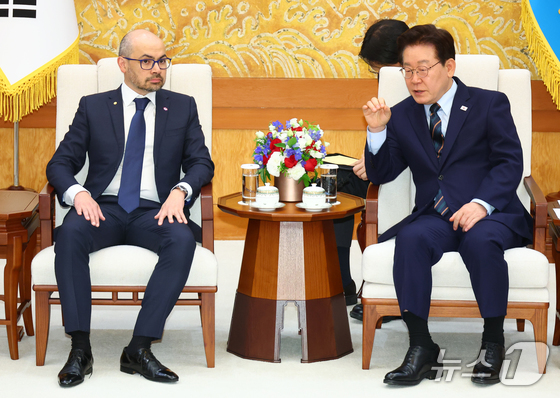
Demis Hassabis and Lee Sedol Reunite After a Decade, Collaborating on K-Moonshot
Hassabis and Lee met at the Google for Korea 2026 event held at the Westin Chosun Seoul on April 29, marking their first encounter in ten years. Hassabis had overseen the groundbreaking 2016 match between AlphaGo and Lee, which stunned the world as the first human vs. artificial intelligence (AI) showdown.
Reflecting on the decade since the AlphaGo match, Hassabis noted significant scientific progress. He expressed his belief that in the next 10 to 20 years, AI technology will revolutionize various fields, including environmental protection and healthcare, ushering in a new scientific renaissance.
Earlier, on April 27, Hassabis met with President Lee Jae Myung to discuss AI technology development and strategies for responsible implementation.
The Ministry of Science and Information and Communications Technology (ICT) signed a memorandum of understanding (MOU) with Hassabis, agreeing to collaborate on the K-Moonshot Project, a nationwide initiative aimed at tackling major challenges using AI technology.
Google DeepMind plans to establish a Google AI Campus in Korea, offering internship opportunities for talented individuals to experience the company’s research environment firsthand. The tech giant will also support technical training for developers and startups through its AI skilling program, AI Olympiad.
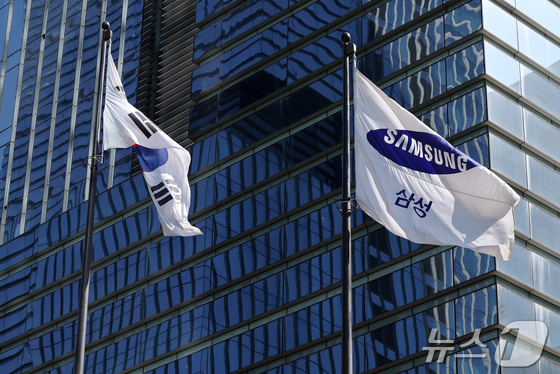
Samsung Electronics Posts Record Results, But Mobile Division Falters in Q1
On April 30, Samsung Electronics reported that its Mobile eXperience (MX)/Networks (NW) business division, encompassing mobile and network operations, recorded consolidated sales of 38.1 trillion KRW (about 25.98 billion USD) and an operating profit of 2.8 trillion KRW (about 1.9 billion USD) for Q1 2023. While sales increased by 2.97% year-over-year, operating profit plummeted by 34.88%.
This decline is attributed to chipflation (memory + inflation). The semiconductor supercycle, which drove up memory prices, helped Samsung achieve a consolidated operating profit of 57.23 trillion KRW (about 39.03 billion USD) in Q1, with the semiconductor division alone contributing 53.7 trillion KRW (about 36.7 billion USD).
Samsung aims to mitigate the decline in operating profit through cost-cutting measures and increased flagship sales. The company plans to boost Galaxy S26 sales through enhanced performance and improved customer experience, despite a price increase.
For Q2, Samsung intends to drive growth across its entire product range by launching new A series devices like the Galaxy A57 and A37. In the latter half of the year, the company will focus on expanding its foldable phone lineup.
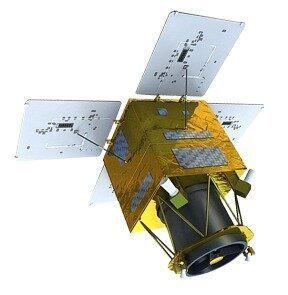
Domestically Developed Satellite Chajung 2 Set for Launch on May 3
Chajung 2 is scheduled to lift off at 3:59 p.m. (Korean time) on May 3 from Vandenberg Space Force Base in California.
The satellite has successfully completed pre-launch preparations, including functionality checks and fueling, over the past month at the base. It is now integrated with SpaceX’s Falcon 9 rocket, awaiting launch.
Approximately 60 minutes post-launch, Chajung 2 will separate from the rocket. It’s expected to establish its first communication with the Svalbard ground station in Norway about 15 minutes later. Following launch, the satellite will undergo a four-month initial operations phase in a 498-kilometer (about 309 miles) orbit before commencing its full mission in the latter half of this year.
Chajung 2 will be utilized for various applications, including ground observation, change detection, mapping, urban planning, and disaster response. It will monitor and aid in responding to damage from natural disasters such as typhoons, heavy snowfall, floods, and wildfires. The satellite is also expected to enhance national spatial information services through the acquisition of independent satellite imagery.