

New criteria have been established to differentiate between early-stage colorectal cancer patients who require additional surgery after endoscopic resection and those who do not.
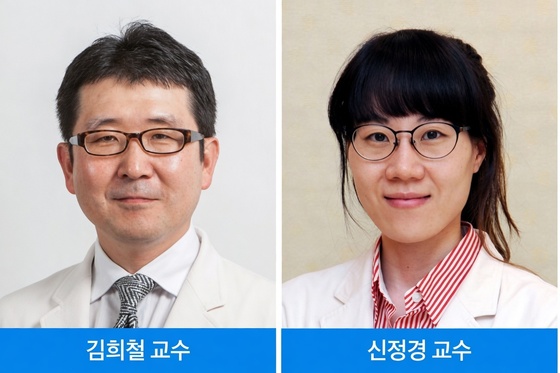
On Thursday, Samsung Medical Center announced that a research team led by Drs. Kim Hee-cheol and Shin Jung-kyung from the Department of Colorectal Surgery has developed a Composite Pathologic Score to assess the necessity of further surgery in early-stage colorectal cancer (T1) patients following endoscopic resection. Their findings were recently published in the prestigious journal, Annals of Surgical Oncology.
According to data from the Central Cancer Registry, the five-year relative survival rate for localized early-stage colorectal cancer from 2019 to 2023 is an impressive 94.9%. Typically, early-stage colorectal cancer is treated with endoscopic tumor removal followed by observation. However, additional bowel resection is recommended if lymphatic, vascular, or nerve invasion, tumor budding, poor differentiation, or deep submucosal invasion is detected.
The concern arises from the fact that 80-90% of patients who undergo additional surgery show no signs of lymph node metastasis, leading to criticisms of potential overtreatment in early-stage cancer patients.
The research team analyzed 1,162 patients who underwent additional surgery after endoscopic resection for early-stage colorectal cancer at Samsung Medical Center between 2004 and 2024. Of these, only 148 patients (12.7%) were confirmed to have lymph node metastasis.
Based on these findings, the team developed the Composite Pathologic Score, which assigns one point for each of five criteria: presence of lymphatic, vascular, or nerve invasion; five or more instances of tumor budding; poor differentiation; submucosal invasion exceeding 2000 μm; and presence of cancerous tissue at the resection margin.
Patients scoring 0-1 points are classified as low-risk, while those with 2 or more points are considered high-risk.
The analysis revealed a clear correlation between higher scores and increased lymph node metastasis rates: 6.6% for a score of 0, 12% for 1, 29.2% for 2, 60% for 3, and 100% for 4.
Moreover, the lymph node metastasis rate for the low-risk group (0-1 points) was 9.5%, compared to a striking 33.5% for the high-risk group (2 points or more).
The researchers suggest that for elderly patients or those with comorbidities who have a low Composite Pathologic Score, careful monitoring may be a more appropriate approach than immediate additional surgery.
Dr. Kim emphasized the importance of identifying cancer patients who truly require surgery, stating that the goal is to develop more nuanced surgical criteria that consider both quality of life and patient autonomy.
Samsung Medical Center’s Cancer Center is intensifying its focus on quality of life-based treatment research. In 2024, they launched the Quality of Life Research Institute for Cancer Patients in partnership with Samsung Fire & Marine Insurance. They have also been collaborating with Germany’s Charité Hospital on patient-reported outcomes (PRO) seminars.
The center has forged a partnership with the European Organization for Research and Treatment of Cancer (EORTC) for the translation and quality management of Korean PRO tools. Additionally, they became the first in South Korea to receive certification from the International Consortium for Health Outcomes Measurement (ICHOM), a global leader in value-based healthcare.
For two consecutive years, Samsung Medical Center’s Cancer Center has ranked third globally in Newsweek’s World’s Best Specialized Hospitals list for oncology.
Last month, they published their 2026 Outcomes Book, a comprehensive guide integrating various clinical indicators from diagnosis through treatment and post-treatment care.