

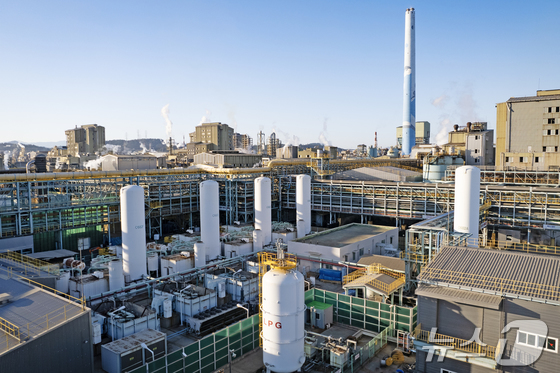
As global competition to secure critical minerals and rare earth supply chains intensifies, Korea Zinc is drawing attention not only in the United States but also increasingly in Australia as a key critical minerals supply chain player.
Australian local communities and business leaders have begun calling for the expansion of the SMC smelter operated by Korea Zinc.
According to Australian local media reports and industry sources on the 27th, support is growing among political and business circles in Townsville, North Queensland, for the expansion of SMC, Korea Zinc’s Australian subsidiary.
The proposal calls for establishing an integrated smelting system covering not only zinc but also lead and copper, while developing the site into a comprehensive critical minerals production hub similar to the U.S.-based “Project Crucible.”
SMC appeared receptive to those community requests during the recent “Townsville Enterprise 2026 Mining and Manufacturing Forum.”
The company also indicated that it plans to continue detailed feasibility reviews and further discussions.
The discussions come as Korea Zinc responds to ongoing calls within Australia to strengthen the country’s critical minerals processing capabilities.
“Project Crucible,” which aims to build an integrated smelter in Tennessee in cooperation with the U.S. government by 2029, was also reportedly initiated at the request of the U.S. side.
Under the project, Korea Zinc, the U.S. government and local investors are moving forward by establishing the joint venture Crucible JV with an initial investment of $1.94 billion.
Combined with U.S. policy financing loans, financial investor funding, Commerce Department grants and direct investment, the total investment is expected to reach $7.43 billion.
Ron Lee, CEO of SMC, said at the forum, “We are reviewing requests to apply the technological expertise accumulated at the Onsan smelter to North Queensland following Project Crucible,” adding, “This forum could become the starting point for concrete discussions aimed at strengthening Australia’s critical minerals capabilities.”
A U.S. government official attending the forum also expressed support for the initiative.
Jeremy Cornforth said, “If Australia’s abundant mineral resources are combined with U.S. capital and Korea Zinc’s industrial capabilities, significant synergies could be created,” expressing interest in trilateral cooperation among the three countries.
Expectations are also rising within Australia.
Claudia Brumme-Smith said, “If these discussions materialize, it could become a major turning point for the future of manufacturing in North Queensland and Australia.”
Nick Dametto also emphasized the need to further develop cooperation discussions with Korea Zinc to strengthen regional industrial competitiveness and create jobs.
Industry observers say the strong trust Australian political and business circles place in SMC is partly rooted in the deep ties between Australia and Korea Zinc Chairman Choi Yun-bum as well as the company’s current leadership.
Choi served as president of SMC from 2014 to 2019, successfully turning the company around from chronic losses to profitability.
Since then, he has expanded renewable energy and hydrogen projects in Australia while building close partnerships with local business communities.
In 2018, during Choi’s tenure, SMC completed a 125-megawatt industrial solar power facility near the Townsville zinc smelter — then the largest of its kind in Australia — laying the foundation for a transition to renewable energy.
The facility is still regarded as a representative example of Korea Zinc’s long-term investment commitment.
That level of trust was also evident during last year’s attempt by Young Poong and MBK Partners to gain management control of Korea Zinc.
Former Queensland Premier Annastacia Palaszczuk publicly expressed support for Choi on social media, saying, “Chairman Choi has built a close partnership with the Queensland government,” and adding, “I hope his leadership in renewable energy continues.”
Industry analysts say that if the Australian community’s requests develop into concrete business discussions, trilateral cooperation among South Korea, the United States and Australia centered on critical minerals could strengthen further.
Some also believe such cooperation could expand into broader strategic sectors including defense, shipbuilding and energy, potentially evolving into a new axis of economic and security cooperation.