

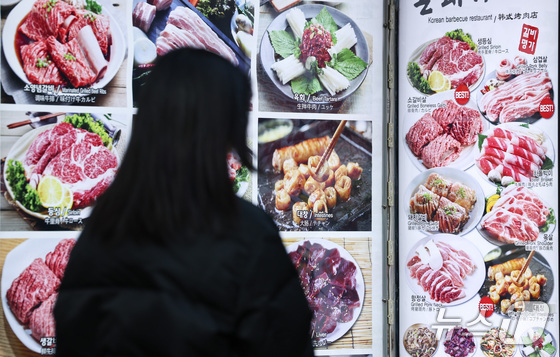
As food delivery app use and late-night eating culture become increasingly common, the risk of hypertension and metabolic disorders is rising among young adults in their 20s and 30s.
Experts say repeated consumption of delivery meals high in refined carbohydrates and fat can lead to increases in blood pressure, blood sugar and waist circumference, underscoring the importance of managing dietary habits.
According to the Korea Disease Control and Prevention Agency on May 26, the number of people with hypertension in South Korea is estimated at about 13 million.
The prevalence rate among adults stands at roughly 30%, meaning one in three adults has high blood pressure.
Among them, about 890,000 patients are young adults in their 20s and 30s.
Experts say hypertension is no longer limited to middle-aged and older adults as dining out and delivery-centered eating habits become routine.
According to Statistics Korea’s “2024 Online Shopping Trends” report, food service transactions, including the food delivery app market, reached 19.7 billion in 2024, up 10.9% from a year earlier.
Experts say the issue is not delivery food itself, but the composition of the meals.
They warn that repeatedly eating meals heavily centered on refined carbohydrates and fats — such as tteokbokki with fried foods or fried chicken with beer — can simultaneously strain blood sugar and blood pressure levels.
Analysts also say alcohol consumption can further increase blood pressure variability by affecting the sympathetic nervous system and vascular responses.
So Jae-yong, head director of Seoul 365mc Hospital, said, “Adjusting the composition of delivery meals can be a practical management strategy,” adding, “When eating carbohydrate-heavy foods such as noodles or rice cakes, it is better to reduce fried foods and sugary drinks while increasing protein and vegetables.”
He added, “Even with the same delivery foods, reducing soup or broth intake, eating earlier or lowering the frequency of alcohol consumption can help reduce the burden on blood sugar and blood pressure.”
Koreans face metabolic risks even at lower BMIs
Experts say East Asians, including Koreans, may develop diabetes and metabolic abnormalities at lower body mass indexes compared with Western populations.
Some studies have also reported that East Asians tend to have relatively smaller pancreatic volume and lower insulin secretion capacity.
So said, “Insulin is a hormone that helps glucose in the bloodstream enter cells to be used as energy, and the pancreas is the organ that secretes it. If insulin secretion is low or abdominal obesity reduces insulin function, blood sugar control can worsen.”
He added, “When insulin resistance overlaps with visceral fat accumulation, it can lead to metabolic abnormalities that worsen not only blood sugar but also triglyceride and blood pressure levels.”
Normal blood pressure is defined as below 120 mmHg systolic and 80 mmHg diastolic.
If blood pressure consistently exceeds those levels, lifestyle changes and ongoing management are needed.
More frequent blood pressure monitoring is particularly recommended for people who are obese, overweight or have excess abdominal fat.
But even people at a normal weight should not assume they are free from risk.
One representative example is so-called “skinny fat” syndrome.
The condition refers to people with thin arms and legs but concentrated abdominal fat, increasing visceral fat levels and making blood sugar and blood pressure management more difficult.
So said, “If your abdomen begins protruding rapidly or your waist circumference increases after your 30s, you should not focus only on the number on the scale but also check blood pressure, fasting glucose and HDL cholesterol levels together.”
He added, “Hypertension that begins at a young age can be more unfavorable over the long term because blood vessels are exposed to elevated pressure for a prolonged period. If lifestyle changes are difficult, active obesity management through GLP-1 treatments or liposuction procedures may also help.”