

[Courtesy of News1]
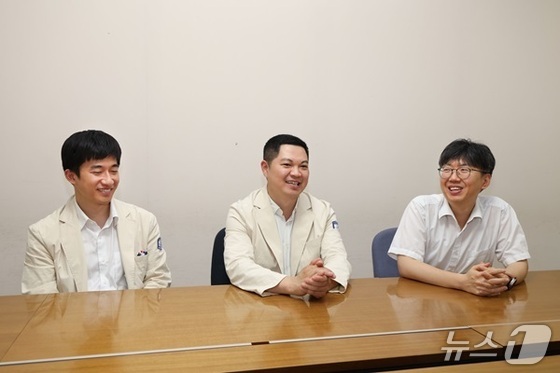
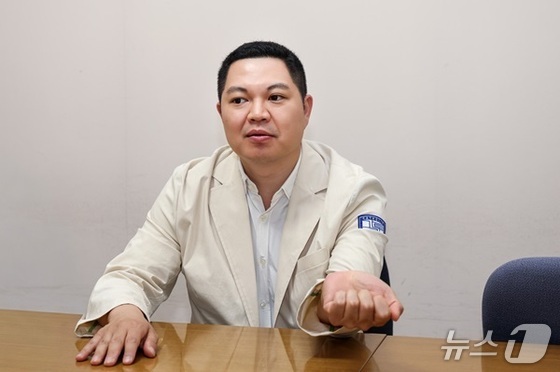
“Physician-scientists are the future of Korea. They will become one of the greatest drivers of value creation in society.” Dr. Pil Soo Sung, a gastroenterologist at Catholic University of Korea’s Seoul St. Mary’s Hospital, did not hesitate when asked about the role of physician-scientists. Physician-scientists, or MD-PhDs, operate at the intersection of medical practice and scientific innovation. Beyond treating patients, they bring questions from the clinic into the laboratory to develop new treatments and diagnostic technologies. Countries such as the United States and the United Kingdom have invested heavily in training physician-scientists as a cornerstone of biotechnology competitiveness, but the concept remains relatively unfamiliar in South Korea. At Seoul St. Mary’s Hospital’s gastroenterology division, three researchers who share that career path are working together within a single department. Sung, Dr. Ji Won Han and clinical fellow Dr. Kwon Yong Tak all completed full-time doctoral programs at the Korea Advanced Institute of Science and Technology (KAIST) before returning to clinical practice. Together, they have secured approximately $5.4 million in government research funding. Although their research spans metabolic liver disease, liver cancer, fibrosis and artificial intelligence, all three focus on translating questions that arise in clinical practice into research, presenting a new model for hospital-based precision medicine. What do they see as the true role of physician-scientists, and what challenges remain in building a physician-scientist workforce in South Korea? Physician-scientists bridge the gap between the clinic and the laboratory While clinicians focus on treating individual patients and improving quality of life, physician-scientists go a step further by seeking breakthroughs that can overcome the limitations of existing therapies. “A typical clinical professor may stop at asking why certain patients have poorer outcomes,” Han said. “Physician-scientists directly integrate basic science, engineering and multidisciplinary research to identify solutions that can improve patient care.” Sung emphasized the importance of a continuous cycle in which patient care informs research and research findings ultimately improve patient care. “Research conducted by basic scientists can sometimes remain disconnected from clinical practice,” he said. “Research led by physician-scientists is far more likely to directly benefit patients and be applied in real-world care.”
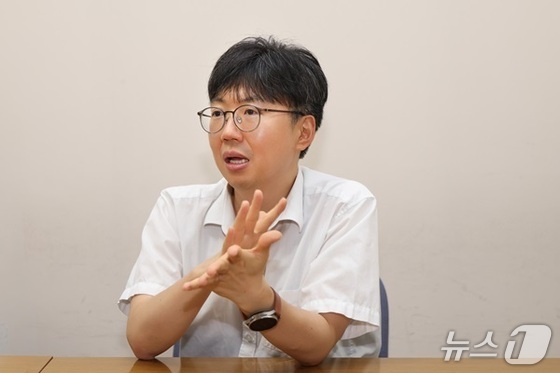
[Courtesy of News1] Tak also cited clear direction as one of the greatest strengths of physician-scientists. He described the frustrations he experienced between research laboratories focused on fundamental science and clinical settings focused on solving immediate medical problems. “When I propose developing treatments for liver fibrosis, basic scientists often advise focusing first on fundamental questions such as what liver cell regeneration is,” Tak said. “Meanwhile, clinicians prioritize preventing progression to cancer or pursuing established treatments such as liver transplantation.” “To create real value in biomedicine, we need people who can bridge these two worlds and understand both sides,” he added. Three physician-scientists, three research paths, one mission Their research efforts function as interconnected components within the gastroenterology division. Sung is leading a five-year government-funded project worth approximately $1.6 million under the Ministry of Health and Welfare’s physician-scientist leadership program. His work focuses on immune injury mechanisms in metabolic dysfunction-associated steatotic liver disease and alcohol-related liver disease. One area of particular interest is developing therapies based on extracellular vesicles derived from human commensal microbiota. “There are still no treatments that effectively reduce inflammation in patients with fatty liver disease caused by increased intestinal permeability and gut microbiome imbalance,” Sung said. “This is a novel approach based on a clear clinical need.” Han has secured cumulative government research funding of approximately $1.2 million for projects linking clinical decision-making with artificial intelligence. What distinguishes her work is that she develops the underlying algorithms herself after identifying clinical challenges through direct patient care. “Even a single line in a radiology report that a physician misses during a busy clinic schedule can change treatment decisions if AI flags it,” Sung said, highlighting the practical impact of Han’s research.
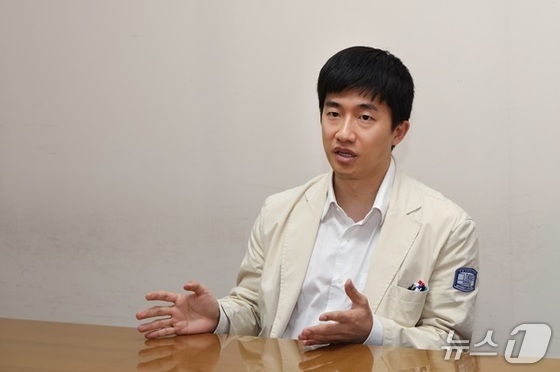
[Courtesy of News1] Tak has gained attention for research using single-cell and spatial transcriptomic analysis to decode the liver microenvironment at the cellular level. His work has been published in leading journals, including Nature Aging. His long-term goal is to break the link between liver fibrosis, or cirrhosis, and cancer. “The liver has remarkable regenerative capacity,” Tak said. “If we can prevent cellular aging and free the liver from the fibrosis process, restoring it to a normal state is not just a theoretical possibility.” “However, developing a commercially viable drug will likely take a lifetime,” he added with a smile. Physician-scientists balancing patient care and research call for stronger institutional support Behind their research achievements lies the challenge of balancing scientific work with demanding clinical responsibilities. All three carry workloads comparable to those of any practicing physician. “Just this morning, I saw more than 60 outpatients and cared for more than 20 hospitalized patients,” Sung said. “Within Korea’s healthcare system, it is difficult to reduce clinical responsibilities simply because someone is a physician-scientist.” Research activities are still often viewed as an additional responsibility rather than a core part of the job within hospitals and universities, he said. “For now, we have no choice but to prove that we can secure funding, produce research and maintain excellence in patient care at the same time,” Sung said. “Fortunately, having three people with the same mission in one department creates unique synergies through shared ideas and research infrastructure.”
[Courtesy of News1] The question, however, is whether that model is sustainable. Although physician-scientist development has long been a national priority, many researchers say personal dedication alone is no longer enough. “In major institutions overseas, including in the United States, clinical workloads are adjusted based on the scale of research funding,” Tak said. “Government support is important, but hospital leaders and department heads must also rethink traditional clinician-centered systems if younger physician-scientists are to see a future in this career.” Han said clearer definitions and stronger institutional support for physician-scientists are urgently needed. “There is still no clear definition of what a physician-scientist is,” she said. “Formal career tracks and appointment systems that allow physicians to balance research and clinical work remain underdeveloped.” Sung, one of South Korea’s leading physician-scientists, argued that the consequences extend beyond individual careers. “Many physician-scientists from previous generations ultimately left academia and opened private practices because they lacked job security,” he said. “That represents a tremendous loss for the country.” He called for institutional guarantees to support physician-scientists, including requirements that departments maintain dedicated physician-scientist positions. “South Korea’s biotechnology and medical competitiveness 10 years from now will depend on the systems we build today,” Sung said. Despite the challenges, the three researchers remain committed to working in both the clinic and the laboratory. They believe physician-scientists are uniquely positioned to ask the questions that can transform medicine because they understand the language of both patient care and scientific research. “Physician-scientists will become one of the leading contributors to value creation in our society,” Sung said. “Ultimately, physician-scientists are South Korea’s future.”