

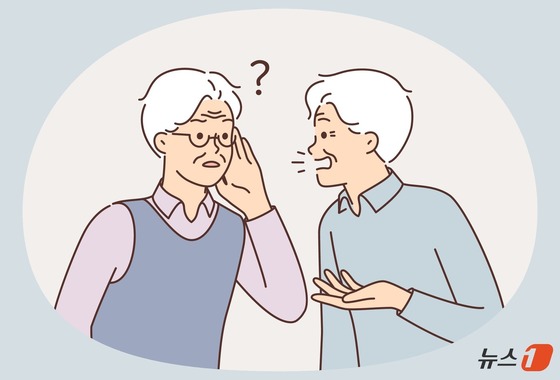
Recent research has highlighted that hearing loss is not merely an age-related inconvenience, but a significant risk factor for dementia, underscoring the critical importance of early detection and management.
Dr. Sun Woo-sang, a professor of otolaryngology at Gachon University Gil Medical Center, stated on Tuesday that hearing loss is the most substantial modifiable risk factor for dementia. He emphasized that maintaining good hearing is crucial not only for improving quality of life but also for preserving cognitive health.
While hearing loss is often perceived as an inevitable part of aging, recent studies have revealed it to be a potent contributor to dementia risk. Notably, hearing decline that begins in middle age has been strongly linked to subsequent cognitive deterioration.
Dr. Sun pointed to reduced brain stimulation as a primary mechanism by which hearing loss increases dementia risk.
When auditory input decreases, activity in the brain’s auditory cortex and cognitive areas also diminishes, he explained. Underused brain regions gradually atrophy, potentially leading to cognitive decline.
He added that moreover, as hearing worsens, individuals must allocate more cognitive resources to understanding speech, potentially compromising other cognitive functions such as memory and decision-making.
The social isolation that often accompanies hearing loss is another concern. As communication becomes more challenging, social interactions may decrease, further elevating dementia risk.
Dr. Sun emphasized that hearing loss is a significant condition affecting not just sensory function but overall brain health.
Fortunately, hearing loss is a modifiable risk factor that can be identified and addressed early. While age and genetics are immutable, timely interventions can slow the progression of hearing loss or mitigate its effects.
Regular hearing tests are crucial for early detection. If issues are identified, individuals should minimize noise exposure and properly treat ear, nose, and throat conditions to slow hearing deterioration. When necessary, hearing aids can help maintain auditory function.
Indeed, growing evidence suggests that using hearing aids can decelerate cognitive decline.
However, it’s important to note that addressing hearing loss alone cannot completely prevent dementia. The condition results from a complex interplay of risk factors, including high LDL cholesterol, hypertension, diabetes, smoking, physical inactivity, obesity, excessive alcohol consumption, social isolation, and sleep deprivation.
Dr. Sun concluded that for conditions that are difficult to cure, prevention is paramount. Hearing loss is a prime example of a risk factor that can be detected and addressed early. Taking steps to check your hearing now could be the first step in safeguarding your future cognitive health.