

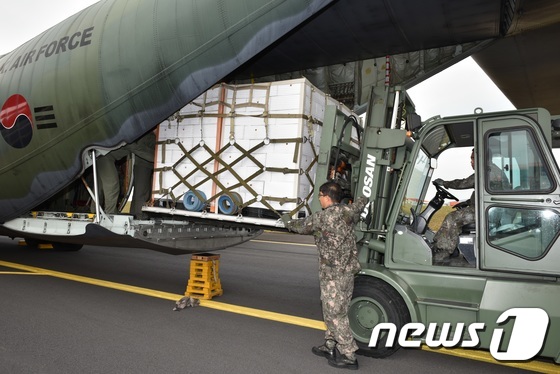
Recent contacts between Jeju Island and North Korea, resulting in the delivery of some aid supplies to the North, are not an exception to North Korea’s two hostile states stance. Instead, analysts suggest this represents a redefinition of the nature and structure of inter-Korean exchanges.
In a report published on Monday, Park Eun-joo, a researcher at the Korea Institute for National Unification, analyzed the February meeting in Beijing between Jeju Governor Oh Young-hoon and North Korean official Ri Ho-nam. She views this as an example of how two hostile states can engage in limited cooperation for mutual benefit.
Park further elaborated that this should not be seen as an exception to the theory of hostile states, but rather as a new form of exchange emerging in an era characterized by hostility.
Since officially adopting the hostile states theory in late 2023, North Korea has dismantled and restructured its organizations for inter-Korean relations, such as the United Front Department and the Committee for the Peaceful Reunification of the Fatherland. This move effectively discards the concept of unification and fundamentally redefines the nature of inter-Korean relations.
North Korea’s recent constitutional amendments have further solidified this stance. The revised constitution removes phrases related to ethnic ties like national unification and one Korean nation from its preamble and body. Instead, it introduces a new territorial clause in Article 2, specifying the territory, territorial waters, and airspace adjacent to South Korea.
Cooperation With a Hostile Relationship Does Not Equate to Improving Relations
Park pointed out that in international politics, hostility and cooperation can coexist. She noted that while North Korea designates the United States as its primary adversary, it has held summits with the U.S. and engaged in normalization talks with Japan regarding abductees.
She added that in this context, limited cooperation with a hostile country is not an unfamiliar phenomenon in North Korean diplomacy.
Park explained that North Korea’s lack of follow-up actions, such as formal responses or invitations after receiving supplies, indicates that while it acknowledges the need for support, it remains cautious about expanding to improve inter-Korean relations.
She elaborated that North Korea now defines South Korea as a separate state, reframing exchanges not as a means to improve relations or restore a national community, but as a tool for national interests. This approach emphasizes that accepting cooperation does not necessarily equate to improving relations.
Why North Korea accepted limited cooperation with local governments: Instrumentalization of exchanges
Park believes that North Korea’s decision to engage in limited cooperation first with local governments, rather than the central government, allows it to secure practical benefits while minimizing political repercussions. She noted that by using the Korean Disabled Support Company as a channel, North Korea is not rejecting all forms of inter-Korean exchange but is leaving open the possibility for limited cooperation in areas it deems necessary.
Some have pointed to the emotional factor of Kim Jong Un’s maternal family being from Jeju as a backdrop for these contacts. However, considering North Korea’s shift towards strict pragmatism, Park argues that practical factors, such as over 20 years of established exchange assets, high symbolism, and Jeju’s independent inter-Korean cooperation fund, likely played a more significant role than personal connections in this decision.
In this context, Park views the recent contacts between North Korea and Jeju as evidence that North Korea is not halting exchanges but thoroughly reorganizing them under state control. She suggests that for North Korea, inter-Korean exchanges have transformed from a process of ethnic reconciliation into a tool that can be selectively permitted or blocked based on national interests.
Park emphasized that in the past, the resumption of exchanges itself was a measure of improving relations. Moving forward, it needs to examine the purposes and methods of these exchanges as well. She concluded that North Korea has not stopped exchanges; rather, it is changing the objectives of those exchanges.