

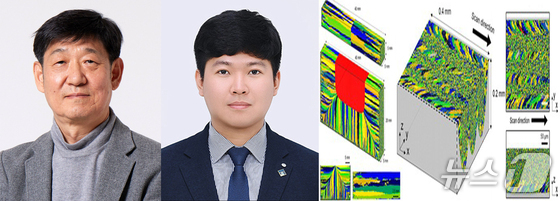
On Wednesday, Pohang University of Science and Technology (POSTECH) announced a breakthrough in metal manufacturing simulation. Professor Lee Byung-joo from the Department of Materials Science and Engineering and Dr. Oh Sang-ho’s team developed technology to rapidly and accurately predict microstructures formed during metal production.
This innovation allows for precise calculations on standard computers, eliminating the need for extensive experimentation and trial-and-error in developing new metal materials or optimizing manufacturing processes.
While existing precise simulations, such as the phase-field model, require high-performance computers and can take hundreds of hours to analyze areas just tens of micrometers in size, this new technology completes the task in two days. It can also predict microstructural changes during three-dimensional (3D) printing.
The research team successfully implemented a model combining a Monte Carlo Potts model, based on statistical mechanics, with a method for linking actual physical units. This allows simultaneous calculation of phenomena occurring during metal solidification within a single algorithm.
Professor Lee explained that this technology can run simulations on a regular desktop computer in just tens of hours. It will serve as an efficient guide to significantly reduce trial-and-error during the design phase of metal manufacturing processes, all with minimal computational costs.